
Introduction
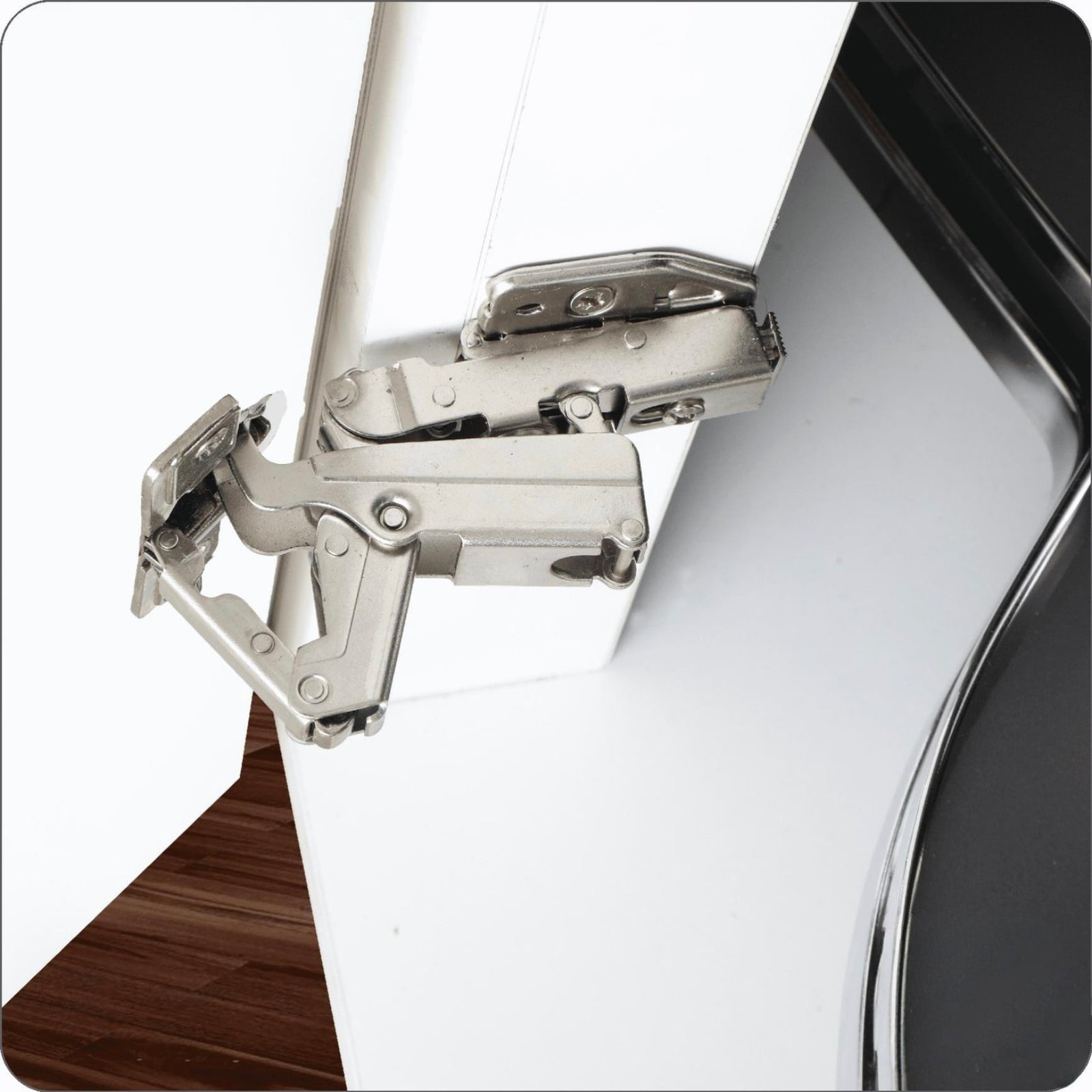
When sourcing cabinet hinges for large-scale furniture manufacturing or hardware wholesale, procurement teams often place heavy emphasis on overlay types—such as Full Overlay, Half Overlay, and Inset. However, one equally critical specification that directly impacts cabinet functionality and manufacturing tolerances is the hinge opening angle.
Selecting the wrong opening angle can lead to functional issues after installation: internal drawers or pull-out baskets that cannot fully extend, corner doors that block adjacent pathways, or cabinet doors hitting nearby walls.
This technical selection guide breaks down the structural differences and practical applications of standard and specialized cabinet hinge opening angles (90°, 110°, 135°, 165°, and 180°), helping you source the exact specifications required for your production line or inventory.
Quick Comparison Chart
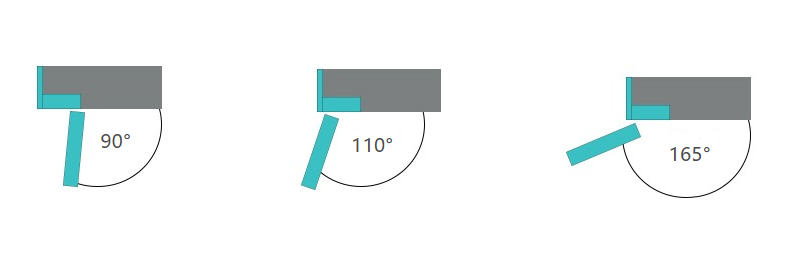
| Opening Angle | Typical Application | Key Function | Space Requirement |
| 90° | Basic cabinetry, office furniture, budget projects | Simple 90-degree stop | Fits tight clearances |
| 110° | Standard kitchen cabinets, residential wardrobes | Industry standard versatility | Standard front clearance |
| 135° | Corner cabinet transition panels (L-shaped) | Connects angled corner doors | Specific corner clearance |
| 165° | Full-access corner cabinets, Lazy Susan units | Clears opening for internal pull-outs | Requires wide side clearance |
| 180° | Folding doors, commercial & utility cabinets | Folds flat against adjacent panel | Zero protruding profile |
Why Hinge Opening Angle Matters in Cabinet Production
For furniture designers and factory production lines, the choice of opening angle dictates the clearance profile of the cabinet door.
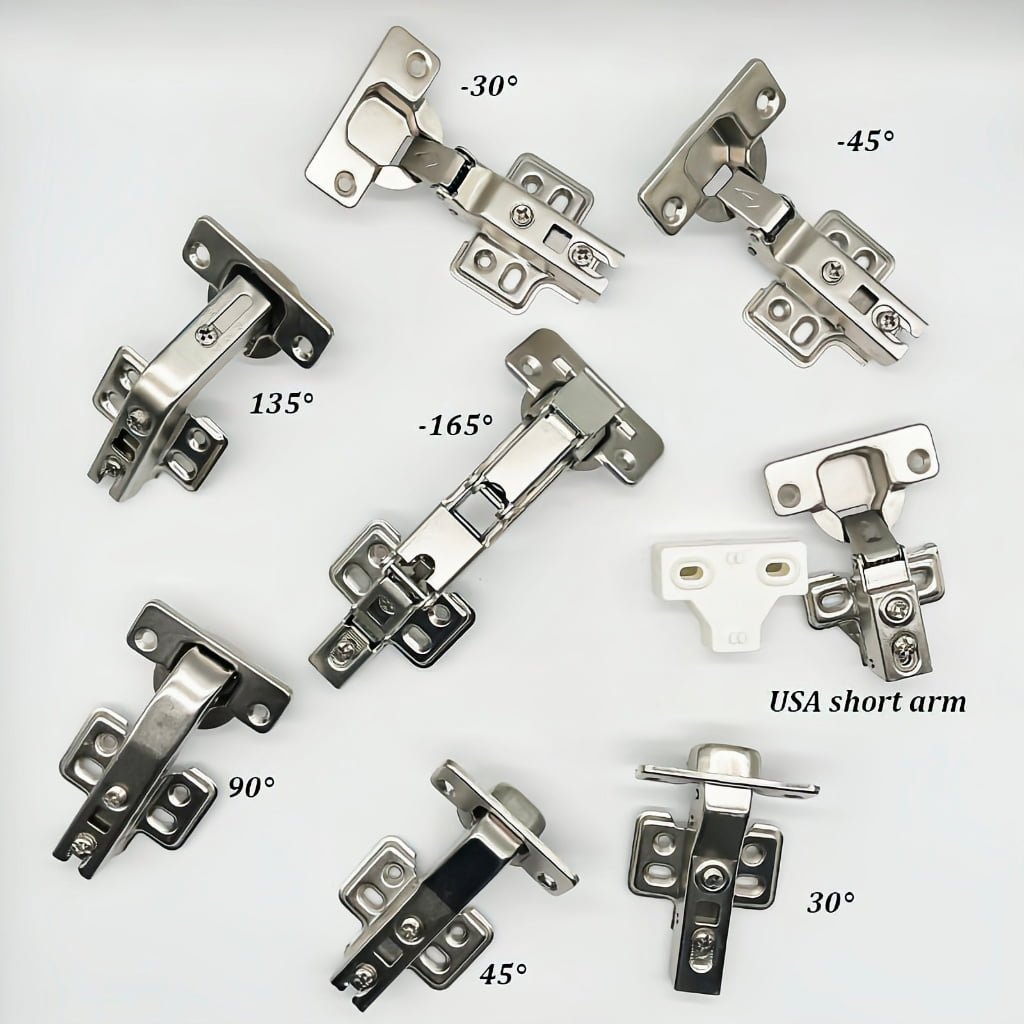
If a contract furniture project involves inner drawers or smart storage units, a standard hinge may cause the door edge to protrude into the opening space even when opened. This creates a physical obstruction that blocks the drawer glides. Engineering the correct opening angle into your cabinet drawings ensures smooth operation and reduces field complaints.
90° Hinges: Minimalist and Cost-Effective
A 90° opening angle hinge is designed for basic cabinetry setups where space is constrained or the budget requires optimized hardware costs.
Best Used For: Office desks, utility room cabinets, and entry-level furniture projects.
Advantages: It provides a strict, controlled stop. It prevents the door from swinging past a right angle, making it ideal for cabinets placed adjacent to delicate glass structures or appliances.
Limitations: The restricted opening space means it is not suitable for deep cabinets or units requiring internal functional hardware.
110° Hinges: The Global Workhorse for Modern Cabinetry
The 105° to 110° opening angle hinge is the standard specification for the global furniture hardware market. Most concealed cabinet hinges used in modern residential kitchens and premium wardrobes are built to this standard.
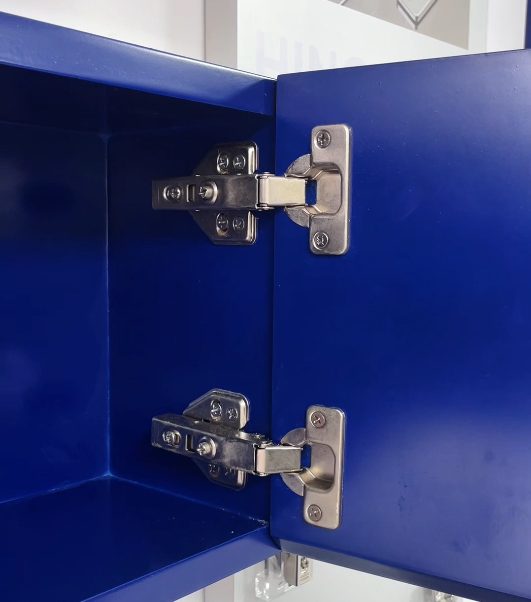
Best Used For: Standard overhead kitchen cabinets, bedroom wardrobes, and bathroom vanities.
Why It Dominates: A 110° angle allows the cabinet door to swing slightly past a straight line. This provides comfortable physical clearance for end-users to reach into the cabinet without the door blocking their view or shoulders.
B2B Sourcing Tip: For premium residential projects, combining a 110° angle with integrated soft-closing dampers is highly recommended. You can explore our robust range of heavy-duty 3D Hydraulic Soft-Close Hinges to improve tactile performance.
135° Hinges: The Corner Transition Solution
The 135° hinge is a specialized hardware component engineered specifically for multi-panel corner configurations, such as L-shaped corner cabinets.
Best Used For: Diagonal corner cabinets and pie-cut corner door setups.
Functionality: It bridges the transition between two angled panels, ensuring that the corner door opens smoothly without binding against the adjacent framework.
Procurement Insight: While 135° hinges are vital for corner cabinet transitions, they are often paired strategically with wider-angle hinges depending on the internal storage mechanism.
165° Hinges: Full-Access and Zero-Protrusion Setup
Often categorized as a “wide-angle” or “full-access” hinge, the 165° opening angle hinge is essential for specialized kitchen storage systems.
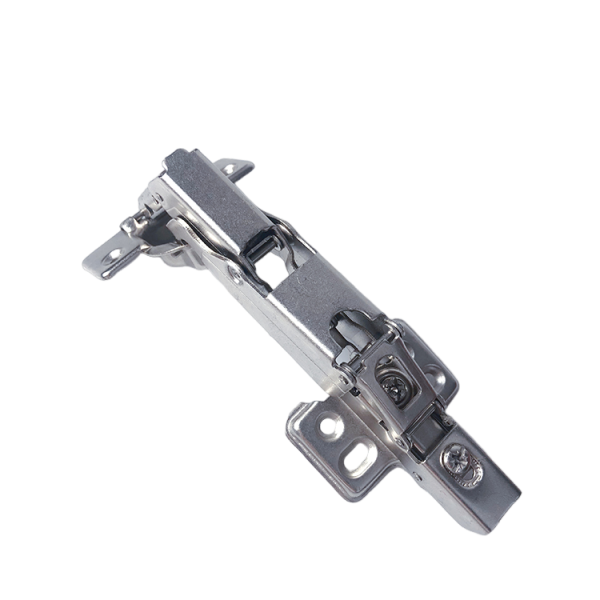
Best Used For: Cabinets featuring internal Lazy Susan carousels, pull-out wire baskets, or stacked internal drawers.
The Full-Access Advantage: A 165° hinge allows internal drawers and pull-out baskets to clear the cabinet opening without interference. When fully extended, the cabinet door folds almost entirely back, parallel to the side panel, preventing drawers from catching or scratching the inside face of the door.
Learn More: To see how wide-angle hardware optimizes complex space layouts, check out our comprehensive Corner Cabinet Hinges 165° & Bifold Guide.
180° Hinges: Folding Doors and Access Panels
The 180° hinge allows a cabinet door to fold flat against the adjacent exterior panel, creating an unobstructed $180\text{-degree}$ plane.
Best Used For: Fold-away furniture, commercial display cabinets, special access panels, and industrial equipment enclosures.
Advantages: By laying completely flat against the side panel, it eliminates the leverage hazard of an open door protruding into a hallway or busy workspace. It provides maximum clearance for specialized utility applications.
Technical FAQ
Is a 165° hinge better than a 110° hinge?
No. A wider opening angle does not automatically mean better performance. The correct choice depends entirely on the cabinet structure, internal storage requirements, and available installation space. A 165° hinge is required for pull-out drawers, while a 110° hinge is preferred for standard shelving.
What is the most common cabinet hinge opening angle?
For modern kitchen cabinets and wardrobes, 105°–110° hinges remain the most widely used options worldwide due to their balance of cost, clearance, and durability.
Do wider-angle hinges require more installation space?
Yes. 165° and 180° hinges require additional side clearance to allow the door to fold back completely without hitting adjacent cabinets, trim, or walls.
Conclusion & Custom Sourcing
Selecting the correct hinge opening angle involves balancing structural design constraints, clearance requirements, and manufacturing costs. As an established manufacturer of cabinet hardware, Furnihard provides precision-engineered hinge systems tailored to international B2B quality standards.
Not sure which hinge angle is suitable for your cabinet design? Send us your cabinet drawings or door specifications, and our technical team can recommend the appropriate hinge solution for your project.
📩 [Contact Our Engineering Team for Technical Consultations & Free Samples]