Introduction
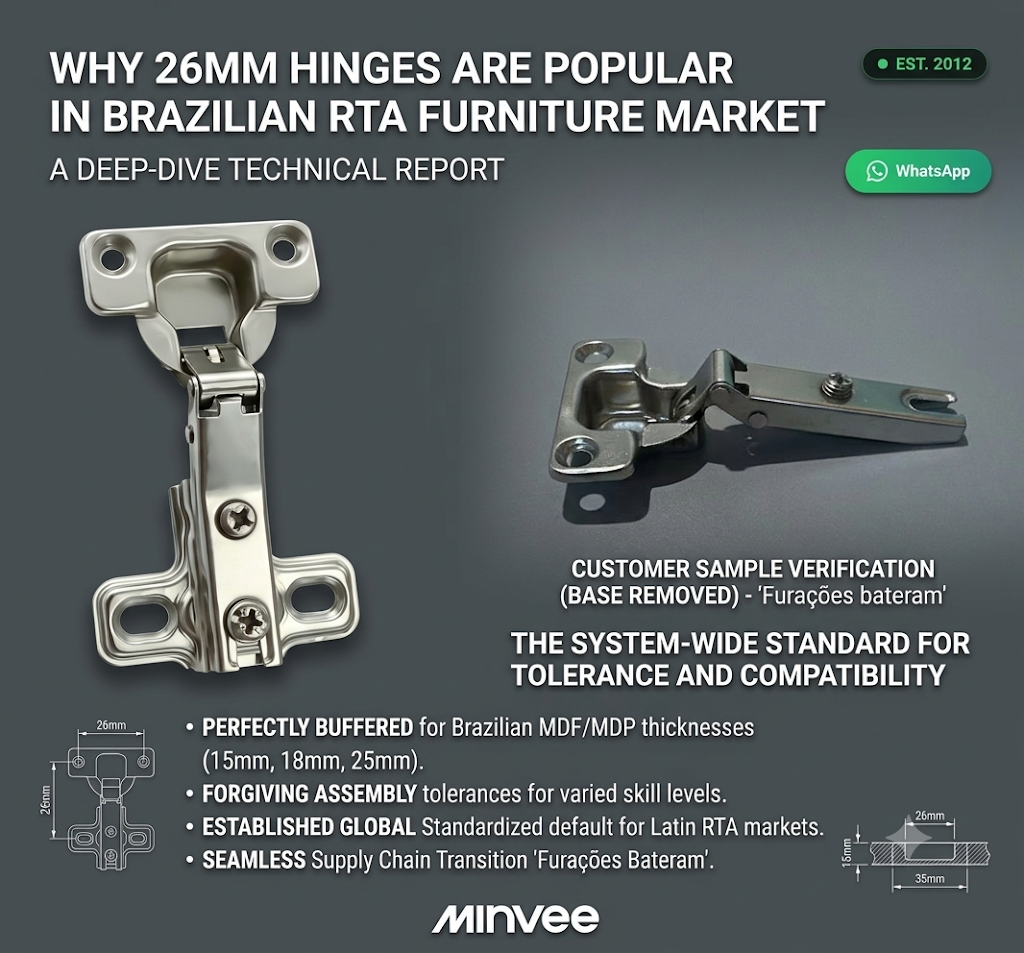
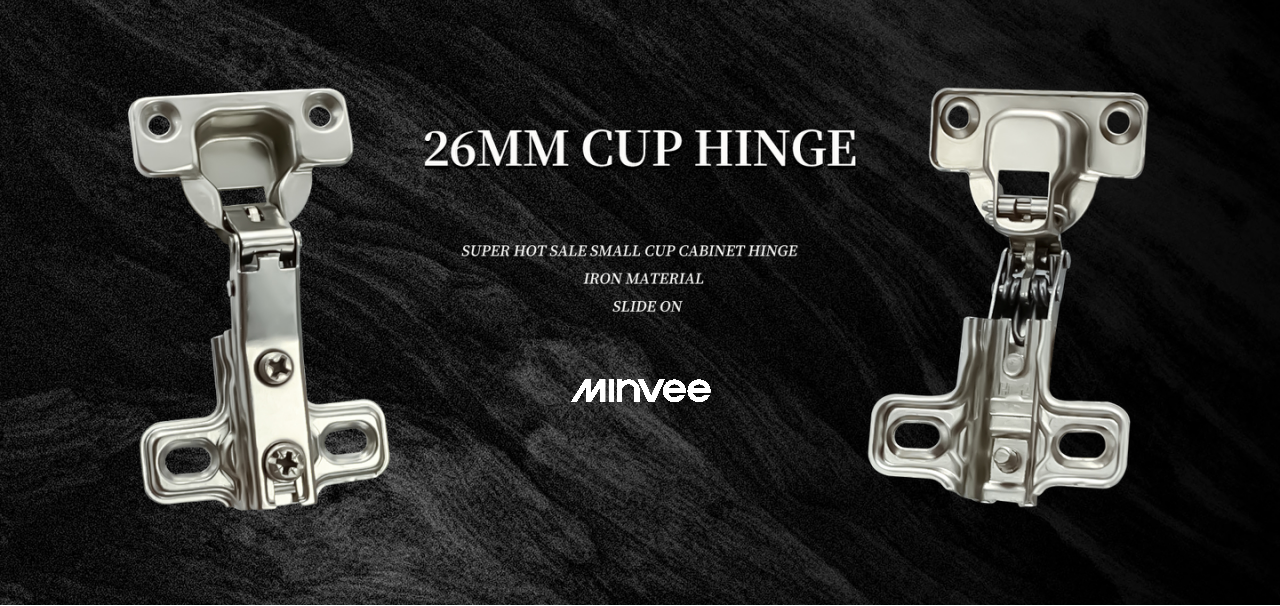
In the global furniture hardware sourcing landscape, the 35mm cup concealed hinge is widely regarded as the universal benchmark. However, international procurement managers and OEM factory buyers evaluating the Brazilian RTA (Ready-to-Assemble) furniture sector quickly notice a distinct, widespread market deviation: the overwhelming preference for 26mm cup mini hinges.
This regional dominance is far from a random design choice. It is a deeply entrenched, systemic market standard shaped by Brazil’s unique industrial board processing infrastructure, localized assembly habits, and long-standing supply chain locking mechanisms.
This technical report breaks down the four structural pillars explaining why the 26mm concealed hinge remains the most efficient, high-tolerance hardware specification for the Brazilian residential furniture market.
Quick Angle & Cup Selection Decision Tree
To optimize your factory’s production layout or inventory turnover, use this basic engineering decision flow:
Low Thickness Board (12–15mm) / Cost Optimization? → Specify 26mm Cup Mini Hinge
Standard Modular Kitchens & Wardrobes? → Specify 35mm Cup Hinge (110° Ergo Baseline)
Corner Transitions (L-Shaped Cabinets)? → Specify 135° Corner Transition Hinge
Internal Drawers or Pull-Out Cargo Baskets? → Specify 165° Wide-Angle Full-Access Hinge
Local Board System Geometries (MDF & MDP Thicknesses)
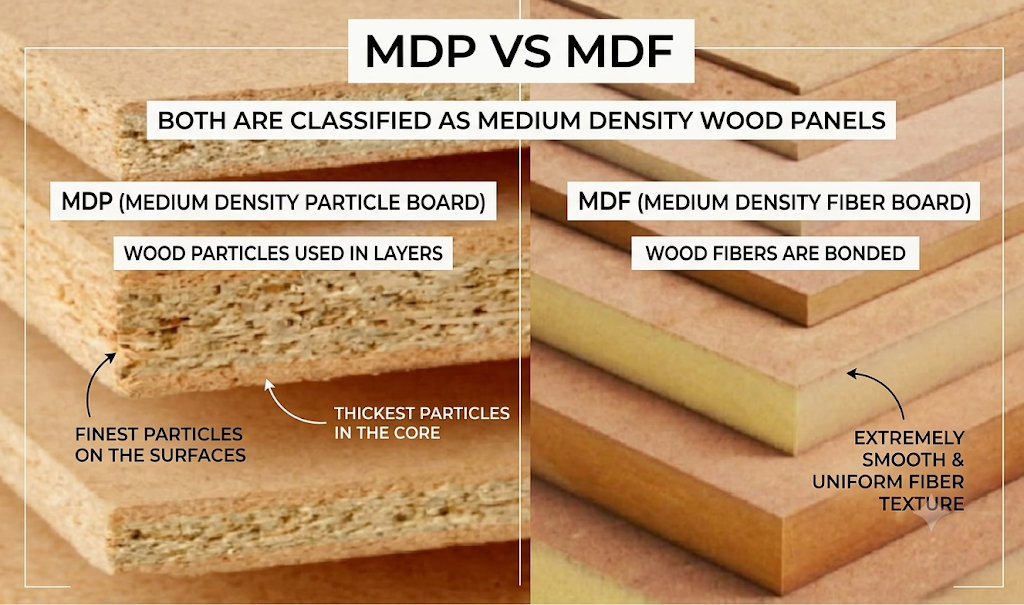
Selecting the correct furniture hardware always starts with an analysis of the wood panel substrates. The Brazilian mass-production furniture hubs rely heavily on two engineered wood materials: MDF (Medium Density Fiberboard) and, predominantly, MDP (Medium Density Particleboard).
Dominant Board Thicknesses: Production lines across Brazil are heavily calibrated around 15mm, 18mm, and 25mm panels.
The 26mm Cup Compatibility Sweet Spot: On 15mm panels—which are universally used for mass-market wardrobes, chest of drawers, and kitchen wall units—the margin for cup hole boring is incredibly tight. The 26mm mini hinge requires a significantly reduced boring diameter and depth compared to a 35mm hinge. It acts as a flawless “buffer specification,” providing excellent mechanical pull-out resistance without running the risk of blistering, dimpling, or breaking through the delicate outer melamine face during high-speed multi-boring or CNC machining operations.
High Tolerance and “Rough Assembly” Cultures
One of the highest risk factors for brands manufacturing RTA furniture (where end-consumers or local third-party contractors handle the final installation) is on-site assembly precision.
Variability in Installer Skill Levels: The field assembly network in South America involves diverse tools, environments, and varied technical skill sets.
High Tolerance to Bored Hole Variances: The mechanical architecture of a 26mm concealed hinge inherently provides exceptional clearance profiles and tolerance boundaries. Because it is structurally compact, it accommodates slight factory boring misalignments remarkably well.
The Practical Advantage: Put simply, the 26mm system is far less sensitive to minor millimeter offsets. It grants field installers a wider, more forgiving three-dimensional physical adjustment range, ensuring that cabinet doors line up perfectly even if the original workshop boring suffered minor structural deviations.
Supply Chain Lock-In & Hub Standardization
Just as China established the Type 86 electrical wall box standard and Europe unified around the 32mm system for 35mm cup hinges, the Brazilian RTA industry underwent a profound historical standardization within its importing supply chain.
Over the past decades, standardized 26mm import hardware configurations became the “default language” across Brazil’s primary furniture manufacturing clusters—such as Bento Gonçalves (RS), Arapongas (PR), and Ubá (MG).
For a large-scale Brazilian factory, altering automated drilling lines, updating multi-spindle boring setups, and overhauling component inventory parts to accommodate a 35mm replacement across the board presents prohibitive operational costs. The 26mm cup has evolved into a deeply integrated technical barrier that keeps local distributor supply loops running at peak velocity.
Seamless Supply Chain Replacement (“Furações Bateram”)
For hardware importers, wholesale distributors, and volume furniture brands trading in South America, success does not lie in trying to force new, experimental drilling layouts onto production lines. Instead, it relies entirely on ensuring absolute compatibility and seamless supply chain transitions.
Direct engineering feedback from major purchasing managers in Brazil confirms an essential operational fact: “Furações bateram” (the pre-drilled hole patterns matched perfectly). >
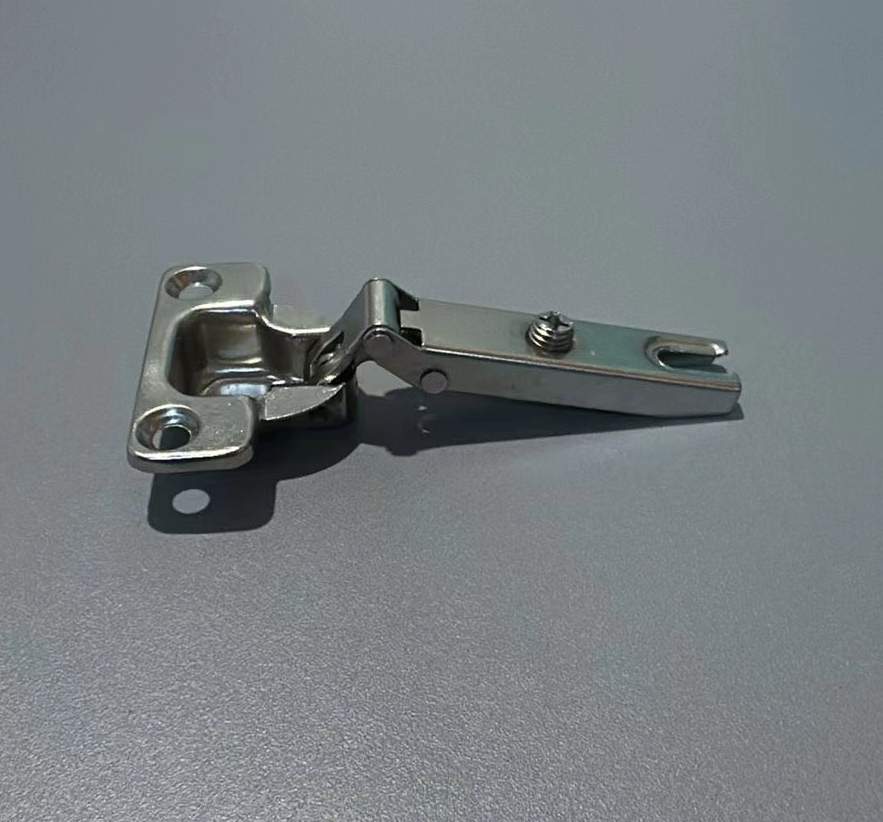
When our heavy-duty 26mm mini hinges are integrated into local RTA cabinet designs, the screw distances and cup setbacks match historical Brazilian patterns at a 100% precision rate. This structural alignment allows local brands to execute a smooth Supply Chain Replacement (Transition of Manufacturer) with zero production downtime, zero tooling re-adjustments, and absolute confidence in structural longevity.
B2B Technical FAQ for Volume Importers
Can we mix 26mm and 35mm cup hinges within the same cabinet line?
We do not recommend mixing them on the same cabinet door due to differences in pivoting mechanics and rotational centers. However, factories producing complete modular kitchens frequently mix them across different units: utilizing 35mm hinges on heavy base cabinets and deploying 26mm mini hinges on smaller bathroom vanities or overhead storage doors to optimize overall bill of materials (BOM) costs.
What is the verified lifecycle rating for a premium 26mm mini hinge?
Our industrial-grade 26mm concealed cabinet hinges undergo strict quality control protocols, consistently certified to pass 30,000-50,000 open-and-close cycles. This performance ensures over a decade of flawless residential operation under the high humidity parameters typical of South American coastal and tropical climates.
Do you supply physical samples for automated boring machine trials?
Yes. For volume B2B importers, OEM furniture producers, and established wholesale distributors needing to validate mechanical fitment directly on their assembly line floors, we provide comprehensive technical sample lots for engineering validation and testing.
Conclusion
The massive popularity of the 26mm cup hinge in the Brazilian RTA furniture market is a prime example of smart engineering focused on cost optimization, universal compatibility, and forgiving assembly tolerances. Recognizing these specific structural dynamics is what elevates a standard component vendor into a strategic B2B manufacturing partner.
Is your furniture factory looking to optimize hardware procurement costs, or are you looking for an OEM supplier with boring patterns that match your existing production lines perfectly?