
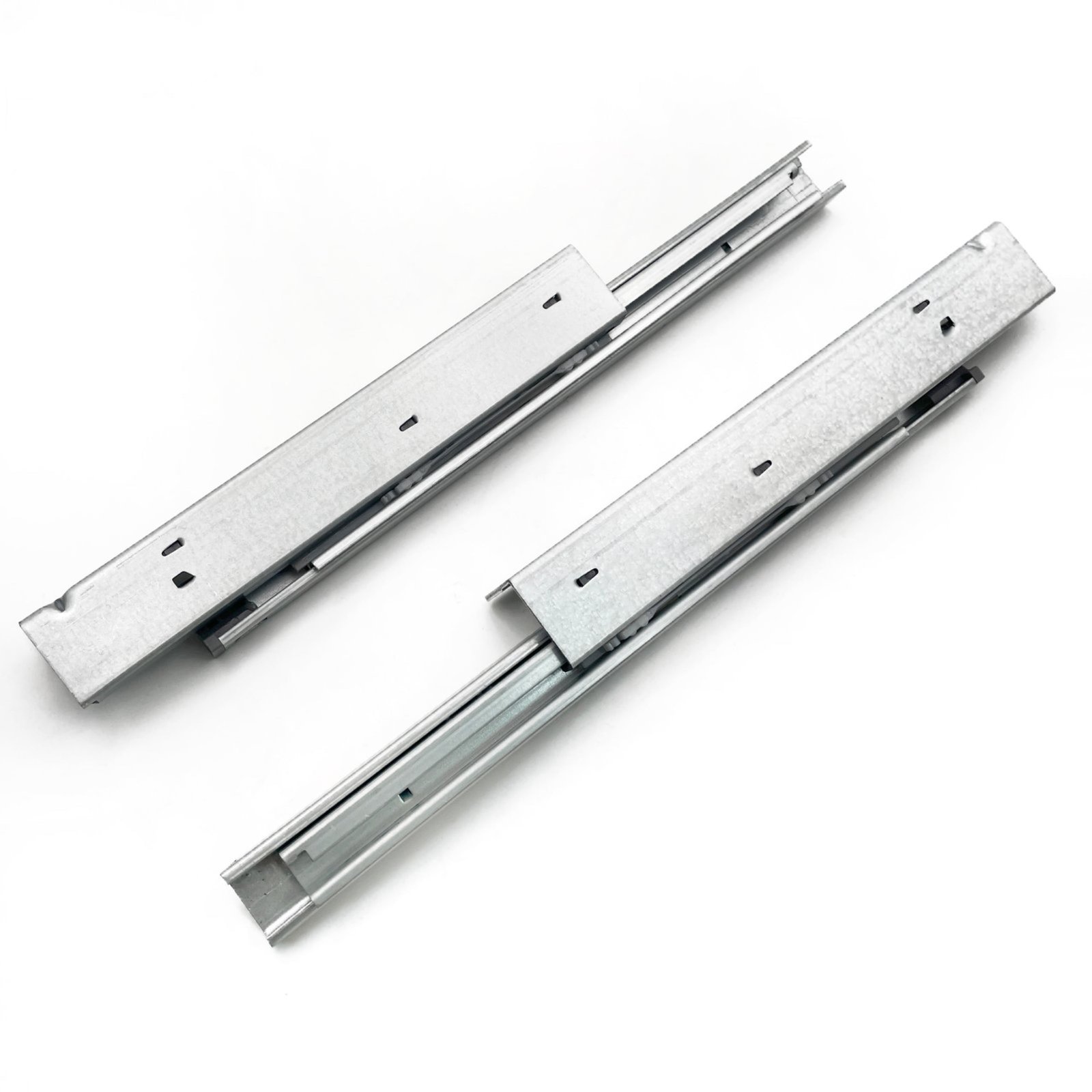
The comparison of undermount vs bottom mount drawer slides is not just about where the rail sits. In B2B furniture orders, it affects cabinet construction, visible finish, assembly speed, loaded movement, complaints after handover, and whether the same specification can be repeated without confusion. Undermount slides usually fit cleaner cabinet presentation and controlled movement. Bottom mount slides are often considered for simpler structures, replacement work, or cost-sensitive furniture lines. The wrong choice shows up later as uneven drawer gaps, sagging under load, rough pulling, or inconsistent closing across a batch.
Understanding Drawer Slide Options for Industrial Use
A showroom drawer tells only part of the story. It is empty, handled gently, and usually built by someone who knows exactly how the slide should sit. Bulk production is different. Workers install hardware repeatedly, drawer boxes vary slightly, and the end user may load the drawer far beyond what the sample ever saw.
For commercial furniture, start with a plain rule: look at the drawer first, then the load, then the factory line. The mount type comes after that.
Undermount drawer slides are installed below the drawer and are normally hidden from direct side view when the drawer is open. They are often used where the cabinet finish and drawer-side appearance matter, such as kitchen cabinets, wardrobes, office furniture, and project furniture.
“Bottom mount” needs more care. The name can vary by supplier and market. Some buyers use it for slides fixed at the lower drawer area. Others use it loosely for lower-position side or base-mounted slide structures. In this article, bottom mount means a slide solution positioned around the lower part of the drawer structure, usually selected for practical installation, basic function, replacement convenience, or cost control.
Do not buy from the name alone. Compare the installation position, rail structure, extension type, load tier, and cabinet fit.
| If a supplier says “bottom mount” | What the buyer needs clarified before quotation |
|---|---|
| Lower-position side slide | Where the rail fixes to the drawer and cabinet side |
| Base or under-base mounted structure | Whether the cabinet bottom, side panel, or drawer base carries the load |
| Replacement-style lower rail | Whether it matches the existing hole position and drawer clearance |
| Basic value-line slide | Load tier, extension type, material, and whether the model suits loaded use |
MINGYI (Furnihard)’s confirmed drawer slide range includes undermount options, plus categories such as 2-fold, 3-fold, soft-closing, push-open, heavy-duty, and related slide options. Material options may include high-strength cold-rolled steel and thickened steel depending on product tier and application. For heavier drawers, 35kg and 50kg load-test references can be discussed where they apply to the selected model.
The mistake is approving a smooth loose rail on a desk. A slide only proves itself inside the real cabinet, with weight in the drawer.
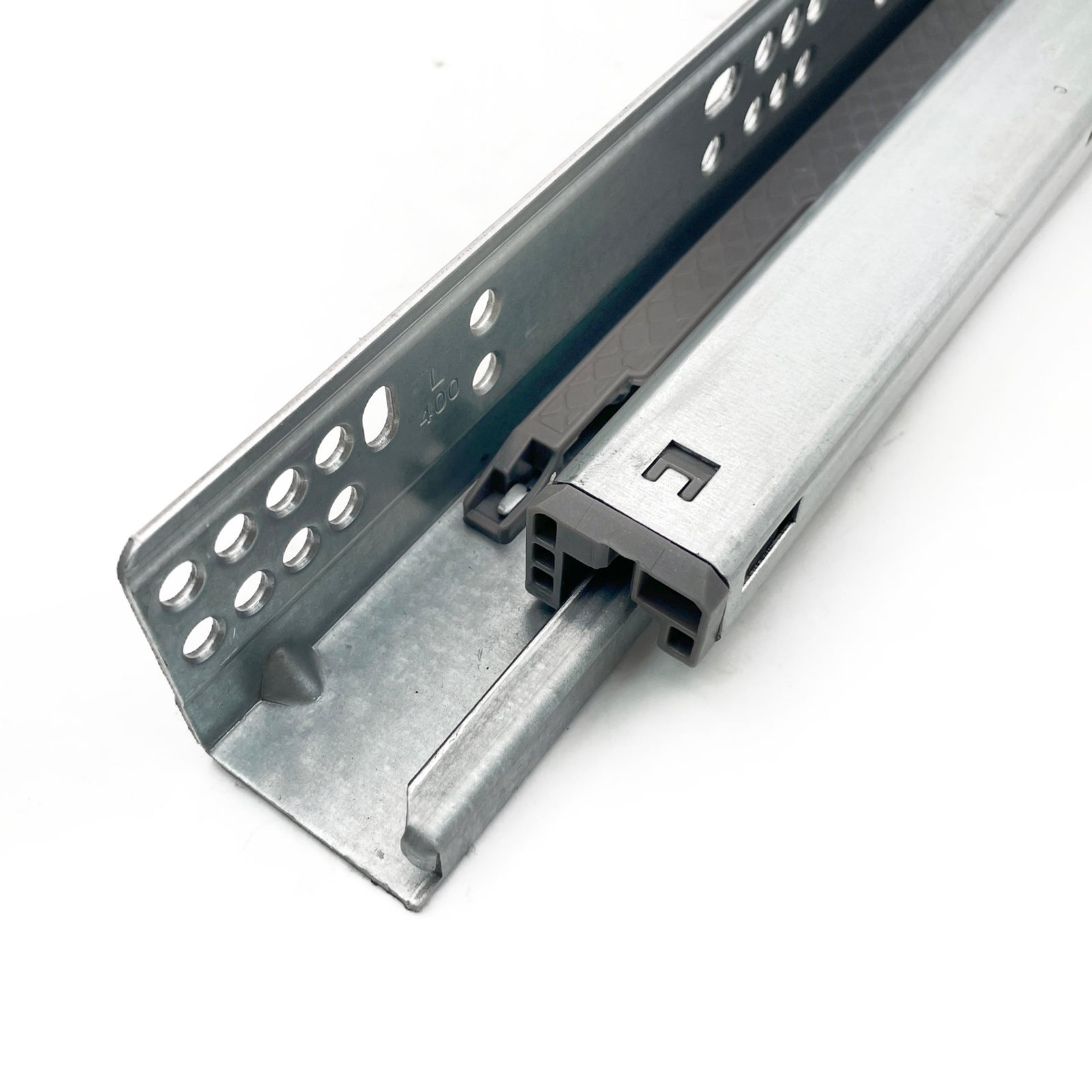
Comparison of Undermount and Bottom Mount Drawer Slides
Undermount and bottom mount slides solve different buyer problems. One leans toward concealed appearance and a more controlled cabinet feel. The other may suit simpler furniture construction or value-focused programs, provided the model is not under-specified.
| Buying factor | Undermount drawer slides | Bottom mount drawer slides | What usually goes wrong |
|---|---|---|---|
| Appearance | Hidden from the drawer side and cleaner in presentation | More function-led; visibility depends on structure | A visible slide can weaken the product look in premium cabinets |
| Cabinet precision | Usually needs tighter drawer and cabinet accuracy | May be more forgiving in basic structures | Poor tolerance creates uneven fronts and closing complaints |
| Installation | Better when the factory can control positioning | Often considered when assembly simplicity matters | Faster installation is not a saving if rework rises |
| Loaded movement | Can feel refined when matched to load and box design | Can work well for basic loads if structure is suitable | Empty testing hides sagging and side play |
| Cost logic | May require more preparation and better process control | Often attractive on unit price | Low price can move cost into after-sales service |
| Best-fit use | Kitchen, wardrobe, office, project furniture, higher-presentation lines | Utility drawers, simple cabinets, replacement programs, value lines | Category choice cannot replace load review |
Undermount slides can raise perceived value because the hardware does not interrupt the drawer side. For distributors and project buyers, this matters during handover or showroom inspection. A clean drawer interior feels more finished.
Bottom mount slides can be sensible when the buyer’s real priority is a working drawer at a controlled cost. But the lower-cost option has to survive the actual drawer size and contents. If it drops at the front after loaded cycling, nobody remembers the saving.
The tradeoff in one sentence
Use undermount when appearance, controlled movement, and cabinet presentation justify tighter production control. Use a bottom mount style only when the cabinet structure is simple enough, the load is realistic for the selected model, and the buyer accepts the visual and functional tradeoff.
Industrial Applications: Which Type Suits Your Needs?
“Industrial” does not always mean a 50kg drawer. In furniture sourcing, it often means repeated opening, batch consistency, many installers, and expensive complaints if the hardware fails after delivery.
Kitchen cabinet and wardrobe drawers
Undermount slides are usually stronger candidates for kitchens and wardrobes where the drawer side is visible and the product is judged by finish. Deep kitchen drawers are the danger point. Pots, tableware, or dry food storage can create more stress than expected.
The rejection sign is easy to see: after loaded cycling, the drawer front no longer sits even with neighboring fronts, or the soft-closing feel changes from drawer to drawer. That is not a cosmetic detail. It becomes a project complaint.
If the furniture factory has inconsistent drawer boxes, undermount hardware will expose it quickly. The slide may be blamed, but the root cause can be drawer construction or positioning.
Office cabinets and commercial storage
Office furniture sits in the middle. Some drawers carry light stationery. Others carry files, samples, tools, or shared supplies. A single slide choice across all drawer depths is risky.
Undermount slides can fit executive desks, reception cabinets, and higher-end office lines. A bottom mount style may suit basic storage where appearance is secondary. For long or deep drawers, watch front drop and side movement during pulling. Long drawers create leverage; they punish weak rail structure faster than short drawers.
Tool cabinets, industrial drawers, and heavy storage systems
Here the mount label matters less than the load tier and rail structure. Heavy drawers create sagging, rough movement, noise, and user complaints when the slide is too light for the job.
For heavier-use applications, the buyer can ask whether the proposed slide tier has relevant 35kg or 50kg load-test references. MINGYI drawer slide positioning includes 25kg, 35kg, and 50kg load tiers depending on product quality tier and application, but these are not universal values for every slide.
A practical review should include drawer depth, expected contents, extension requirement, loaded pull feel, left-right stability, and noise after repeated opening. Test several pieces, not one lucky sample. Soft-close inconsistency across a batch is a real warning sign for furniture factories.
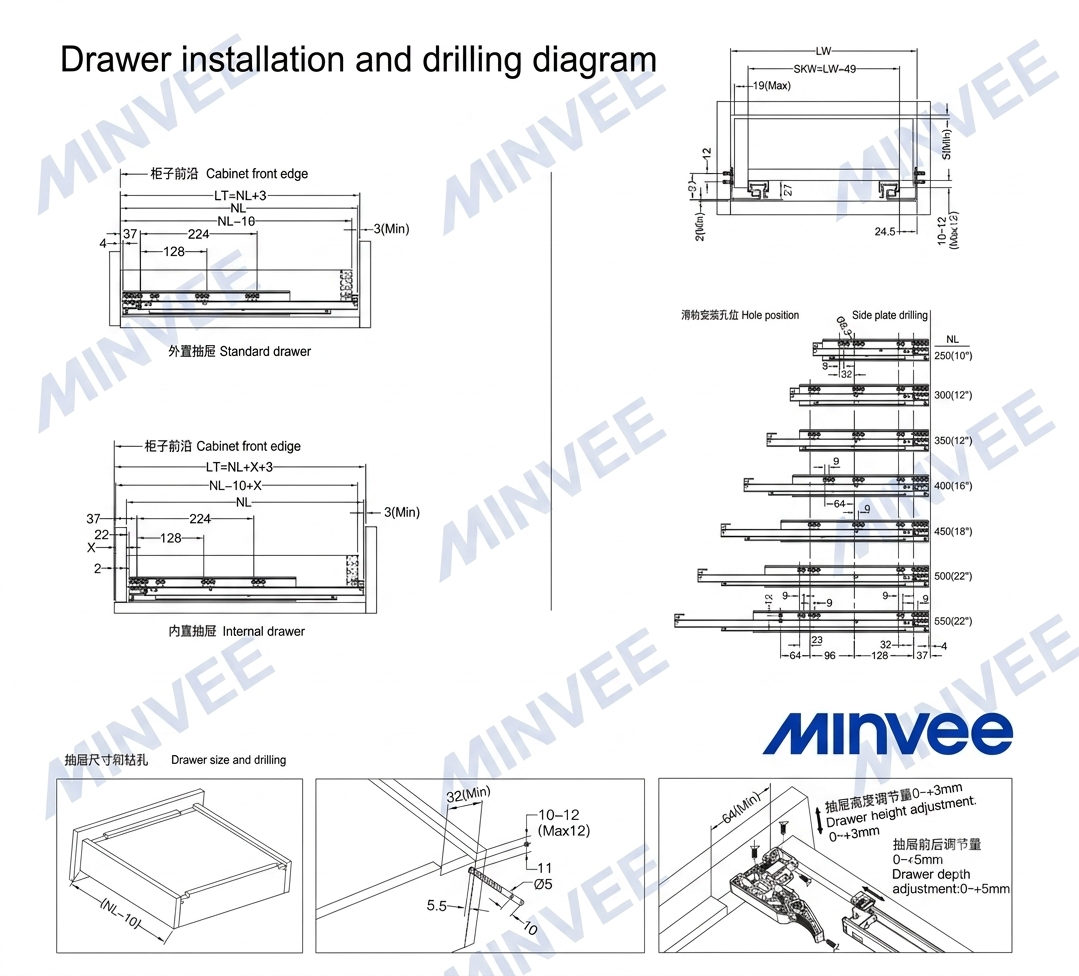
Evaluating Costs and Bulk Benefits for Each Slide Type
Unit price is the easiest number to compare. It is also the number that hides the most.
Undermount drawer slides may require more accurate drawer preparation and more disciplined assembly. If the factory already controls those details, the result can be stable and clean. If not, the same slide can slow the line and increase rework.
Bottom mount slides may look better on a cost sheet for high-volume or value furniture. That does not automatically make them cheaper in use. A drawer that sags after delivery can create technician visits, replacement parts, customer claims, and pressure on the next order price.
For bulk purchasing, compare these costs together:
- hardware price for the approved model, not only the slide category;
- drawer box preparation and assembly labor;
- rejection or adjustment rate during production;
- complaint risk after loaded use;
- packaging and labeling clarity for receiving and resale;
- repeat-order stability when the same specification is reordered.
Wholesalers often care about SKU clarity and packaging consistency. Furniture factories care about installation efficiency and stable repeat use. Project buyers care about handover risk and fewer coordination problems.
MINGYI can discuss broader cabinet-hardware sourcing, including drawer slides, hinges, tandem boxes, cabinet baskets, gas springs, cabinet connectors, furniture legs, and push openers. Coordinated sourcing can help reduce supplier count and keep product style or package presentation more consistent. It still needs product-level review; no supplier should be treated as automatically covering every item in a cabinet bill of materials.
Packaging belongs in the cost discussion too. Branded packaging, color boxes, labels, barcodes, carton printing, and carton presentation may be discussed depending on product and order requirements. For distributors and e-commerce sellers, unclear packaging creates receiving mistakes before the slide ever reaches a cabinet.
Ensuring Quality: What to Verify Before Purchasing
Approve the slide in the place where it will be judged: the finished drawer, under realistic load, with the intended function.
Catalog photos are not enough. A loose rail sample is not enough.
Load and structure
The drawer contents decide the load requirement. Kitchen pots, office files, tools, and industrial parts are not the same buying case.
For MINGYI drawer slides, load tiers may include 25kg, 35kg, and 50kg depending on product quality tier and application. For heavier applications, 35kg or 50kg load-test references may be relevant when tied to the proposed model.
High-strength cold-rolled steel is a relevant material option. Thickened steel may also apply depending on tier and use. But material wording alone does not carry the drawer. Rail structure, ball track, assembly quality, cabinet rigidity, and installation accuracy all decide the final result.
Movement in the finished cabinet
Low-noise and smooth movement should be reviewed in a realistic cabinet setup. Pay attention to loaded opening, closing control, side movement, drawer-front alignment, and noise inside the actual cabinet material.
If soft-closing or buffering is needed, put that function into the specification from the start. These features can support quieter and more controlled movement for suitable slide types, but they are not included in every drawer slide.
Strong rejection examples are simple:
- the front gap becomes uneven after loaded cycling;
- the drawer drops at the front when fully opened;
- pulling feels rough only after weight is added;
- soft-close speed or catching point varies noticeably across samples;
- left and right slides do not track evenly in the cabinet.
Those signals matter more than a nice catalog photo.
Lifecycle and load-test relevance
MINGYI references 60,000 continuous opening-and-closing lifecycle testing under load for drawer slides and hinges where applicable. That can support durability discussion, but it should be tied to the quoted slide, length, load tier, installation condition, and intended application.
If length, structure, finish, function, or expected load changes, the original assumption may no longer apply. Treat the approved sample, drawing, quotation, and bulk order as one connected specification.
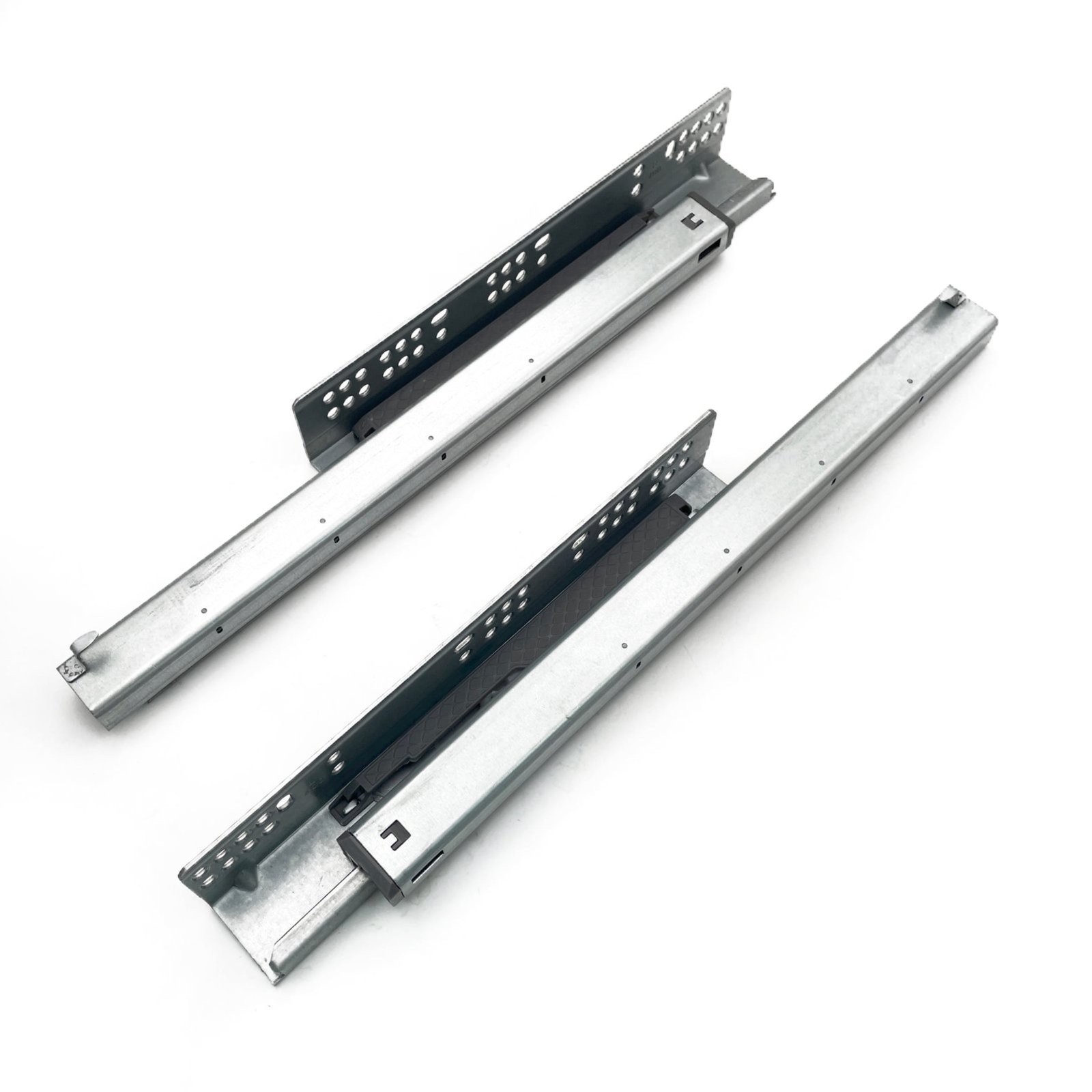
Supplier Comparison Points for B2B Buyers
A useful supplier comparison is not “who has undermount” or “who has bottom mount.” It is whether the quote describes the exact slide the factory will receive.
Ask for quote-line clarity on:
- slide length;
- mount type and installation position;
- load tier;
- extension type;
- function such as standard, soft-closing, buffering, push-open, full extension, or partial extension where relevant;
- material and rail structure description;
- packaging code, label requirement, carton mark, or brand packaging discussion;
- whether the sample, drawing, and bulk goods are tied to the same model.
This is where many buyers avoid trouble. Not by adding paperwork for its own sake, but by removing the small ambiguities that become mixed SKUs, wrong packaging, installation delays, or sample-to-bulk mismatch.
MINGYI can support discussions around drawer slides and broader cabinet hardware sourcing, including logo, packaging, hole position, thickness, surface treatment, and accessory-combination topics depending on product and order requirements. For bottom mount styles, buyers need to compare the required structure and application details with current product availability before treating the category name as a confirmed match.
FAQ
What are the benefits of undermount drawer slides in a commercial setting?
Undermount drawer slides help keep the drawer side visually clean, which can improve cabinet presentation in kitchens, wardrobes, office furniture, and project furniture. They are often selected when user feel and concealed hardware matter. The main buying risks are drawer box accuracy, installation consistency, load suitability, and whether the selected function matches the cabinet design.
How can I verify the durability of bottom mount slides for factory use?
Test the selected bottom mount style in the actual drawer and cabinet, under realistic load. Review the rail structure, material, load tier, extension type, and loaded movement. For heavier drawers, ask whether relevant 35kg or 50kg load-test references apply to the proposed model. Do not rely only on the “bottom mount” name, because naming can vary by supplier and market.
What cost benefits can bulk purchasing provide for drawer slides?
Bulk purchasing can support repeat supply planning, clearer packaging control, fewer SKU mix-ups, and more stable production when the specification is locked. The real cost benefit depends on product type, quantity, packaging, order requirements, and the approved slide model. Compare total cost, including assembly labor, rework risk, complaint handling, and packaging needs.
CTA
Compare Drawer Slide Specifications Before Bulk Purchasing
Send MINGYI your drawer drawing, target loaded weight, cabinet type, required movement function, quantity range, target tier, packaging needs, and any current slide problem such as sagging, noise, rough pulling, or uneven closing.
If you already have two or three supplier quotes, or one existing slide sample, include them for side-by-side specification comparison. MINGYI can help narrow the discussion to suitable drawer slide tiers, catalog options, packaging requirements, and bulk pricing based on the actual application before you commit to production.