
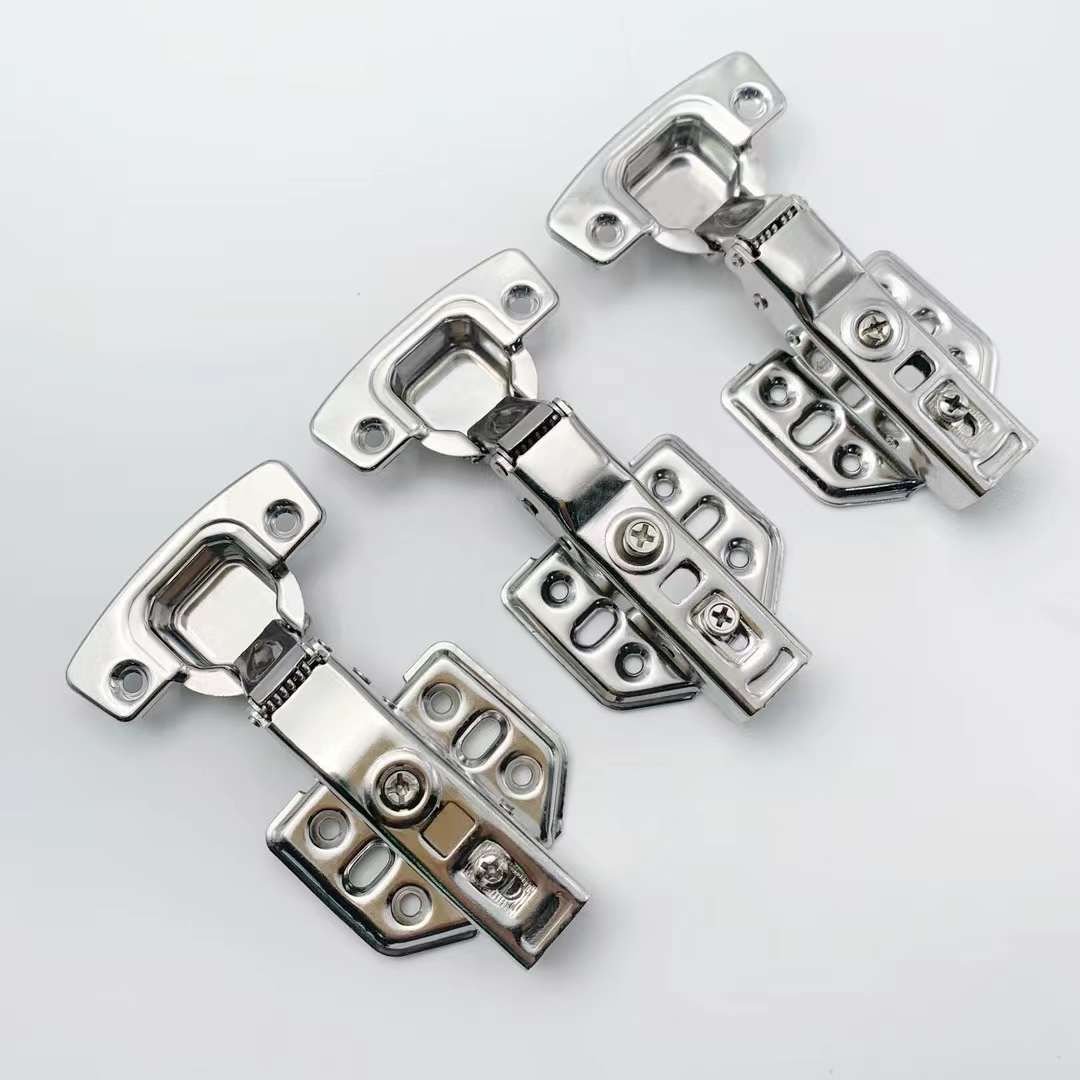
For a furniture factory, installing frameless cabinet hinges is not a small fitting job. It decides how clean the door reveal looks, how quickly workers can adjust doors, and how many complaints come back after delivery. A hinge may look fine on one showroom sample, then create rework on heavy wardrobe doors, humid-market bathroom cabinets, or full inset frameless cabinet hinges with tight visual gaps. The safer move is to settle the hinge type, material, function, and test reference before drilling patterns and bulk orders are locked.
Understanding Frameless Cabinet Hinges
Frameless cabinet construction gives the hinge less room to hide mistakes. There is no front face frame to cover a poor reveal or compensate for a hinge selected too casually. The hinge mounts to the cabinet side panel, carries the door, controls the swing, and gives the production team its adjustment range.
For B2B work, the question is not only whether a hinge can be installed on a frameless cabinet. The better question is whether that hinge stays predictable across the actual cabinet program: kitchen, wardrobe, bathroom, office furniture, project furniture, or custom furniture.
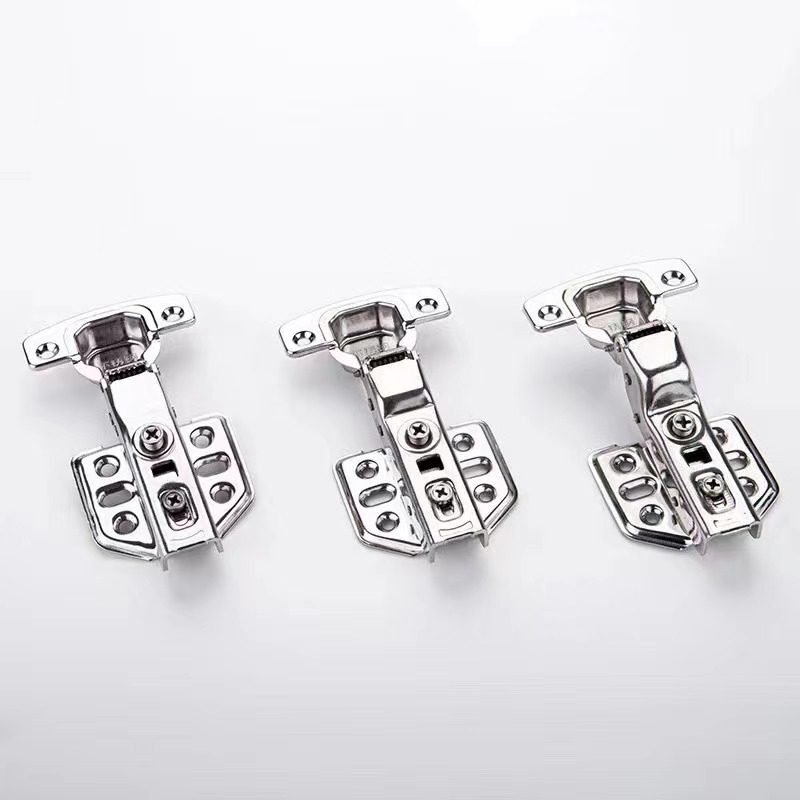
MINGYI (Furnihard) hinge options include common cabinet-hinge categories such as normal, two-way, soft-closing, clip-on, stainless steel, aluminium-framed, glass, 3D, and corner hinges. Model, finish, size, and application fit still need to be handled at product level. One hinge category does not cover every door style.
Scenario map for frameless hinge selection
| Cabinet scenario | Hinge priority | If the match is wrong | Sourcing note |
|---|---|---|---|
| Kitchen cabinet doors | Smooth movement, corrosion resistance, repeatable adjustment | Door bounce, uneven gaps, rust complaints in humid kitchens | Material, surface treatment, and cycle reference matter more than catalog appearance |
| Wardrobe doors | Load support and stable reveal control | Door sag, rubbing edges, repeated adjustment | Door size, door weight, and hinge quantity need to be handled as one set |
| Bathroom cabinets | Moisture resistance and finish suitability | Faster corrosion or noisy movement | Stainless steel or suitable surface treatment may be relevant by market and product tier |
| Office furniture | Fast installation and consistent operation | Assembly-line delays across many units | Keep hinge model, plate position, and package labels clear |
| Project furniture | Batch consistency and site reliability | SKU mixing, site complaints, delayed handover | Product code and inspection criteria must be clear before shipment |
| Custom furniture | Application-specific fit | A hinge that works on one cabinet style fails on another | Drawings, photos, or built samples reduce wrong selection risk |
A common purchasing mistake is approving a hinge because it works on one sample door, then spreading it across a wider door range. The sample passes. Production pays the price.
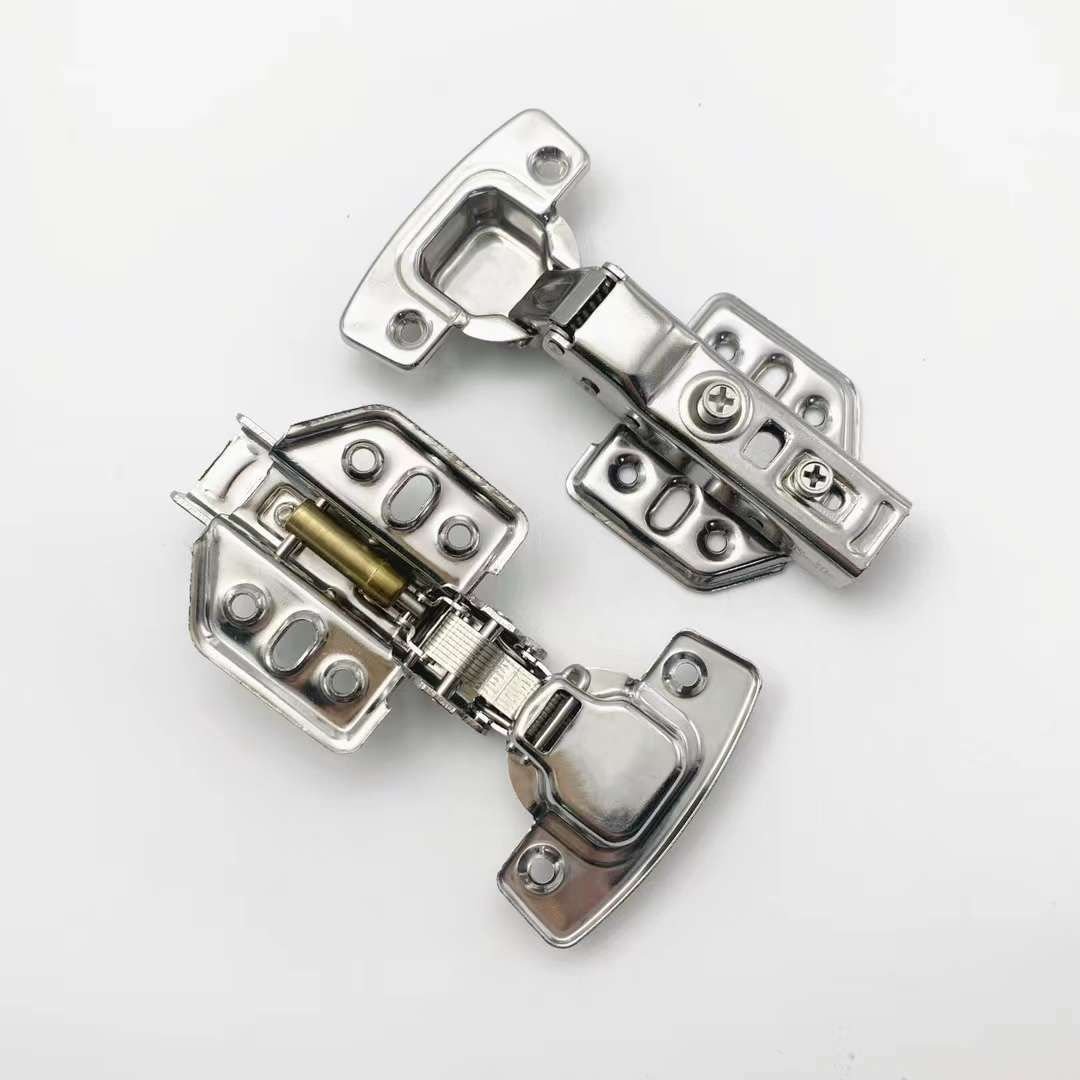
Step-by-Step Installation Guide for Frameless Hinges
This installation sequence is for factory and workshop use. Exact drilling positions must follow the selected hinge specification and cabinet drawing. Do not carry one drilling pattern across hinge models unless the engineering side has already proven it.
1. Lock the cabinet application before drilling
Before releasing a drilling template, settle the cabinet type, door material, door thickness, door height and width, expected door weight range, overlay or inset requirement, opening angle, soft-close need, and destination environment. Packaging and labeling also matter when similar hinge SKUs sit in the same warehouse or assembly area.
This prevents a familiar line problem: a standard hinge is used because it is available, while the door really needs a different adjustment range, movement function, or material tier.
2. Match hinge type to the door construction
Concealed cup hinges are commonly used for frameless cabinets because they hide the hardware and allow adjustment. Within that group, the choice changes quickly.
Soft-closing hinges support controlled closing where user feel matters. Clip-on hinges can help when doors need faster removal and reinstallation during assembly or site work. Stainless steel hinge options may be useful in higher-corrosion environments. 3D hinges can help where reveal control is difficult.
None of these features should be treated as decoration. If a feature does not solve a real door, market, or assembly problem, it can add cost without reducing risk.
3. Control drilling before batch production
Frameless installation is unforgiving because small drilling variation becomes visible at the reveal. A few bad panels can create a full day of argument between the cabinet line and the hardware buyer.
Use a fixed drilling jig or CNC program where applicable. Keep screw-hole positions consistent. Separate left-door and right-door setups if the program mixes configurations. Run a first-piece cabinet before batch drilling starts.
The hard rule is simple: freeze the hinge model before the panel is drilled. Changing hinge type after drilling may mean scrap, repair work, or a rushed substitution that creates a second problem.
4. Watch the rejection signs during installation
The hinge cup should seat cleanly. If workers have to press, twist, or force the cup into the bore, the hole position, bore quality, or hinge specification is suspect. Screws should bite firmly in the panel material. If screws spin too easily or need unusual tightening to hold the hinge flat, do not treat it as a normal assembly issue.
After the mounting plate is fixed, hang the door and look for the problems that slow real production: repeated reveal correction, doors needing unusual adjustment after hanging, rubbing at the door edge, weak soft-close action in the finished cabinet, or workers swapping plates just to make one cabinet pass.
One adjusted sample can hide trouble. Ten cabinets in a row usually tell the truth.
5. Test the installed hinge in a realistic cabinet
A loose hinge opened by hand is not production approval. Test the selected hinge in a finished cabinet or a realistic cabinet setup. For heavier doors, observe whether the door stays aligned after repeated movement and whether the screw area remains stable.
Product-level test references help here. MINGYI references 50,000-cycle opening-and-closing testing for hinge durability discussions. That reference should be tied to the selected model and application before it becomes an approval point.
Comparison: Frameless vs. Face Frame Hinges
Frameless and face frame cabinets are not just different styles. They change how the hinge is mounted, how visible the reveal is, and how much correction the installer has after the door is hung.
In a face frame cabinet, the frame can hide some construction variation. In a frameless cabinet, the side panel, drilling position, mounting plate, and hinge adjustment are exposed through the final door gap. Poor alignment is easier to see.
That is why frameless programs need tighter control over side-panel drilling and first-piece inspection. If a hinge model changes after drilling, the rework risk is higher than many buyers expect.
Full inset frameless cabinet hinges are the stricter test
Full inset frameless cabinet hinges deserve separate attention because the door sits inside the cabinet opening. There is almost no visual forgiveness. An overlay door may hide a slight mismatch. An inset door shows it immediately.
Typical trouble signs are uneven side gaps, a door face sitting proud or too deep, rubbing at one edge, or a soft-close hinge pulling the door into a visibly wrong position. These faults are not always caused by a bad hinge. Often they come from a poor combination of hinge selection, cup position, plate position, panel accuracy, and door weight.
For an inset program, approve a complete cabinet sample with the final door material and actual cabinet construction before bulk hinge purchasing and drilling setup. If one furniture series includes several cabinet sizes, prove the hinge on more than the easiest size. The narrowest or heaviest door often exposes the problem first.

Measuring Techniques for Precision Installation
Measurement should not live only in the engineering drawing. It needs to become a production habit.
The critical points are door thickness, door height and width, overlay or inset position, cup drilling location, mounting plate position, opening clearance, and surface-treatment requirement for the destination market. If these points are vague, the factory may blame the hinge, the supplier may blame installation, and the buyer still has to handle the complaint.
A practical first-piece routine looks like this:
- Use the final hinge model and product code.
- Drill one cabinet according to the approved drawing.
- Install the door with normal worker handling, not special engineering attention.
- Adjust the door and record whether unusual correction was needed.
- Inspect reveal, swing clearance, screw holding, and closing feel.
- Release batch drilling only when the cabinet passes under normal production conditions.
This routine is not sophisticated. It is just cheaper than discovering the issue after hundreds of panels are drilled.
Optimizing Hinge Choice for Heavy-Duty Applications
Heavy-duty should mean real cabinet conditions, not a sales adjective. Door weight, door size, use frequency, user behavior, and installation environment all affect hinge selection.
A tall wardrobe door has different hinge risk from a small bathroom door. A project cabinet in a high-use apartment or office may receive rougher daily use than a showroom sample. A humid coastal market changes the material conversation again.
For heavier or higher-use doors, approval should include an installed door sample, movement after adjustment, screw holding in the chosen panel material, hinge quantity per door, surface treatment for the destination environment, and relevant test references. If every door on the line needs special handling to sit correctly, the hinge is not production-friendly even if the unit price looks attractive.
MINGYI hinge material options include cold-rolled steel, SUS201 stainless steel, and SUS304 stainless steel depending on product type and application. Stainless steel is not automatically required for every cabinet, and SUS304 should not be assumed for all hinges. The material choice has to match corrosion risk, cabinet use, and target price tier.
For load discussions, MINGYI references 15kg hinge load testing for suitable hinge applications, subject to the exact model being quoted. Treat that as a product-verification point, not a blanket rating across all hinge SKUs.
Production Patterns That Often Get Mistaken for Hinge Problems
Pattern 1: The hinge passes the sample but slows the line
This is common in cabinet production. The sample door looks acceptable. Then the line starts, and workers spend too long correcting each door.
The hinge may not be defective. The mismatch may sit between hinge type, drilling accuracy, mounting plate position, and cabinet construction. The buyer sees uneven reveals, final-inspection rework, and confusion when similar hinge SKUs are mixed.
The fix is not simply buying a more expensive hinge. The hinge, drilling process, and inspection standard need to work as one installation system. Automated hinge assembly can support more consistent production when matched with QC checks, but buyer-side control still depends on clear model selection and sample approval.
Pattern 2: Humid-market cabinets create rust complaints
In humid or coastal markets, corrosion risk can appear faster when material, surface treatment, and salt-spray performance are not matched to the environment. Once the cabinet is installed, rust is difficult for a distributor or project buyer to explain away.
MINGYI references 48-hour salt spray testing as a baseline discussion point for hinge corrosion where applicable. The selected material, finish, and product model still need to be reviewed together. Nickel plating is listed as a hinge surface-treatment option, but the exact finish requirement belongs in the product discussion, not after cartons are packed.
Pattern 3: Inset doors expose small mistakes
Full inset frameless doors punish loose approval. Uneven margins, rubbing edges, and doors that do not sit flush often come from a chain of small decisions: hinge model, cup drilling, plate position, cabinet tolerance, and door weight.
For this application, catalog images are weak evidence. A built sample tells more. If the sample needs unusual adjustment to pass, mass production will probably need even more.
Maximizing Durability: Materials and Testing Insights
Durability is not only the hinge material. It is material, surface treatment, hinge structure, testing relevance, production consistency, and installation quality working together.
| Durability factor | MINGYI-related reference for discussion | Practical interpretation |
|---|---|---|
| Hinge materials | Cold-rolled steel, SUS201 stainless steel, and SUS304 stainless steel options depending on product type and application | Match material to environment and price tier; do not assume one material across all hinges |
| Surface treatment | Nickel plating is listed as a hinge surface-treatment option | Finish details should be tied to the selected model for corrosion-sensitive orders |
| Lifecycle testing | 50,000-cycle opening-and-closing testing is referenced for hinge products | Useful when connected to the exact model and use condition |
| Load testing | 15kg hinge load testing is referenced for suitable hinge applications | A verification point, not a blanket rating |
| Salt spray testing | 48-hour salt spray testing is referenced where applicable | Relevant for corrosion review, but not proof for every finish or SKU |
| Production consistency | Automated hinge assembly can support more consistent hinge production when paired with QC checks | Good for repeat orders, while final approval still needs installed-sample review |
Before a repeat order or project order, the buyer needs clean answers on hinge type, material, finish, intended cabinet use, drilling pattern, packaging label, and any logo or packaging requirements. MINGYI can discuss customization around logo, packaging, hole position, thickness, surface treatment, and accessory combinations depending on product and order requirements.
Use-Case Checklist Before Drilling Starts
Use this as a plain production screen before the drilling jig, CNC file, or purchasing order is fixed.
- Kitchen cabinets: approve closing feel, reveal control, surface treatment, and SKU labeling before the line mixes similar hinges.
- Wardrobes: review door size, estimated door weight range, hinge quantity, screw holding, and whether the door keeps alignment after repeated movement.
- Bathroom cabinets: settle material and surface-treatment direction early, especially for humid markets. Do not leave corrosion review until packing.
- Office and project furniture: keep product codes, mounting plates, labels, and inspection criteria clear. A small SKU mix-up can become a site complaint.
- Full inset frameless cabinets: build the real cabinet sample, not only a door board. Look at side gaps, depth position, rubbing, and the amount of worker adjustment needed.
The buyer rule is simple: fit, drill, hang, stress, then buy in volume.
Fit the hinge to the cabinet application. Drill one cabinet with the final pattern. Hang the door under normal production handling. Stress the sample through realistic opening, closing, alignment, and screw-holding review. Then place the bulk order with the product code, packaging, labeling, and customization details fixed.
A hinge is a small component, but every user touches it. When it is wrong, the complaint feels much larger than the part cost.
FAQ
What types of hinges are best for frameless cabinets in heavy-duty furniture?
For heavy-duty frameless furniture, concealed hinges with stable adjustment, suitable load support, and the correct material tier are usually the starting point. Soft-closing, clip-on, stainless steel, or 3D hinge options may be relevant depending on door weight, use frequency, installation method, and market environment. MINGYI offers several common hinge categories, but the exact model should be matched to the cabinet application.
How can the longevity and efficiency of hinges in factory settings be ensured?
Longevity and efficiency come from matching the hinge to the cabinet, controlling drilling accuracy, and approving the hinge in an installed cabinet sample. Relevant test references may include 50,000-cycle opening-and-closing testing, 15kg load testing for suitable hinge applications, and 48-hour salt spray testing where applicable. These references should be tied to the selected model, not treated as universal claims.
Are there options for hinge customization based on industrial needs?
Yes. MINGYI can discuss customization around logo, packaging, hole position, thickness, surface treatment, and accessory combinations depending on the product and order requirements. Packaging discussions may include branded packaging, labels, color boxes, and carton presentation where suitable. Feasibility should be reviewed before production planning.
CTA
Match a Hinge to Your Cabinet Program
Send MINGYI your door drawing or photo, door size, estimated loaded weight range, cabinet type, overlay or inset requirement, hinge position, destination market, expected quantity, and target product tier. Add any packaging, label, logo, or carton-presentation needs if they matter for your channel.
With those details, MINGYI can help narrow the hinge type, material direction, and relevant test-reference needs before sample drilling and bulk ordering. Use the contact page to request a hinge catalog shortlist or discuss concealed hinge options for cabinet production.