
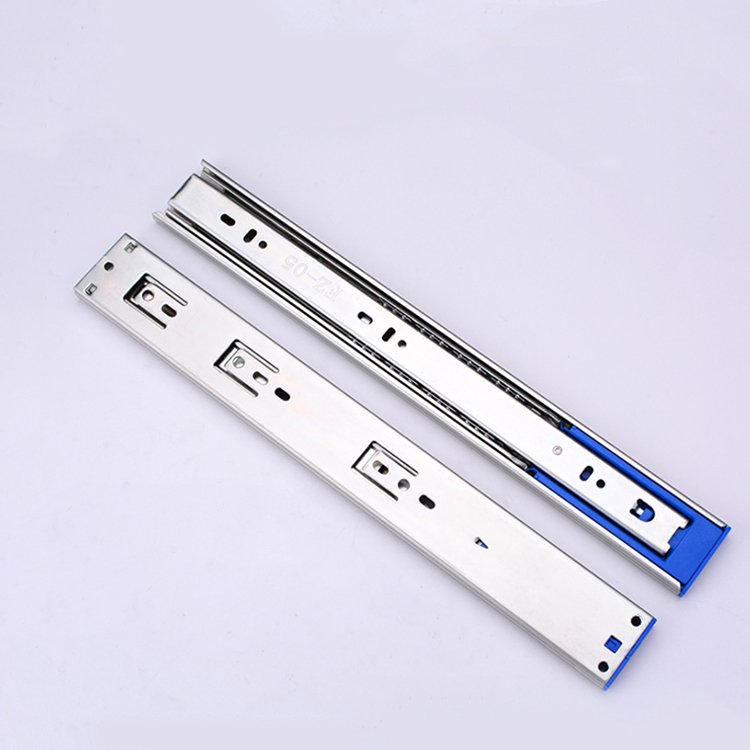
For an industrial drawer, the first complaint rarely sounds technical. The front drops. The pull turns rough after loading. The soft close hits too hard at the end. Or the finished cabinet simply feels cheap during project handover. Heavy duty soft close drawer slides need to be selected by application, real loaded weight, rail structure, buffering behavior, and repeat-order control—not by a loose sample that glides nicely on a desk.
Start With the Drawer Scenario, Not the Slide Name
A heavy drawer is not automatically an industrial drawer. A kitchen pot drawer, a workshop tool drawer, an office filing drawer, and a storage system drawer may all need stronger slides, but the failure pattern is different.
The better opening question is plain: what will this drawer suffer after installation? Static load, pull frequency, drawer depth, cabinet material, user handling, side clearance, and screw bite all change the result. An empty drawer can hide problems that appear after one week of loaded use.
MINGYI (Furnihard)’s drawer slide range includes 2-fold, 3-fold, soft-closing, push-open, heavy-duty, and undermount options. For industrial and heavy-use purchasing, the usual focus is a suitable heavy-duty slide tier with soft-closing function where the application needs controlled closing. Not every drawer slide includes soft close. Not every heavy-duty slide belongs in every cabinet.
Scenario map for heavy-duty soft close slide selection
| Drawer scenario | What usually goes wrong | Slide focus | Before bulk approval |
|---|---|---|---|
| Tool cabinet or workshop drawer | Front dip, rough pull, user pulls harder over time | Higher load tier, stable rail structure, controlled full travel | Run the drawer loaded, not empty |
| Industrial storage drawer | Repeat-use wear and complaint risk | Durable tier, load support, cycle-test reference where applicable | Review the intended load and use frequency together |
| Office cabinet or file drawer | Noise complaints and poor daily feel | Smooth movement, suitable buffering, consistent installation | Test inside the actual cabinet body |
| Kitchen or utility cabinet drawer | Visible quality problem during daily use | Soft close, smooth pull, side-clearance tolerance | Use realistic contents during sample review |
| Heavy storage system | Weight plus wide/deep drawer geometry | Heavy-duty structure and cabinet-side support | Treat cabinet construction as part of the slide decision |
This scenario-first route prevents a common sourcing mistake: approving a slide because it feels smooth in hand, then finding out the installed drawer behaves differently under real weight.
Understanding Load Capacities and Durability in Drawer Slides
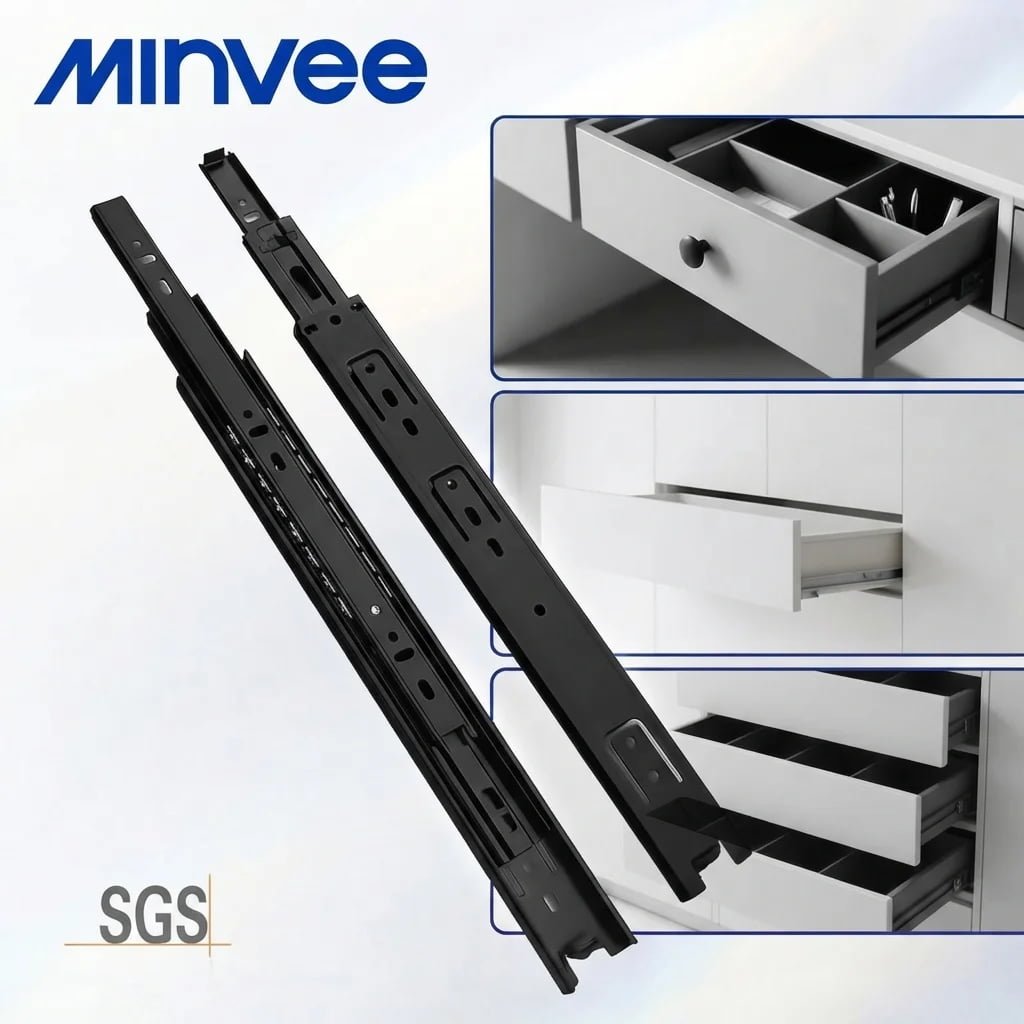
Load capacity is a product-matching figure, not a slogan. MINGYI positions drawer slides across 25kg, 35kg, and 50kg load tiers, depending on product quality tier and application. For heavier drawer applications, the purchasing file can request whether the selected slide tier has applicable 35kg or 50kg load-test references.
The boundary matters. Do not treat 50kg as universal across all SKUs. The exact model, slide length, drawer width, cabinet construction, fixing method, and installation accuracy all affect the final result.
For durability discussions, MINGYI references 60,000-cycle opening-and-closing lifecycle testing under load for drawer slides where applicable. That kind of test reference gives B2B buyers a more useful comparison point than vague words such as strong, quiet, or long-lasting.
A practical way to think about load tiering:
- 25kg tier: often relevant for lighter furniture drawers and standard cabinet use. Over-specifying every drawer into a higher tier can inflate cost and complicate inventory without solving a real problem.
- 35kg tier: often fits medium-to-heavy furniture drawers, utility drawers, and office cabinet uses where load and daily frequency are both meaningful.
- 50kg tier: reserved for more demanding storage, tool cabinet, or heavy project applications when the exact model and cabinet structure support that use.
Loaded testing belongs in a representative drawer box. Wide drawers, weak side panels, poor screw holding, or inaccurate clearance can defeat a stronger slide. The slide is only one part of the system.
For repeat purchasing, record the exact approved slide model, length, load tier, hole-position requirement, packaging, and application. Many later complaints come from a second purchase order using a similar-looking slide that is not the approved one.
Key Benefits of Soft Close Mechanisms
Soft close is not just a comfort feature. In B2B furniture and cabinet projects, controlled closing can reduce slamming, improve user feel, and make the finished product feel more stable during inspection.
For suitable slide types, MINGYI’s drawer slide knowledge base describes soft-closing and silent buffering features that support quieter and more controlled drawer movement. Precision steel ball structures can also support smoother pushing and pulling when matched with the rail structure, load tier, and assembly quality.
That last phrase is where poor purchasing decisions get exposed. Ball structure alone does not guarantee long-term quiet movement. Soft close also does not guarantee silence in every cabinet environment. Cabinet material, side clearance, drawer weight distribution, and on-site installation all influence the final sound and feel.
Where soft close earns its cost:
- Project furniture: better handover impression and fewer obvious slamming complaints.
- Office cabinets: less disturbance in shared work areas.
- Kitchen and utility drawers: smoother daily use when drawers carry heavier contents.
- Distributor product lines: clearer separation between economy and upgraded hardware series.
- Furniture factories: fewer user-feel complaints when the same specification is installed consistently.
Heavy-duty soft close needs special attention because the buffer must control weight, not just movement. An empty drawer may close beautifully. Add tools, files, or storage items, and the final 50 millimeters of movement can tell a different story.
A simple shop-floor rule works well: test the drawer empty, test it loaded, then operate it repeatedly. If the loaded drawer closes too fast, bumps at the end, hesitates halfway, or sounds different from one cycle to the next, the sample is not ready for bulk approval.

Industrial Applications of Heavy Duty Drawer Slides
MINGYI drawer slide applications include kitchen cabinet drawers, wardrobe drawers, office cabinets, tool cabinets, industrial drawers, and heavy storage systems. These applications share one requirement: the slide must fit the real cabinet, not just the catalog category.
Application fit table for B2B buyers
| Application | Drawer behavior to expect | More suitable slide focus | Costly mistake |
|---|---|---|---|
| Tool cabinets | Concentrated load, frequent opening, rougher handling | Heavy-duty tier, loaded movement stability | Buying by empty smoothness only |
| Industrial drawers | Repeated operation under load | Load tier plus lifecycle reference where applicable | Waiting for complaints before asking about durability |
| Heavy storage systems | Weight combined with wide or deep drawer design | Stronger rail structure and cabinet-side support | Reading load rating apart from drawer geometry |
| Office cabinets | Daily use, moderate load, noise sensitivity | Smooth movement and low-noise performance | Selecting only by price and losing user feel |
| Kitchen utility drawers | Mixed contents and visible quality expectation | Soft close, smooth pull, controlled close | Testing without realistic contents |
The buyer’s job is not to buy the strongest slide every time. It is to protect the application without adding unnecessary cost, SKU complexity, or after-sales exposure.
For distributors and project buyers, one slide is often proposed across several drawer types to simplify purchasing. Sometimes that works. Sometimes it creates the exact complaint the buyer was trying to avoid. A medium office cabinet and a deep tool drawer may look close on a spreadsheet; loaded use separates them quickly.
Group drawers by load, width/depth, and opening frequency before reducing SKU count. Cabinet category alone is too rough.
Comparing Material Strength: Cold-Rolled vs. Thickened Steel
Material discussion should stay practical. MINGYI drawer slide material options include high-strength cold-rolled steel and thickened steel, depending on product tier and application. That does not mean every drawer slide uses thickened steel. It also does not mean a material phrase alone proves performance.
Cold-rolled steel can support stable forming and consistent slide structure when manufacturing and assembly are controlled. Thickened steel may be worth the added cost where drawer weight, width, or user handling creates higher deformation risk.
Where thickened steel is usually easier to justify:
- heavy storage drawers with real loaded weight;
- tool cabinets with concentrated contents;
- deeper drawers where leverage increases front sagging risk;
- project applications where replacement after installation would be expensive;
- product lines where the heavy-duty tier must be clearly separated from economy slides.
Where it may create unnecessary complexity:
- light drawers sold under a standard cabinet line;
- mixed-SKU orders where warehouse staff may confuse similar-looking tiers;
- price-sensitive distributor ranges where the end use does not require added rigidity;
- projects where cabinet structure is weak and needs redesign more than a heavier slide.
Material and structure comparison
| Factor | High-strength cold-rolled steel | Thickened steel option | Practical buyer reading |
|---|---|---|---|
| Typical role | Standard-to-strong structure depending on slide tier | Added rigidity for more demanding applications | Match material to load and drawer geometry |
| Main value | Consistent formed components when process control is good | Better resistance to deformation in suitable designs | Worth paying for when load risk is real |
| Main risk | Assuming all cold-rolled steel slides perform the same | Assuming thickened steel is available or needed on every model | Keep model-level specification clear |
| Best review method | Loaded movement, load tier, cycle reference where applicable | Loaded movement plus structural fit | Judge in a finished cabinet sample |
For mixed cabinet projects, two or three approved slide tiers often work better than one forced specification. It keeps purchasing manageable while giving sales and installation teams a clear answer for light, medium, and heavy-use drawers.
Real-World Use Cases: Ensuring Performance in High-Demand Environments
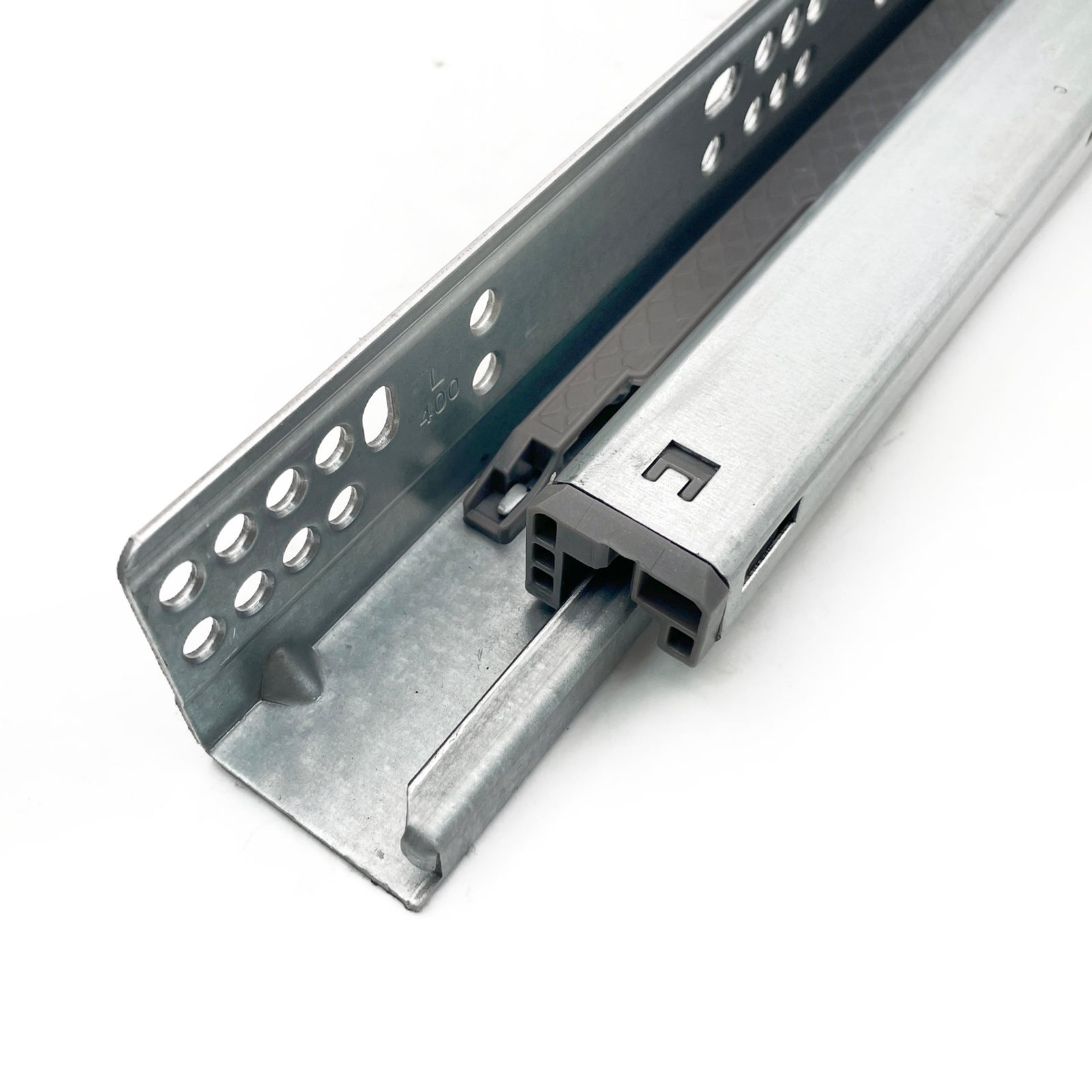
A common heavy-use complaint is drawer sagging that appears only after loaded use. The slide may look acceptable during first installation. Later, the front edge dips, movement becomes uneven, or users pull harder because the drawer no longer tracks smoothly.
That failure is expensive because it rarely stays inside the hardware department. It becomes production rework for furniture factories, a project handover problem for contractors, or a return issue for distributors.
Heavy-use slide approval needs to cover load tier, rail structure, and loaded movement review. If sagging risk is already known from a previous product line, treat it as a specification problem before price negotiation, not as an after-sales topic.
Loaded sample rejection points
Reject or rework the sample plan if the representative drawer shows any of these problems:
- Visible front dip: the drawer face drops under realistic load, especially when extended.
- Uneven travel: the pull feels smooth in one section and tight or rough in another.
- Uncontrolled soft close under load: the drawer closes too fast, bumps, or fails to pull in consistently.
- Abnormal noise: clicking, scraping, or uneven ball-track sound appears during repeated operation.
- Screw loosening or poor bite: fixing points move after loaded cycling or short repeated use.
- Side clearance sensitivity: small assembly variation creates binding or soft-close failure.
This is a hard-nosed test, but it saves money. Approving a weak sample because the shipment date is close usually pushes the cost downstream—to installers, customer service, or the next purchase order.
Use-case checklist before approving heavy duty soft close drawer slides
- Expected real loaded weight, not only empty drawer weight.
- Drawer width, depth, and height.
- Opening frequency: occasional, daily, or high-repeat use.
- Required load tier: 25kg, 35kg, or 50kg, depending on the exact SKU.
- Soft-close requirement: all drawers or selected upgraded drawers only.
- Movement across full travel under realistic load.
- Noise level inside the finished cabinet body.
- Hole position and screw holding strength for the cabinet material.
- Packaging and labeling method for repeat-order identification.
- Applicable lifecycle or load-test reference for the selected model.
Furniture factories usually care most about rework and line stability. Wholesalers and distributors care about something different: SKU confusion. If sales staff cannot clearly separate light, medium, and heavy-use slides, customers will put the wrong slide in the wrong drawer. Clear tiering protects the channel.
Insights into Choosing Reliable Slide Systems for Bulk Purchases
Bulk purchasing changes the standard. A sample must prove more than movement. It must be easy to specify, repeat, pack, label, and explain across many orders.
For heavy duty soft close drawer slides, the purchasing file should include:
- approved product category and exact model reference;
- slide length and mounting style requirement;
- applicable load tier, such as 25kg, 35kg, or 50kg, depending on SKU;
- whether soft-closing and buffering features are included;
- material option, such as high-strength cold-rolled steel or thickened steel where applicable;
- packaging requirement and carton labeling plan;
- logo or packaging customization needs if relevant;
- notes from loaded sample review;
- applicable lifecycle or load-test references where available.
MINGYI can discuss customization around logo, packaging, hole position, thickness, surface treatment, and accessory combinations, depending on product and order requirements. Packaging customization may include branded packaging, color boxes, labels, and carton presentation where suitable.
For buyers consolidating cabinet hardware, MINGYI’s cabinet-hardware range also includes related items such as tandem boxes, cabinet baskets, gas springs, cabinet connectors, furniture legs, and push openers. Integrated sourcing can reduce supplier count and simplify purchasing coordination when the product range fits the project.
Price matters, of course. But price comparison before load-tier matching is weak purchasing. First decide what the drawer must survive. Then compare offers inside the same performance tier.
Beyond Installation: Evaluating Long-Term Efficiency Gains
Installation is only the first checkpoint. The real cost of a drawer slide appears across assembly speed, user feel, complaint handling, replacement work, and repeat-order stability.
A reliable heavy-duty soft close slide can support efficiency in several practical ways:
- Fewer movement complaints: when load tier and cabinet structure are matched correctly.
- Less assembly rework: when hole positions, slide dimensions, and installation tolerances are settled before production.
- Better project handover: when soft close and low-noise movement behave well in the finished cabinet.
- Cleaner SKU planning: when distributors separate 25kg, 35kg, and 50kg tiers clearly.
- More stable repeat purchasing: when the approved specification is not replaced by a similar-looking alternative.
No slide fixes every cabinet problem. Heavy load, poor alignment, weak panels, unsuitable screws, and incorrect drawer clearance can all damage the final result.
A finished-cabinet sample is worth more than a beautiful loose slide. Load the drawer. Open it several times. Listen. Watch the front edge. Feel whether the soft close controls the drawer or merely slows it at the end.
That small review often prevents a much larger after-sales problem.
Practical Specification Notes for Buyers
Before requesting a quote for heavy duty soft close drawer slides, prepare enough information for a useful model-level recommendation. Product images help, but they are not enough.
Share the following when available:
- Drawer application: tool cabinet, office cabinet, kitchen utility drawer, industrial storage, or heavy storage system.
- Drawer size and slide length requirement.
- Target loaded weight and use frequency.
- Preferred load tier if already known.
- Whether soft close is required for every drawer or only selected drawers.
- Cabinet material and mounting condition.
- Photos or drawings showing the drawer box and cabinet side structure.
- Packaging, label, barcode, or branded carton requirements.
- Estimated order quantity and whether multiple SKUs are involved.
- Any previous complaint: sagging, rough pull, noise, screw loosening, or soft-close failure.
With that information, the supplier can discuss a suitable slide tier instead of quoting a similar-looking rail. For industrial applications, that difference is not small. It decides whether the drawer passes in the real cabinet.
FAQ
How do heavy duty soft close drawer slides improve industrial efficiency?
They can reduce slamming, support smoother drawer movement, and lower user-feel complaints when the slide is matched to the drawer load and cabinet structure. The bigger efficiency gain is often avoided rework: fewer sagging drawers, fewer rough-pull complaints, and fewer project handover problems after cabinets are assembled.
What load tests must heavy duty drawer slides pass for industrial use?
There is no single universal test for every drawer slide SKU. For heavier applications, buyers can request whether the selected model has relevant 35kg or 50kg load-test references. MINGYI also references 60,000-cycle opening-and-closing lifecycle testing under load for drawer slides where applicable. The exact relevance needs to be tied to the quoted model.
What customization options are available for bulk orders?
For suitable products and order requirements, MINGYI can discuss customization around logo, packaging, hole position, thickness, surface treatment, and accessory combinations. Packaging discussions may include branded packaging, color boxes, labels, and carton presentation. Availability depends on the exact product and order review.
Get a Model-Level Load-Tier Review
Send your drawer size, required slide length, target loaded weight, cabinet photo or drawing, application type, quantity plan, and packaging needs.
MINGYI can review suitable heavy duty soft close drawer slide categories, compare applicable 25kg, 35kg, or 50kg load-tier options by model, and discuss customization points for bulk purchasing.
Standard-grade figures: the figures in this guide (60,000 open-close cycles, 48-hour salt spray, 25–50 kg load) are MINGYI (Furnihard) standard-grade figures. Higher grades are available on request: higher load, 72-hour salt spray and 70,000 open-close cycles. Warranty is 3 years and the minimum order quantity for drawer slides is 1,000 pairs.
Talk to MINGYI (Furnihard)
Send us your drawing, photo, quantity and target market, and we will recommend suitable models and quote FOB Shenzhen. Chat with us on WhatsApp (+86 183 1221 8218) or use our contact page.