
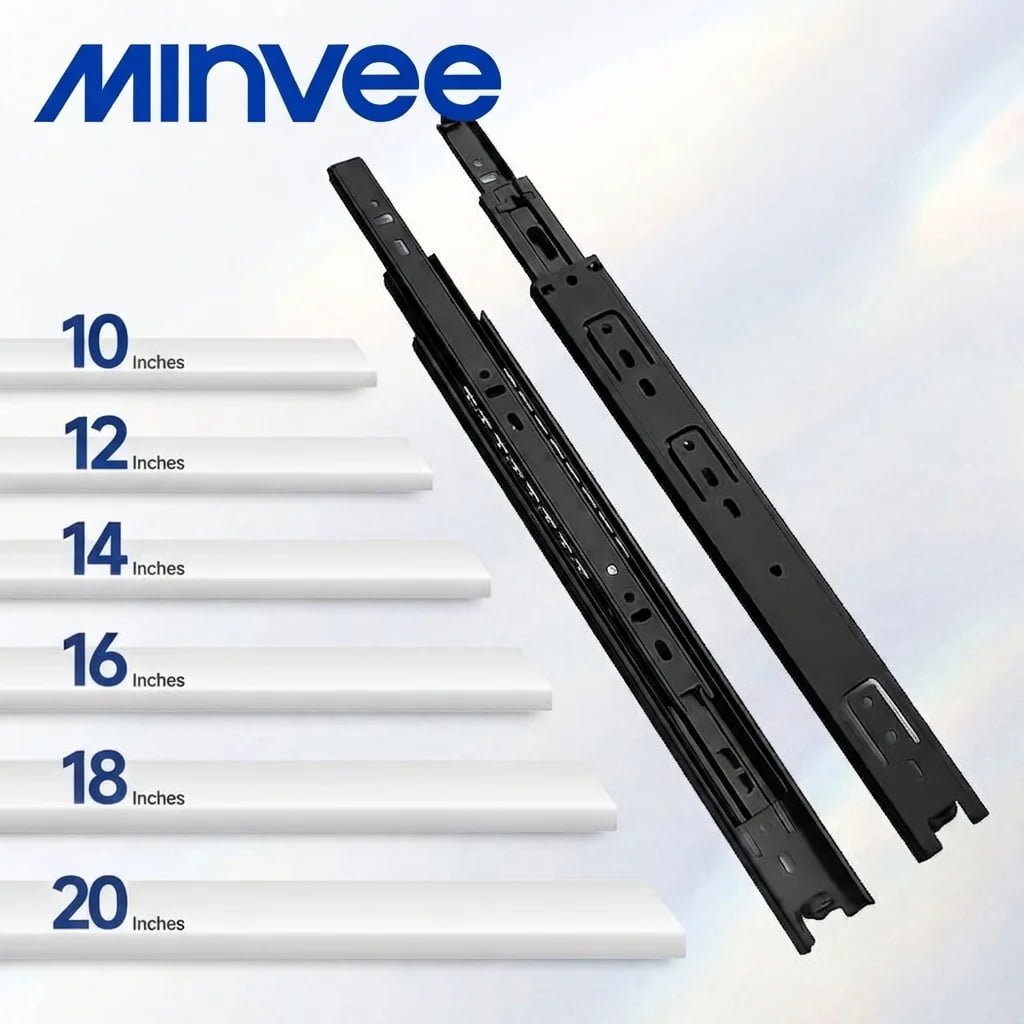
A side mount drawer slide can look fine on a clean sample bench and still disappoint the buyer later. The real test is inside a loaded drawer: side pull, front-gap movement, installer tolerance, carton labels, and repeated use across a full furniture batch.
Where Side Mount Drawer Slides Earn Their Keep
For furniture factories, wholesalers, distributors, and project buyers, the side mount drawer slide is still a practical hardware choice. It is visible during installation, familiar to many assemblers, and adaptable across many cabinet formats.
That familiarity is also where mistakes start.
A buyer sends length, quantity, and target price. The sample opens smoothly on the table. Everyone moves on. Then the same slide goes into a wide wardrobe drawer, an office file drawer, or a project furniture order with hundreds of repeated units. That is when side play, rough pull, wrong labels, and uneven drawer feel start costing money.
MINGYI (Furnihard) can discuss drawer slide sourcing across categories such as 2-fold, 3-fold, soft-closing, push-open, heavy-duty, undermount, and side mount drawer slides. Depending on the model and application, material options may include high-strength cold-rolled steel or thickened steel. Load positioning can include 25kg, 35kg, and 50kg tiers, but those figures belong to the quoted model. They are not blanket ratings for every slide.
This is B2B approval work, not a home repair guide. The buyer’s question is not only whether the slide opens. It is whether the drawer still feels acceptable after loading, repeated pulling, assembly variation, and warehouse handling.

Start With the Drawer, Not the Slide Name
A side mount slide is approved by the drawer it has to carry.
Before price comparison, look at what goes inside the drawer, how wide the front is, how often users open it, and whether they pull from the center or from one side. Also look at where assembly happens. A controlled furniture factory line and a project site with mixed installers are not the same risk.
| Drawer application | What happens in use | Where trouble usually starts | What to settle before bulk order |
|---|---|---|---|
| Kitchen cabinet drawers | Daily use with mixed household items | Rough movement, noise, uneven closing | Test in the assembled cabinet with realistic contents |
| Wide wardrobe drawers | Large fronts, textile load, side pulling | Side play, front-gap drop, loose feel | Pay close attention to rail stability and loaded extension |
| Office cabinets | Frequent opening with paper or files | Wear feel, inconsistent pull, drawer wobble | Treat usage frequency as seriously as weight |
| Tool cabinets | Concentrated metal load | Sagging, rail deformation, hard pull | Discuss heavier slide options and applicable load-test references |
| Heavy storage or industrial drawers | Higher load and rougher handling | Long-term instability and safety margin concerns | Tie the exact model to the intended load tier |
| Project furniture | Many similar units installed together | Wrong SKU, uneven handover quality, rework | Align sample, specification sheet, carton label, and installation notes |
A loose slide on a table is not the test. The cabinet is.
Load the drawer. Pull it off-center. Leave it loaded for a period, then open it again and look at the front gap. A quick showroom push misses problems that appear only after weight and leverage are involved.
Features That Matter in Industrial Use
Industrial-grade does not mean buying the strongest slide for every drawer. That wastes money. It means the slide is strong enough, consistent enough, and clear enough in specification for repeat production.
Load tier must fit the real drawer
MINGYI drawer slides are positioned across 25kg, 35kg, and 50kg load tiers depending on product tier and application. For heavier drawer programs, buyers can ask whether the selected model is supported by 35kg or 50kg load-test references.
Do not treat load as one clean number. A narrow drawer and a wide drawer may carry the same weight but behave differently. Wide fronts invite off-center pulling. Deep drawers add leverage. Tool drawers concentrate weight in one area.
Reject the sample if loaded full extension shows obvious sag, front-gap drop, rough movement, or side play that makes the drawer feel cheap. That small looseness becomes a return conversation later.
Rail structure and steel choice
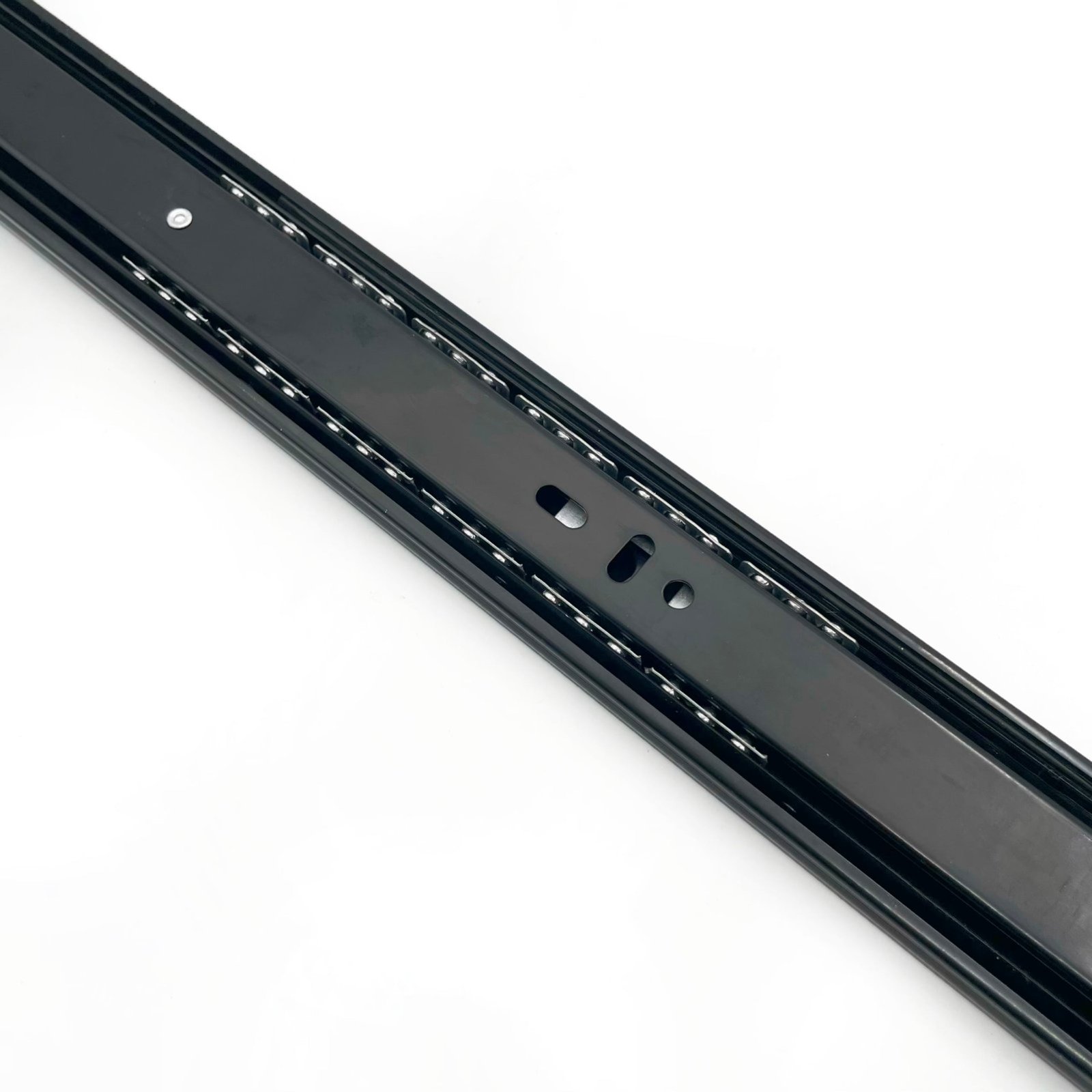
Side mount drawer slides commonly rely on steel rail profiles. MINGYI material options include high-strength cold-rolled steel and, depending on product tier and application, thickened steel.
Not every drawer needs thickened steel. Not every model uses it. The real question is whether the rail keeps its shape in the intended cabinet.
When the rail flexes, the end user will not say rail deformation. They will say the drawer is noisy, heavy, crooked, or loose.
Ball movement is useful, but not magic
A precision steel ball structure can support smoother pushing and pulling when it is paired with the right rail profile, load tier, and assembly quality. It does not fix poor cabinet alignment. It does not rescue an overloaded drawer.
During approval, move the drawer slowly and quickly. Pull from one side of the handle, not only the center. Listen for metal contact. Watch whether the drawer front returns to an even gap. If the movement changes sharply between empty and loaded conditions, the slide is not ready for volume use.
Optional functions need their own sample decision
Side mount drawer slides may be standard, 2-fold, 3-fold, soft-closing, push-open, or heavy-duty depending on the model. Soft-closing and buffering can support quieter, more controlled movement for suitable slide types, but not all slides include those functions.
Push-open needs extra attention. Handle-free furniture makes users depend on release force, rebound feel, and drawer alignment. If the push-open action feels uncertain in the finished cabinet, the complaint will not sound technical. It will sound like bad furniture.
Never let a function name replace cabinet testing.
Batch consistency matters after the sample is approved
For factories and project buyers, one good sample is not the finish line. Repeat-order stability matters. Automated stamping, assembly, and selected packaging processes can help improve furniture-hardware consistency when paired with QC control.
The value is simple: fewer surprises between the approved sample and later production batches.

Industrial vs. Consumer-Grade Slides: What Actually Changes
Many slides feel acceptable when new and empty. The gap appears after loading, repeated use, mixed installers, and warehouse handling.
| What to compare | Low-cost buying risk | Industrial buying focus | If ignored |
|---|---|---|---|
| Load tier | Picked mainly by price | Use 25kg, 35kg, or 50kg positioning according to the real drawer and exact SKU | Sagging, returns, complaint sorting |
| Rail profile | Feels fine when empty | Look for stability under load and at extension | Rough pull after installation |
| Material level | Steel details may be unclear | Use cold-rolled steel or thickened steel options where the application needs them | Weak feel in demanding drawers |
| Movement test | Loose rail pushed by hand | Finished cabinet test with drawer box and contents | Assembly rework |
| Function | Soft-close or push-open assumed from a name | Separate exact function and model code | Wrong SKU or wrong shipment |
| QC discussion | Little evidence beyond sample feel | Ask about applicable load, lifecycle, and movement tests | Harder claim handling later |
| Packaging and labels | Acceptable for small one-off use | Clear carton, model, length, function, and label control | Warehouse mistakes and distributor complaints |
Drawer slides are a small cost item inside a cabinet, but they are touched every day. A weak slide makes the whole furniture piece feel cheaper, even when the board, finish, and design are acceptable.
Applications in Furniture Manufacturing
Side mount drawer slides are used across kitchen cabinets, wardrobes, office cabinets, tool cabinets, industrial drawers, and heavy storage systems. The application range is broad. The approval depth should not be equal for all of them.
Kitchen cabinet drawers
Kitchen drawers carry mixed loads: cutlery, cookware, dry food, and cleaning items. Movement quality and low-noise performance matter, but sound must be judged inside the assembled cabinet. Cabinet material and drawer-box accuracy can change the noise.
For a kitchen line with several drawer depths, using one slide family may simplify purchasing. Still, each length and drawer group needs its own approval result.
Wide wardrobe drawers
This is a high-risk area that often looks harmless. Clothes are not heavy like tools, but wardrobe drawers are often wide, and users pull from one side. That twist exposes weak rail support.
Watch the front gap at full extension. Look for side play. Leave the drawer loaded, then open it again. If the front drops or the slide feels loose after off-center pulls, do not dismiss it too quickly as a sample quirk. In volume production, that looseness becomes a visible quality complaint.
Office cabinets
Office drawers may not carry the heaviest load, but they can be opened many times per day. Documents and files also create dense, shifting weight.
For this application, lifecycle thinking matters. MINGYI references 60,000 continuous opening-and-closing lifecycle testing under load for drawer slides and hinges where applicable. That reference belongs to applicable products and needs to be connected to the exact model being discussed.
Tool cabinets and industrial drawers
Tool drawers expose under-specification fast. Concentrated metal weight can show rail weakness, ball-track instability, and sagging that an empty sample hides.
Do not approve this group by hand feel alone. Use a real or simulated load. Open fully. Pull repeatedly. Pull from one side. If the movement becomes rough, the rail twists, or the drawer front drops, the sample has already answered the question.
Project furniture
Project furniture adds repetition risk. A hotel, apartment, office, or institutional order may use many identical or similar drawers. A small mismatch in slide model, function, or label can create installation delays and handover complaints.
Keep the approved sample, quotation specification, model code, carton label, and installation notes aligned. This is not paperwork for its own sake. It prevents the wrong slide from reaching the wrong cabinet.
A Practical Way to Narrow the Option
Split the drawers into ordinary, sensitive, and risky groups.
Ordinary drawers are light, narrow, and not opened constantly. Sensitive drawers affect user feel: kitchens, wardrobes, office furniture, and visible project units. Risky drawers are wide, deep, heavily loaded, frequently used, or installed in large repeated projects.
For each group, prepare the useful details:
- Drawer size: width, depth, panel material, and side clearance.
- Real load: light goods, kitchenware, files, tools, or heavy storage.
- Use frequency: occasional, daily, or intensive commercial use.
- Extension need: partial extension, full extension, or special access.
- Movement function: standard, soft-closing, push-open, or heavy-duty structure.
- Cabinet environment: kitchen, wardrobe, office, tool storage, industrial use, or project furniture.
- Noise expectation: judge sound inside the cabinet, not on a loose rail.
- Assembly method: factory line, manual assembly, or project-site installation.
- Carton and label needs: especially for wholesalers, distributors, and multi-SKU projects.
- Applicable tests: load, lifecycle, and movement references where relevant to the model.
A useful field rule is: load it, pull it off-center, leave it, then decide. If the drawer still runs smoothly, keeps its front gap, and does not develop obvious side play, the slide has passed a more realistic first approval.
Customization can also be discussed. MINGYI can support discussions around logo, packaging, hole position, thickness, surface treatment, and accessory combinations depending on product and order requirements. Non-standard dimensions or special load-related needs require product and order review before planning.
Complaint Patterns Buyers Try to Prevent
Without a documented buyer story approved for publication, it is better to call these what they are: common complaint patterns. They are still useful because they show where hardware sourcing goes wrong.
Heavy-use drawer sagging after real loading
A slide may pass an empty sample test and show sag only after the drawer carries real weight. This is common in heavy storage, tool drawers, and deep drawers.
Heavy-use approval needs load tier, rail structure, and loaded movement in the same discussion. For demanding applications, 35kg or 50kg load-test references may be relevant when tied to the exact side mount drawer slide model.
The answer is not always the highest tier. Spend the money where risk is real: wide drawers, tool drawers, deep storage, and commercial-use furniture.
Wrong slide reaches the assembly station
Multi-drawer furniture lines often use several slide lengths or functions in one program. If model code, length, function, and carton labels are unclear, the wrong slide can reach the line.
The first symptom may look like bad hardware. The root cause is often specification control. For wholesalers and distributors, label clarity also affects warehouse handling and customer confidence.
Low-noise expectation fails in the final cabinet
A slide can sound acceptable on a table and noisy inside a hollow cabinet body. Cabinet material, drawer box accuracy, load, and installation tolerance all change the final sound.
Approve low-noise performance in a realistic cabinet setup. A loose rail test is not enough.
The Cost of Getting the Slide Wrong
Side mount drawer slides are often treated as a price line. That is understandable in competitive furniture production. But the lowest unit price can become expensive when it creates rework or after-sales sorting.
Wrong slide selection can lead to:
- drawer movement complaints after installation;
- assembly interruptions caused by poor fit or unclear specifications;
- returns linked to sagging, rough pull, or weak user feel;
- distributor sorting work caused by SKU or label mistakes;
- project handover complaints when drawer feel varies across units;
- repeat-order inconsistency when later batches do not match the approved sample.
For furniture factories, installation efficiency and quality consistency may matter as much as slide price. For wholesalers, SKU coverage, packaging support, and stable order planning often matter more than forcing one cheap universal slide into every drawer. For project buyers, consistent drawer feel protects handover quality.
The user judges the cabinet by the drawer every day. If it rattles, drops, or pulls roughly, the whole product feels lower grade.
MINGYI Supply Notes for Side Mount Drawer Slide Buyers
MINGYI’s furniture-hardware range includes drawer slides, hinges, cabinet hardware, and related accessories. For buyers coordinating several cabinet hardware items, integrated sourcing can help reduce supplier count and simplify purchasing coordination, subject to product confirmation.
For side mount drawer slide discussions, buyers can raise:
- required slide type, length, extension, and function;
- 25kg, 35kg, or 50kg load-tier positioning where applicable;
- high-strength cold-rolled steel or thickened steel options depending on product tier;
- precision steel ball structure for smoother movement when properly matched;
- logo, label, carton, and packaging customization needs for suitable orders;
- application details for kitchen, wardrobe, office, tool, industrial, or project furniture.
Production may include material preparation, stamping, assembly, packaging, and QC inspection depending on the product. Automated processes in stamping, assembly, and selected packaging steps can support consistency for repeat orders, without replacing product-level approval.
Next Step: Approve the Drawer Behavior
Buy side mount drawer slides by drawer behavior, not catalog name alone.
For light drawers, a standard side mount option may be enough. For wide, heavy, frequently used, or project-sensitive drawers, put more pressure on load tier, rail structure, loaded movement, side play, noise, and label control.
Before a bulk order, prepare the details that let the supplier work accurately: slide length, drawer width and depth, cabinet material, expected load, extension need, movement function, application, quantity, and packaging or label requirements. A better first specification usually costs less than fixing the wrong slide after installation.
FAQ
What are the benefits of side mount drawer slides in industrial settings?
Side mount drawer slides are familiar to installers, visible during assembly, and flexible across many cabinet formats. For industrial and furniture-production buyers, the bigger benefit is specification control: slide length, load tier, function, packaging, and labels can be managed clearly across repeat production when the model is selected by application.
How do I determine the load tier I need?
Start with drawer width, depth, expected contents, usage frequency, and whether users may pull from one side. MINGYI drawer slides are positioned across 25kg, 35kg, and 50kg load tiers depending on product tier and application. Wide drawers, tool drawers, and heavy storage drawers usually need closer discussion around 35kg or 50kg load-test references for the exact model.
Can I customize drawer slides for specific furniture applications?
Customization can be discussed for suitable products and order requirements. Common discussion areas include logo, packaging, hole position, thickness, surface treatment, labels, and accessory combinations. Availability depends on the selected product, quantity, technical review, and order details, so it needs to be settled before sample approval or bulk planning.
Match the Slide to the Drawer Before You Order
Send MINGYI the drawer width, drawer depth, cabinet material, expected loaded weight, extension need, movement function, application type, order quantity, and packaging or label requirements.
With those details, MINGYI can discuss a side mount drawer slide shortlist, the relevant load tier, sample approval points, and logo or packaging needs before bulk order planning.