

Cabinet hinges 1/4 overlay look like a small hardware line item until the doors reach the assembly bench. Then a small overlay error becomes uneven reveals, drilling changes, installer adjustment time, and sometimes a rejected cabinet during project handover. For furniture factories, wholesalers, and project buyers, the hinge has to fit the cabinet design, repeat in bulk, and behave the same way after the sample is approved.
Start from the cabinet, not the hinge photo
A 1/4 overlay cabinet door covers the cabinet face frame or opening edge by about one quarter inch. That definition is useful, but it is not enough for purchasing.
In real production, the overlay affects the drilling template, door reveal, adjustment range, hinge arm geometry, packaging label, and installer expectation. A hinge that looks close enough in a catalog can still put the door in the wrong position once it is mounted.
Use the cabinet scenario first:
| Cabinet application | What matters in production | What goes wrong when the hinge is treated as generic |
|---|---|---|
| Kitchen cabinets | Repeat alignment, controlled closing, humidity awareness | Door-gap complaints, noisy closing, rework at installation |
| Wardrobes and bedroom furniture | Smooth daily use and consistent adjustment | Poor user feel and more after-sales questions |
| Bathroom cabinets | Material and finish suited to moisture exposure | Rust or finish complaints earlier than expected |
| Office furniture | Stable opening and closing across repeated use | Loose doors and poor handover impression |
| Project fit-outs | SKU control, installation speed, repeatable cabinet gaps | Mixed hinge types, site delays, rejected rooms |
| Custom furniture | Exact overlay, hole position, and door construction | Multiple sample revisions before approval |
A shiny hinge sample on a desk proves very little. The useful test is boring: mount it on the real cabinet, open and close it, look at the reveal, adjust it, then ask whether the same result can be repeated across the order.
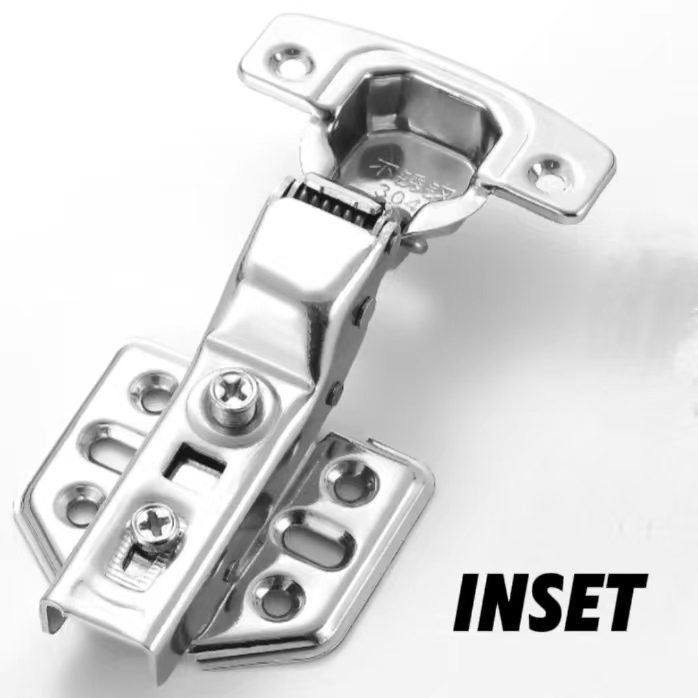
Lock down the 1/4 overlay specification before price negotiation
The biggest mistake is not usually buying a weak hinge. It is buying the wrong hinge with confidence.
A 1/4 overlay hinge is not interchangeable with a larger overlay hinge or an inset hinge. If the wrong overlay is used, the door may sit too far over the frame, expose an unexpected gap, rub against the neighboring door, or force installers to compensate with adjustment screws. That extra adjustment time looks small on one cabinet. Across a project or production run, it becomes labor cost and a quality dispute.
For bulk purchasing, the inquiry needs the cabinet drawing or a clear sample reference. The supplier has to see the door construction, frame condition, required overlay, and intended function before the quotation means much.
Key specification points include:
| Specification point | What needs to be clear | Buyer consequence if missed |
|---|---|---|
| Overlay size | The 1/4 overlay requirement against the cabinet drawing or sample | Wrong reveal, poor door position, drilling changes |
| Cabinet construction | Face frame, frameless, corner, glass, or aluminium-framed design | Wrong hinge structure or fixing method |
| Door material and size | Wood panel, glass, aluminium frame, or other construction | Poor load discussion and unsuitable fixing |
| Hinge function | Standard, two-way, clip-on, soft-closing, or other required behavior | Wrong user feel or extra assembly work |
| Material | Cold-rolled steel, SUS201 stainless steel, or SUS304 stainless steel by product and use case | Cost mismatch or corrosion risk |
| Surface treatment | Nickel plating or another available finish for the selected hinge | Appearance variation and corrosion complaints |
| Test reference | Lifecycle, corrosion, or load information tied to the model | Vague durability claims that cannot support approval |
| Packaging and labels | Bulk cartons, labels, branded packaging, or carton presentation needs | SKU confusion for wholesalers and project teams |
MINGYI (Furnihard)’s hinge range includes common options such as normal, two-way, soft-closing, clip-on, stainless steel, aluminium-framed, glass, 3D, and corner hinge types. That range helps when one buyer is managing several cabinet lines, but the final hinge still has to fit the actual cabinet and order requirements.
Material choice also needs restraint. Cold-rolled steel is common in cabinet hardware. SUS201 and SUS304 stainless steel may be considered for suitable products and applications. Stainless steel is not a magic answer for every cabinet. A dry wardrobe, a bathroom vanity, and a coastal-market cabinet create different corrosion and cost questions.
What happens when 1/4 overlay is confused with another hinge type
This is where small hardware mistakes become visible.
If a larger overlay hinge is used where a 1/4 overlay hinge was intended, the door may cover too much of the frame. The installer then tries to pull the door back through adjustment. Sometimes it works on one sample. On a full run, the gaps start to wander, neighboring doors fight each other, and the drilling template no longer feels reliable.
If an inset hinge is substituted, the problem is worse. Inset doors follow a different alignment logic because the door sits inside the opening. A buyer may think the hinge cup, screws, and finish look acceptable, but the cabinet geometry is wrong. That is not a quality-control issue after production. It is a specification failure before production.
Special hinges add another layer. Glass doors, aluminium-framed doors, and corner cabinets need application-level review. A wood-door overlay hinge should not be pushed into those uses just because the price is attractive.
The hard rule: do not approve cabinet hinges 1/4 overlay from loose parts alone. Approve them on the cabinet construction that will actually ship.

Soft-close features: useful, but not by name only
Soft-close hinges can improve perceived cabinet quality, reduce slamming, and create a better handover feel in apartments, hotels, offices, retail furniture, and mid-range cabinet programs. For distributors, soft-close also helps position a product line above the cheapest hardware option.
Still, the label is not the performance.
For a 1/4 overlay door, soft-close behavior is affected by door weight, drilling accuracy, number of hinges, frame geometry, and hinge adjustment. A sample may feel strong in the hand but lose control after mounting. Another may feel ordinary loose but work cleanly on the finished cabinet.
MINGYI’s hinge range includes soft-closing options, and hydraulic soft-closing performance can be discussed for suitable hinge types. The buyer question is practical: after mounting, does the door close smoothly, hold the reveal, and feel consistent after repeated operation?
Soft-close hinges are worth considering when:
- the cabinet line is sold on comfort or quiet use;
- project handover quality matters;
- door slamming would create complaints;
- the buyer wants a coordinated specification across a cabinet series;
- the added function supports the market price of the furniture.
Do not compare soft-close samples only by finger feel. Put the hinge on the real door. That is where the weak choices show up.
Durability, load, and corrosion checks that matter
Durability language is easy to print on a quotation. Buyers need model-level relevance.
MINGYI references 50,000-cycle opening-and-closing testing for hinge products. This is a useful approval point for furniture factories and project buyers dealing with repeat-use cabinets. It needs to be discussed against the selected hinge model, especially for special or customized products.
Load suitability also needs careful review. MINGYI references 15kg hinge load testing for suitable hinge applications as a product-verification point. That does not mean every hinge suits every 15kg door. Door height, width, material, number of hinges, screw fixing, and cabinet construction all affect the result.
For corrosion discussions, MINGYI references 48-hour neutral salt spray testing as a baseline point where it applies to the selected product. In humid or coastal markets, material and surface treatment are not decoration. They are part of the failure risk. Ask for product-level corrosion information rather than assuming all finishes behave the same.
A good approval sample should be dull in the right way: no drama, no forced adjustment, no strange closing sound, no reveal movement after normal use review.
Integrating hinges into large-scale furniture production
In a factory, the hinge is part of the production rhythm. A small variation between sample and bulk order can disturb drilling, installation, labeling, and final inspection.
For large-scale production, the hinge approval file should include:
- cabinet drawing and required 1/4 overlay;
- door material, size range, and estimated weight range;
- hinge type and function, such as standard, two-way, clip-on, or soft-closing;
- material and surface treatment for the quoted model;
- hole position and installation reference;
- packaging, label, and carton requirements;
- relevant lifecycle, corrosion, or load references;
- retained approval samples for both buyer and supplier.
Retained samples matter. When a repeat order feels different, the team needs a physical reference, not only an old chat record or catalog photo.
MINGYI’s production for cabinet hardware may include material preparation, stamping, assembly, packaging, and QC inspection based on the product. Automated stamping and assembly processes can support more consistent furniture-hardware production when used with QC checks. For repeat orders, that consistency is often worth more than a slightly lower unit price.
Cheap hinges become expensive when installers spend extra minutes correcting every door.
B2B purchasing considerations by buyer type
The same hinge creates different risks for different buyers.
Wholesalers need SKU clarity, packaging support, and product range planning. Too many visually similar hinges with unclear overlay details lead to customer returns and slow-moving stock.
Furniture factories care about installation efficiency and repeat-order stability. A hinge that requires constant adjustment slows the line and makes quality control harder.
Building-material distributors and brand buyers often look at packaging presentation, labeling, and series-based supply. MINGYI can discuss logo customization, labels, color boxes, branded packaging, and carton presentation for suitable furniture-hardware products and order requirements.
E-commerce sellers need clear product information and packaging that reduces fitment complaints. A wrong overlay description can create returns even if the hinge itself is well made.
Project buyers focus on bulk fulfillment, consistent quality, and fewer handover problems. Integrated cabinet-hardware sourcing can reduce supplier count and simplify coordination when the product range fits the cabinet BOM.
MINGYI’s broader cabinet-hardware range includes hinges, drawer slides, tandem boxes, cabinet baskets, gas springs, cabinet connectors, furniture legs, and push openers. Coordinated sourcing can help keep product style and packaging presentation more consistent, but every item still needs product review before it is built into the order plan.
How to compare suppliers for 1/4 overlay hinge orders
Price matters. But for cabinet hinges 1/4 overlay, the lowest line price can hide the cost of rework, mixed SKUs, vague product matching, and weak sample control.
Use supplier comparison around the job the hinge has to do:
| Supplier type | What usually looks attractive | Where the risk shows up |
|---|---|---|
| Low-price generic supplier | Fast quote, simple product photo, low unit price | Overlay may be treated loosely; mounted sample review and model-level test discussion may be weak |
| Catalogue-only hardware supplier | Broad range and many similar hinge options | Buyer still has to solve cabinet fit, labels, material choice, and repeat-order matching alone |
| Application-review supplier | Asks for drawing, door details, function, finish, packaging, and sample review points | Takes more discussion at the start, but reduces the chance of wrong hinge approval before bulk order |
The supplier worth keeping is not the one with the longest product list. It is the one that helps remove the wrong options early.
For MINGYI, the useful conversation starts with application review: cabinet drawing, door sample details, overlay, door material, use environment, hinge function, finish, and sample-check points. The hinge range covers common cabinet-hinge options such as soft-closing, clip-on, stainless steel, aluminium-framed, glass, 3D, and corner hinge types. Material options include cold-rolled steel, SUS201 stainless steel, and SUS304 stainless steel based on product type and application.
Quality discussions may include lifecycle testing, salt spray testing, and load testing when relevant to the selected hinge. Automated stamping, assembly, and selected packaging processes can help improve production consistency when paired with QC review.
A supplier review for this hinge should be practical:
- Reject recommendations made from a product photo only when the cabinet geometry is not clear.
- Hold the mounted sample as the approval reference, not just a loose hinge.
- Tie test references to the quoted model.
- Separate similar hinge SKUs clearly in labels and cartons.
- Keep material and finish choices tied to the use environment, not marketing language.
- Discuss related cabinet hardware only after the project BOM is clear.
A 1/4 overlay hinge is not difficult to source once the cabinet details are clear. The trouble starts when it is treated as a generic metal part. In furniture production, the mistake shows up at the door gap, the closing sound, the installer’s time, and the customer’s first complaint.
Preparing a useful hinge inquiry
A stronger inquiry saves time on both sides. Before asking for price, prepare:
- cabinet drawing or clear photos of the door and frame construction;
- required 1/4 overlay detail;
- door material, approximate size, and cabinet application;
- preferred hinge function, such as standard, two-way, clip-on, or soft-closing;
- material or corrosion expectations for bathroom, humid, or coastal-market use;
- quantity range and any mixed-model planning;
- packaging, label, logo, or carton presentation needs;
- testing or quality documents requested by the buyer or project.
After that, samples can be reviewed and specifications can be locked down before bulk order planning. The quotation discussion usually covers pricing, MOQ, packaging, lead time, and payment terms based on the selected product, quantity, customization, and sales agreement.
The cleanest purchasing habit is simple: make the cabinet application visible before negotiating the hinge.
FAQ
What are the key factors when choosing overlay cabinet hinges for bulk purchasing?
The main factors are overlay dimension, cabinet construction, door material and size, hinge function, material, surface treatment, packaging needs, and model-level test references. For cabinet hinges 1/4 overlay, the drawing and mounted sample matter more than catalog appearance because a small overlay mismatch can create uneven reveals, drilling changes, or assembly rework.
How does MINGYI ensure the durability of its 1/4 overlay cabinet hinges?
MINGYI’s hinge quality discussion can include QC processes and relevant tests such as lifecycle, salt spray, and load testing for the selected product. MINGYI references 50,000-cycle opening-and-closing testing for hinge products, while load and corrosion references should be reviewed against the exact model being quoted.
Can MINGYI support custom orders for specific hinge requirements?
MINGYI can discuss OEM and customization requirements such as logo, packaging, labeling, hole position, thickness, surface treatment, and accessory combinations based on product and order requirements. Custom requests need product review, quantity review, and technical feasibility review before order confirmation.
Match your 1/4 overlay hinge to the cabinet before you buy in bulk
Send MINGYI your cabinet drawing, required 1/4 overlay, door material, approximate door size, cabinet type, movement need, target product tier, quantity range, and packaging or label requirements.
MINGYI can review suitable hinge type, material, finish, and mounted-sample check points. After the model is clear, the quotation discussion can cover specifications, packaging, MOQ, lead time, and order terms based on the selected product and order requirements.