
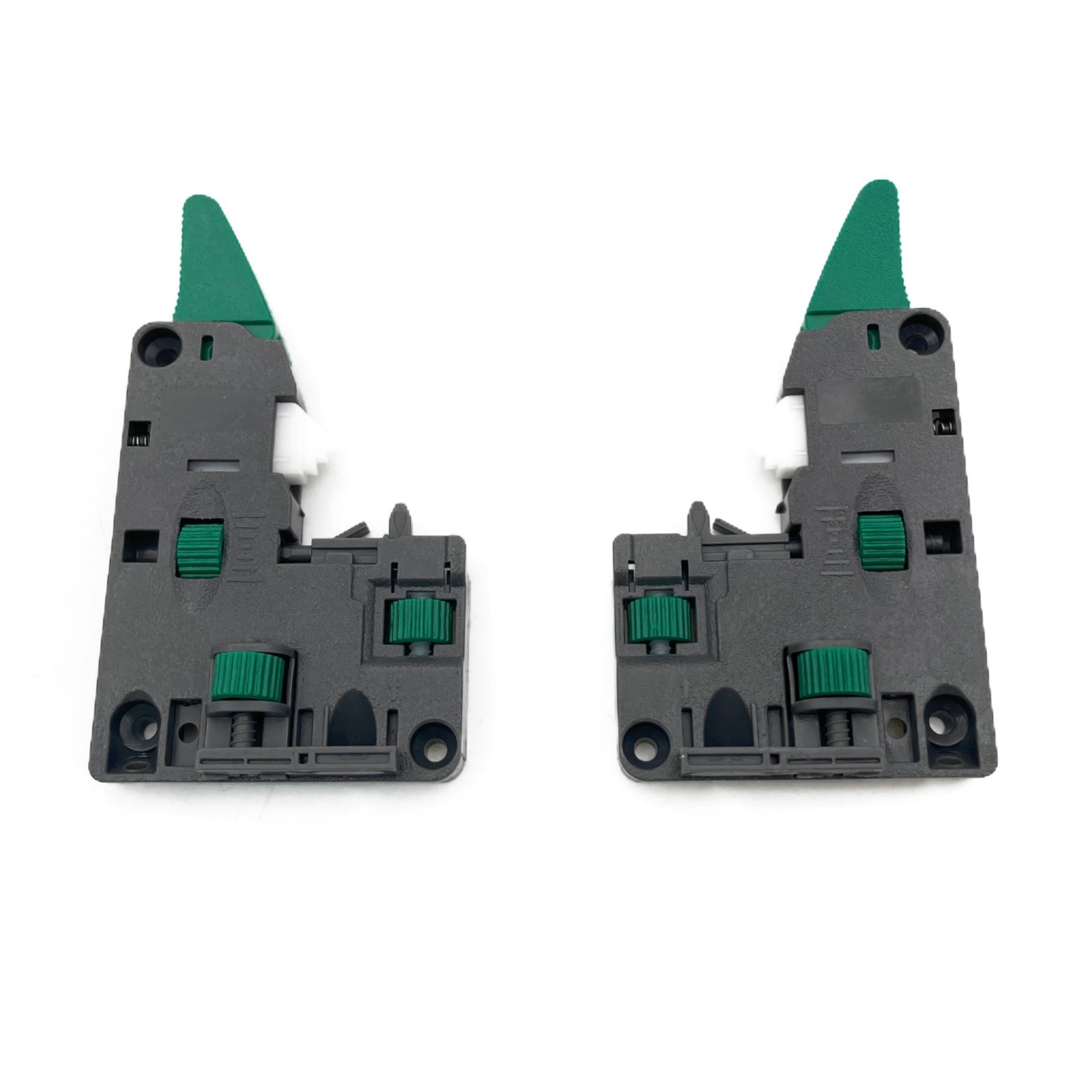
A dresser line can look ready for production until the drawers are loaded. Then the weak points show up: a wide bottom drawer starts to dip, a push-open front rebounds unevenly, or a soft-close slide feels different after the drawer front is fitted. For factory buyers, dresser drawer slides are not a small accessory purchase. They affect assembly time, finished feel, repeat-order stability, and after-sales complaints.
Start With the Drawer That Can Cause the Most Trouble
The safest way to specify dresser drawer slides is to begin with the hardest drawer in the furniture series, not the easiest one. A shallow top drawer for socks or accessories may work with a simpler slide. A deep lower drawer carrying folded clothing, documents, or mixed storage puts more stress on the rail, ball movement, fixing position, and cabinet squareness.
That difference matters in bulk production. If procurement approves one slide because it works on the smallest drawer, the line may later deal with sagging, rubbing, uneven closing, or noisy movement on the larger units. The buying rule is simple: approve by drawer condition, not by slide name alone.
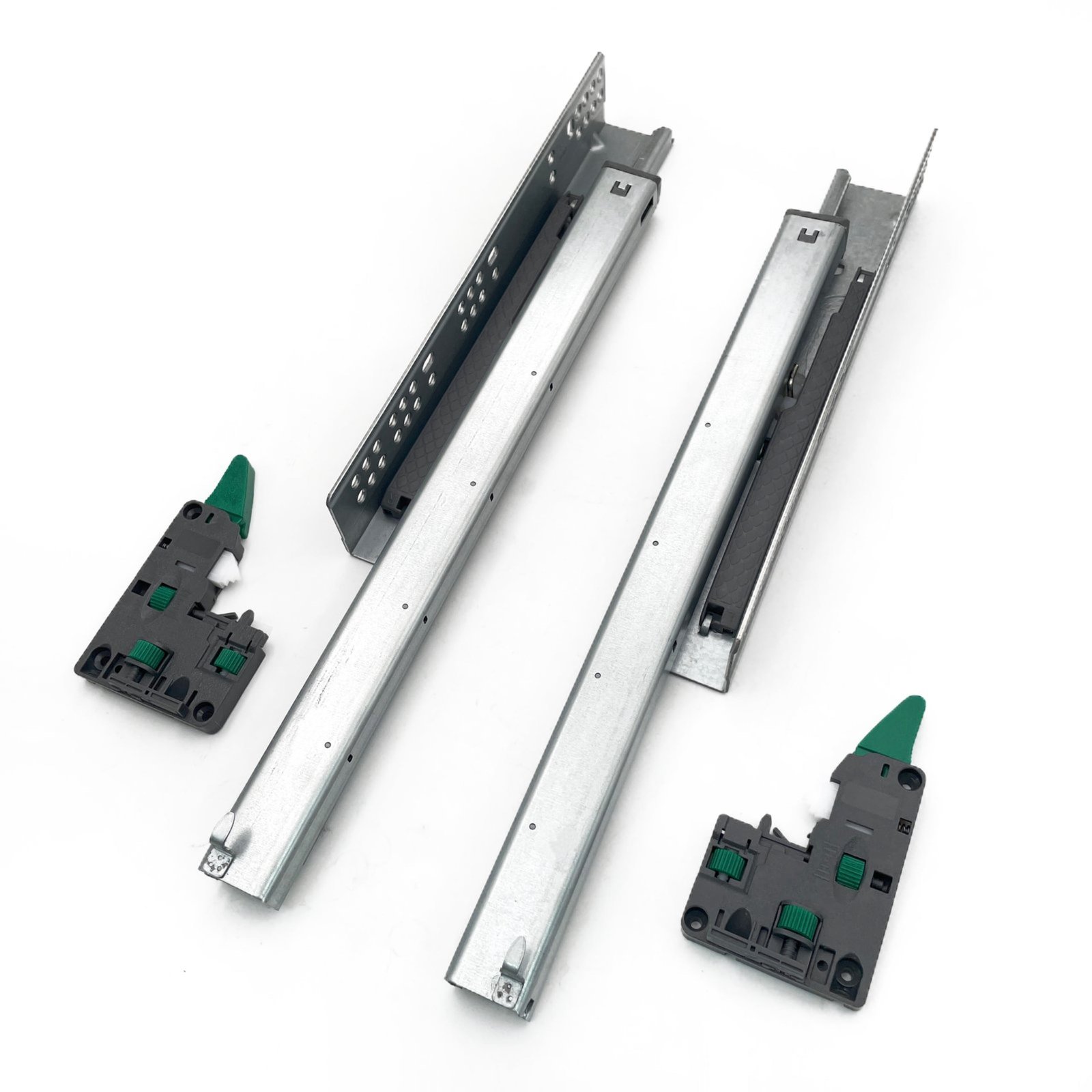
MINGYI (Furnihard)’s drawer slide range includes 2-fold, 3-fold, soft-closing, push-open, heavy-duty, and undermount options. Those categories are useful for shortlisting, but they are not interchangeable. The selected slide has to match drawer size, expected load, extension need, user feel, and the factory’s installation method.
Drawer Slide Types, Without Giving Every Category the Same Weight
Most dresser lines do not need every slide type. The expensive mistakes usually come from three places: heavy bottom drawers, wide drawers with side-play risk, and handle-free or soft-close designs where the customer notices the movement every day.
| Dresser situation with higher risk | Slide direction to consider | What can go wrong if under-specified |
|---|---|---|
| Deep bottom drawers or storage-heavy dressers | Heavy-duty slide, or a higher suitable load tier after model review | Front drop, rail stress, rubbing, noisy movement, complaints after real use |
| Wide dresser drawers | Stable rail structure and careful side-clearance control | Side play, uneven travel, drawer face misalignment |
| Mid-range retail dresser | 3-fold or soft-closing slide depending on market expectation | Drawer feels cheap even if the furniture surface looks acceptable |
| Handle-free dresser | Push-open slide matched with front weight and gap control | Uneven rebound, poor touch response, blame placed on hardware or assembly |
| Premium concealed-hardware design | Undermount option where drawer construction allows it | Fit problems if bottom clearance and drawer construction are not controlled |
| Economy dresser or light-use drawer | 2-fold or simpler slide where access and load demand are modest | Overbuying hardware the line does not need, or losing access if expectations are higher |
This table is selective on purpose. In real purchasing, the big loss is rarely from a light top drawer. It comes from approving a slide that looks fine in a sample room and then struggles in the largest or most visible drawer of the series.
Match the Slide to the Furniture Need Before Asking for Price
A useful inquiry is short, but it cannot be vague. Before pricing, the supplier needs to understand the dresser application clearly enough to quote the same product the factory intends to build around.
Send the drawer width, depth, expected side clearance, mounting method, likely contents, extension expectation, and closing style. Also separate shallow top drawers from deep lower drawers. A dresser series may look like one furniture program on the sales sheet, but the drawers do not all work the same way.
A loose sample can mislead. It may feel smooth in the hand because it carries no drawer box, no front panel, and no load. The real proof is the assembled dresser drawer, using realistic weight and the same fixing method planned for production.
For factories running several dresser series, group slides by application instead of only by length or price. One line may need cost control. Another may need quieter movement because it is sold as a premium series. A storage-heavy version may need a stronger load tier. Treating them as one purchase creates avoidable arguments later.
What Actually Affects Durability
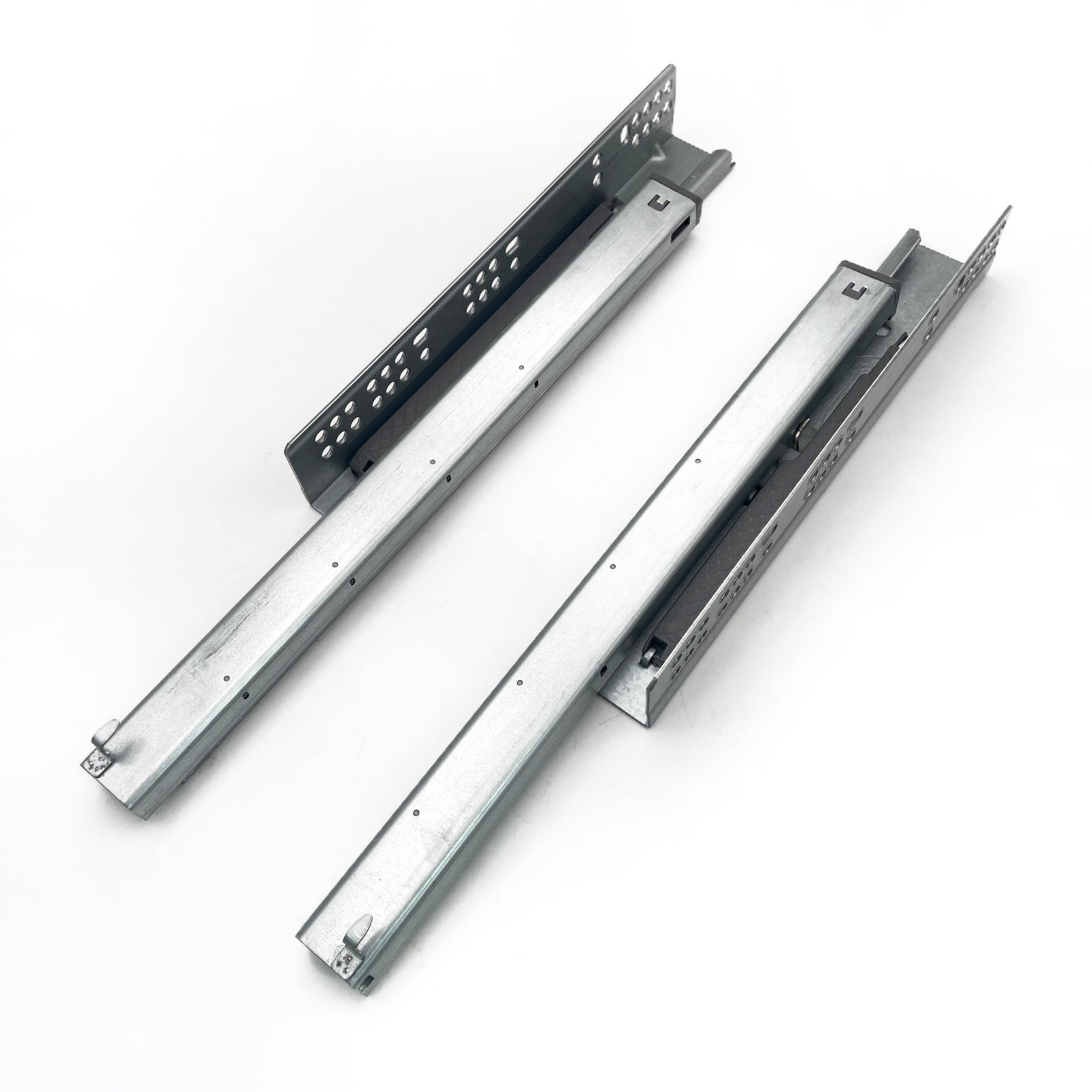
Durability is not created by one label. It comes from material, rail structure, ball movement, load match, installation accuracy, and inspection control working together.
MINGYI drawer slide material options include high-strength cold-rolled steel and, depending on product tier and application, thickened steel options. That does not mean every drawer slide uses the same steel structure. It means the material discussion has to sit inside the application: light dresser, standard dresser, heavy storage drawer, or project furniture.
For heavier drawer applications, buyers can discuss whether the selected slide tier is supported by 35kg or 50kg load-test references. The model matters. A supplier’s range may include those load tiers, but that does not make every SKU suitable for every drawer.
Load match
A drawer can pass an empty opening test and fail in the customer’s real use. Loaded movement exposes front drop, rail stress, inconsistent closing, and noise. Deep lower drawers are the first place to look.
Rail structure and steel ball movement
A precision steel ball structure can support smoother pushing and pulling when the rail structure, load tier, and assembly quality are suitable. Ball movement alone does not rescue an under-specified slide. If the drawer is too wide, too heavy, or badly aligned, the rail still takes the punishment.
Soft-close behavior in the finished cabinet
Soft-closing and buffering features can support quieter, more controlled movement for suitable slide types. But the finished dresser changes the feel. Drawer front weight, cabinet squareness, side gap, and fixing accuracy all affect whether the close feels controlled or weak.
A soft-close complaint is expensive because the user notices it every time the drawer closes. It is not hidden inside the cabinet.
Push-open tolerance
Push-open slides can work well for handle-free dresser designs, but they are less forgiving of gap variation. A heavy drawer front or inconsistent cabinet alignment can make the rebound feel uneven. If the furniture design cannot hold consistent gaps, the hardware becomes the visible problem.
Lifecycle reference and product tier
MINGYI references 60,000 continuous opening-and-closing lifecycle testing under load for drawer slides and hinges where applicable. For purchasing, this is useful as a product-level discussion point, especially for repeat lines. It should not be stretched into a blanket promise for custom or special products without product confirmation.
Loaded-Use Failure Pattern in Dresser Production
In high-volume dresser production, slide problems rarely stay isolated. A small amount of looseness in a sample can become a production-line dispute once many drawer boxes are assembled.
A common pattern is drawer sagging that appears only after loaded use. The drawer moves acceptably when empty. After weight is added, the front dips, the rail feels strained, or the drawer no longer closes cleanly. Wide drawers make this more visible because small side-play shows up at the drawer face.
A typical production mistake is approving the empty drawer first because it looks clean and opens smoothly. Then the same slide is used on deeper bottom drawers. Once those drawers carry real storage weight, the complaint changes from hardware price to rework, return risk, and argument over whether the problem came from the slide, the cabinet, or the assembly line.
The answer is not always the heaviest slide. Over-specifying can add cost and may introduce fit issues. The better route is to look at the whole drawer condition: expected load, drawer width and depth, front-panel weight, slide load tier, rail structure, side clearance, fixing accuracy, and repeatability on the line.
This is where MINGYI input is most useful: not as a generic catalog claim, but in matching slide category, load tier, rail structure, and sample review to the buyer’s dresser application.
Bring Procurement Into the Factory Process
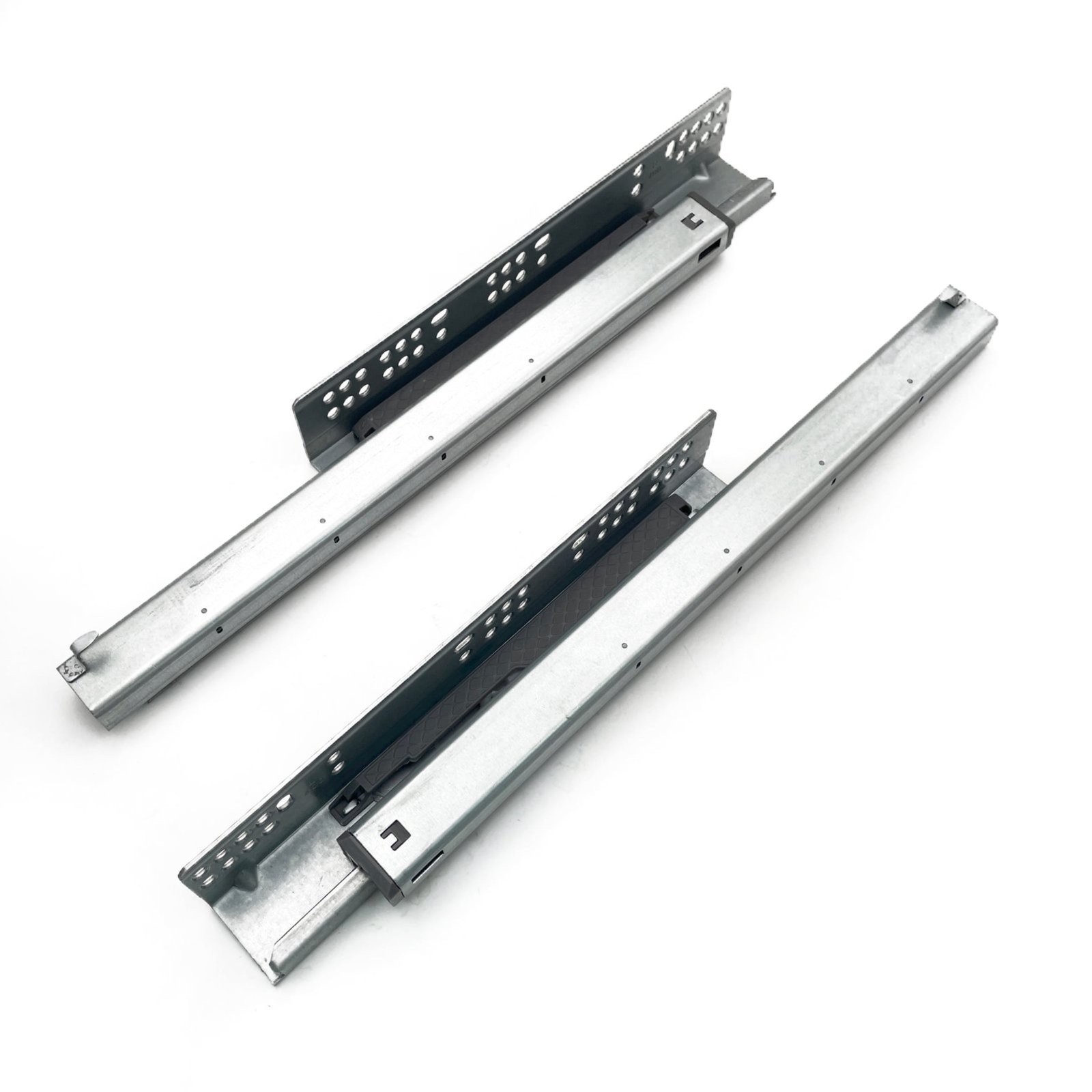
Drawer slide purchasing touches more than the purchase order. It affects drilling, jig setup, assembly sequence, inspection, warehouse identification, and repeat orders.
If procurement changes slide type, hole position, rail thickness, or mounting style without production review, the line pays for it. Workers adjust by hand. Output slows. The cabinet may still ship, but the drawer feel becomes inconsistent.
| Item to lock before bulk order | Why the factory cares |
|---|---|
| Slide category, length, and mounting method | Prevents wrong-line installation and last-minute jig changes |
| Hole position and fixing method | Reduces hand adjustment and uneven drawer movement |
| Load tier or applicable load reference | Keeps heavy drawers from being approved like light drawers |
| Approved dresser sample condition | Gives production a real reference, not just a loose slide |
| Packaging, labels, and SKU marks | Helps warehouse and assembly teams avoid mixing similar slides |
| Photos or videos of installed movement | Protects repeat orders from quiet substitutions or memory-based approval |
Packaging deserves earlier attention than many buyers give it. Similar-looking slides can create wrong-line installation, especially when several lengths or tiers are ordered together. Clear SKU labels, cartons, barcodes, or customer packaging should be discussed during quotation when required, not after production has started.
MINGYI can discuss OEM logo and packaging customization for suitable furniture-hardware products and order requirements. Options such as labels, color boxes, carton presentation, barcodes, or carton printing depend on the product and order review.
Bulk Purchase Criteria That Protect Margin
The lowest slide price can be attractive on a spreadsheet. It becomes expensive if it creates rework, slow installation, mixed SKU errors, or customer complaints.
For dresser drawer slides, compare the commercial and technical points together. The quoted model has to suit the dresser drawer, not just the general product category. Its load tier should align with the expected use, with relevant 25kg, 35kg, or 50kg information discussed only where it applies. Material and rail structure need to match the product tier. Movement feel needs to be judged in the assembled drawer.
Installation compatibility matters just as much. Side clearance, hole position, and fixing method must work on the line. For repeat furniture programs, applicable lifecycle information for the selected product is worth discussing before the purchase order is placed.
For wholesalers and distributors, packaging presentation and SKU clarity can be as important as movement feel. For furniture factories, installation consistency and repeat-order stability usually decide whether the slide really saves money.
MOQ, lead time, payment terms, and packaging details belong in the quotation discussion. Do not build the production schedule around assumptions.
Common Pitfalls in Dresser Slide Approval
Most mistakes are predictable.
Approving the smallest drawer first. The light top drawer gives false confidence. Start with the widest or heaviest drawer, then work back to easier applications.
Using one slide across too many lines. SKU simplicity helps purchasing, but it can hurt furniture performance when economy, standard, premium, and heavy-storage dressers are treated the same.
Judging soft close on a test board. Soft close must be felt in the actual drawer with the real front panel. Otherwise the final movement may be too weak, too heavy, or inconsistent.
Ignoring push-open gap control. Handle-free furniture needs stable alignment. If the cabinet cannot hold consistent gaps, the push-open feature will feel unreliable.
Mixing load references between models. A supplier may offer 35kg and 50kg load-test references for certain slide tiers. That does not transfer automatically to every model.
Leaving packaging until the end. Wrong labels and unclear cartons slow assembly and create warehouse mistakes, especially when several slide lengths look similar.
The fix is not complicated: approve the slide as part of the dresser system. Drawer, hardware, assembly method, load, and packaging have to agree with each other.
Long-Term Reliability: The Factory Rule of Thumb
For repeat dresser production, keep one rule in front of the team: the approved slide is the one that works in the hardest drawer, under load, with the line’s real installation method.
That rule prevents two common problems. First, it stops buyers from approving a slide only because it feels good when loose. Second, it gives production a clear reference when later orders are placed.
Keep the record simple: slide category, model reference, length, mounting style, fixing position, material or product tier, load reference where applicable, drawer design used during approval, and packaging details. Add photos or videos of the installed drawer movement if the line will be repeated.
MINGYI positions drawer slides around smooth pushing and pulling performance when the slide is matched to the application and load. Low-noise movement is also a listed strength, but it belongs in a realistic sample setup or finished cabinet review. Furniture construction, installation accuracy, and user conditions all affect the final result.
The better purchasing question is not simply: what is the cheapest slide? It is: which slide will still feel acceptable after the dresser is assembled, loaded, shipped, and used?
For factories, the best dresser drawer slides are not the most complicated ones. They are the slides that fit the drawer, install consistently, carry the expected load, and stay controllable in repeat orders. That is what protects margin.
FAQ
What are the recommended dresser drawer slide types for heavy-duty use?
For heavy-duty dresser drawers, start with heavy-duty slide options and verify the load tier for the quoted model. MINGYI drawer slides are positioned across 25kg, 35kg, and 50kg load tiers depending on product quality tier and application, but those values do not apply to every SKU automatically. Wide, deep, or storage-heavy drawers also need rail-structure and loaded-movement review.
How can factories ensure drawer slide compatibility with different dresser designs?
Approve the slide inside the actual drawer box, not only as a loose sample. Drawer depth, width, side clearance, fixing position, front-panel weight, extension need, and mounting method all affect compatibility. For soft-closing or push-open dresser designs, finished-furniture review is especially important because alignment and gap control change the user feel.
Which drawer slides offer the best performance for long-term furniture reliability?
The best-performing drawer slide is the one matched to the dresser application. Standard lines may use 3-fold slides for fuller access, premium lines may need soft-closing or undermount options, and heavy storage drawers may require a confirmed higher load-tier slide. Ask for applicable material, load, and lifecycle information for the selected model. MINGYI references 60,000-cycle lifecycle testing for drawer slides and hinges where applicable, with product-level confirmation.
CTA
Match Dresser Drawer Slides to Your Production Line
Send the drawer drawings or size range, slide length target, expected loaded use, drawer-front weight if known, cabinet type, preferred movement style, order quantity, target tier, and packaging or OEM needs. If the current dresser line already has sagging, noise, rebound, or soft-close complaints, include photos or a short movement video.
MINGYI can help shortlist suitable drawer slide categories and load-tier references for the exact dresser application, then discuss sample review and quotation details based on the order requirements.
Start with the drawer most likely to fail under load.