
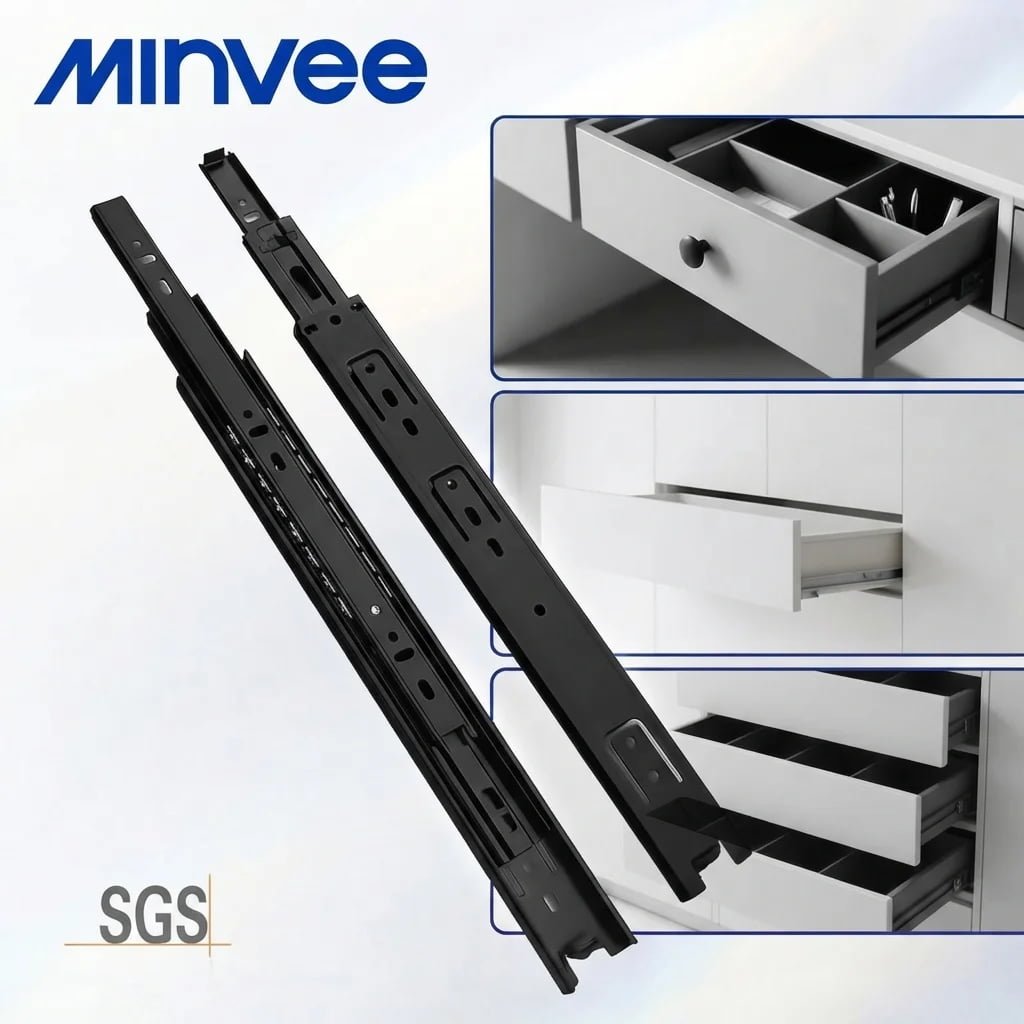
A heavy drawer can feel fine in a showroom and still fail after delivery. Once tools, files, spare parts, or stock are loaded, the drawer may sag, drift when the cabinet moves, rattle, or refuse to lock cleanly. For B2B buyers, heavy duty locking drawer slides need to be judged by real application load, extension, locking behavior, rail structure, material, installation tolerance, and test evidence. A catalog photo and an empty sample are not enough.
Introduction to Heavy Duty Locking Drawer Slides
Heavy duty locking drawer slides are used where a drawer needs both load support and position control. The lock may keep a mobile tool drawer closed during movement. It may hold a service drawer open while parts are being selected. Some drawers need both.
The lock is useful, but it does not rescue a weak slide. The rail still has to carry the drawer, move smoothly, resist sagging, and keep a reasonable feel after repeated loaded use. A light slide with a lock added is still a light slide.
MINGYI (Furnihard)’s drawer slide range includes 2-fold, 3-fold, soft-closing, push-open, heavy-duty, and undermount options. For projects involving heavy duty locking drawer slides, the safer sourcing conversation starts with the cabinet job, then moves to slide route, load tier, material, lock requirement, and test reference. Drawer slide load-test references may include 35kg and 50kg, subject to the exact model being quoted. Durability discussions can also include 60,000-cycle opening-and-closing testing where applicable.
Scenario map: where the lock changes the buying risk
| Application scenario | Why the lock matters | What goes wrong when the slide is under-specified | What deserves attention |
|---|---|---|---|
| Mobile tool cabinet | Drawers must not open during movement | Drawer drift, impact noise, damaged tools | Loaded movement and locked-closed behavior |
| Industrial storage drawer | Heavy contents need stable travel | Sagging, rough pull, rail stress | Load tier, rail rigidity, full-extension behavior |
| Service or maintenance cabinet | Drawer may need to stay open during work | Lock release becomes stiff under load | Locked-open behavior and operator access |
| Office or project storage | Daily users notice noise and poor feel | Complaints after handover | Finished-cabinet noise and smooth operation |
| Heavy storage system | Repeated loaded use stresses every fixing point | Progressive misalignment | Cabinet strength plus slide structure |
A smooth empty sample is not the test. The cabinet is.
Evaluating Load and Weight Capacities
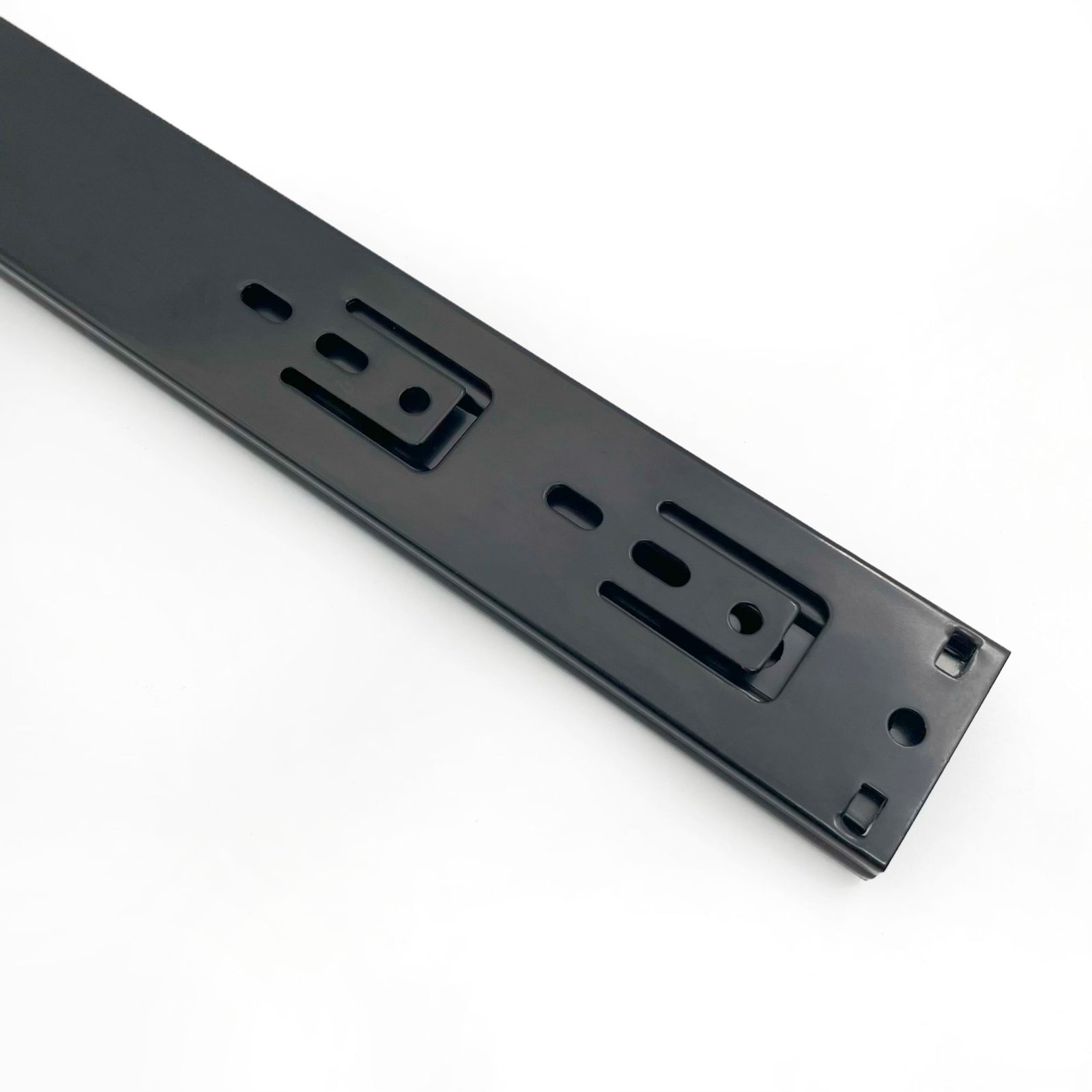
Load capacity is usually the first number requested. It should not be the only one. The better question is simple: how much weight will sit in the drawer, how far will it extend, how often will it move, and how rigid is the cabinet around it?
MINGYI drawer slides are positioned across 25kg, 35kg, and 50kg load tiers depending on product quality tier and application. For heavier drawers, a 35kg or 50kg load-test reference may be relevant, but only when it matches the exact product being quoted. It should not be treated as a rating for every drawer slide model.
A loaded drawer stresses several points at the same time:
- Rail structure and profile stiffness
- Steel material and forming quality
- Ball track or movement structure
- Screw fixing points
- Drawer side panel strength
- Cabinet frame rigidity
- Lock engagement and release position
If one point is weak, the system can still fail even when the slide looks strong on paper.
Practical load review for purchasing teams
| Purchasing question | Why it changes the result | Useful information to prepare |
|---|---|---|
| Expected loaded drawer weight | Prevents selection by drawer size alone | Target weight range and contents type |
| Full or partial extension | Full extension increases leverage | Required extension and drawer depth |
| Fixed or mobile cabinet | Movement raises the importance of locked-closed control | Cabinet type and use environment |
| Wide or narrow drawer | Wide drawers are more sensitive to alignment | Drawer width and mounting method |
| Frequent or occasional use | Higher cycles increase wear and complaint risk | Daily use pattern or access frequency |
| Lock-in, lock-out, or both | The lock requirement changes how the sample is judged | Required drawer position control |
Sagging often appears late. A sample may feel fine when pulled empty, then drop visibly once the user loads real contents. Reject that sample before it becomes a bulk problem. Full extension with visible sagging in the finished cabinet is not a small cosmetic issue; it can lead to rough travel, lock misalignment, and field returns.
Locking Behavior: Closed, Open, or Both
The word locking is too broad for serious sourcing. A drawer can need very different behavior depending on the application.
Locked-closed slides are mainly about preventing unwanted opening. Mobile tool cabinets, service carts, or drawers in equipment-adjacent furniture often need this behavior. The sample needs to be judged while loaded and installed in a cabinet that reflects actual use. If the drawer drifts when the cabinet is pushed or moved under normal handling, it is not suitable for that job.
Locked-open slides are about stable access. A maintenance drawer or parts drawer may need to stay open while the operator works. Here, release access matters as much as holding force. If the user must reach awkwardly around a heavy drawer, or if the release becomes stiff after loading, complaints will come fast. Empty-drawer release feel can be misleading.
Dual-position locking means the drawer needs controlled open and closed positions. It can be useful, but it adds more points that must work correctly. Both engagement positions need to operate with the drawer loaded, aligned, and installed in the actual cabinet structure. Dual-position locking should not be added just because it sounds premium. It should solve a real use problem.
Locking performance is also affected by installation. Drawer skew, hole mismatch, weak side panels, or a slightly twisted cabinet can make a lock feel worse than it did on a loose sample. Final judgment belongs in the assembled cabinet, not on a table.
Material Specifications and Their Impact
Material affects stiffness, deformation resistance, surface durability, and user feel after repeated operation. In heavy duty drawer slides, this is not decoration.
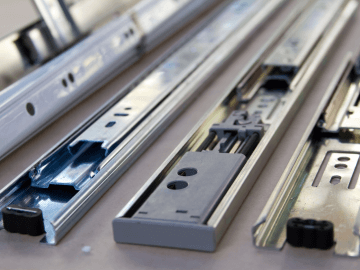
MINGYI drawer slide material options include high-strength cold-rolled steel and thickened steel, depending on product tier and application. Not every drawer slide uses thickened steel, so the quoted model needs product-level discussion.
Movement structure matters too. A precision steel ball structure can support smoother pushing and pulling when it is matched with suitable rail design, load tier, and assembly quality. It is not a guarantee by itself. Poor installation, overload, or a light rail profile can still create noise and rough movement.
For heavier industrial or storage applications, the material discussion should cover:
- Steel material and slide tier
- Whether thickened steel applies to the quoted model
- Rail profile and structural rigidity
- Ball track design and assembly consistency
- Mounting hole layout and fixing strength
- Surface treatment needs if corrosion risk is part of the environment
The lock deserves the same scrutiny. Loose engagement can create rattle. Stiff release can slow operators. Misalignment can turn a good-looking sample into a field adjustment problem.
Applications in Industrial Furniture Systems
Heavy duty locking drawer slides are not only about the highest load number. They are about matching the slide to the way the furniture is used.
MINGYI drawer slide applications include kitchen cabinet drawers, wardrobe drawers, office cabinets, tool cabinets, industrial drawers, and heavy storage systems. One slide type does not fit all of those applications. A tool cabinet and a project storage drawer may both be heavy, but their complaint patterns are different.
Application fit table for B2B selection
| Furniture or storage system | Main priority | Slide discussion focus | Practical risk |
|---|---|---|---|
| Tool cabinet | Load support and closed-position control | Heavy-duty structure, suitable load tier, lock reliability | Drawers opening during movement |
| Industrial drawer | Strength under repeated loaded use | 35kg or 50kg reference where applicable, rail rigidity | Sagging and rough travel |
| Service cabinet | Stable open access | Lock-out behavior, release access, loaded operation | Stiff release during work |
| Office storage cabinet | Smooth daily use | Low-noise movement and controlled travel | User complaints after installation |
| Heavy storage system | Bulk load and long-term stability | Cabinet frame strength plus slide tier | Misalignment over time |
| Project furniture | Repeatable fit across many units | Samples, drawings, packaging, model control | Handover rework and SKU confusion |
For wholesalers and distributors, the danger is often one listing covering too many use cases. A slide sold across light office drawers, loaded tool drawers, and heavy storage cabinets will eventually be used in the wrong place. That creates channel returns even when the product itself is not defective.
For furniture factories, the bigger pain is production disruption. If the approved slide changes hole position, lock orientation, or release access, drilled panels may no longer match. A cheap substitution can become expensive after the line is already set.
Industrial Integration: Best Practices
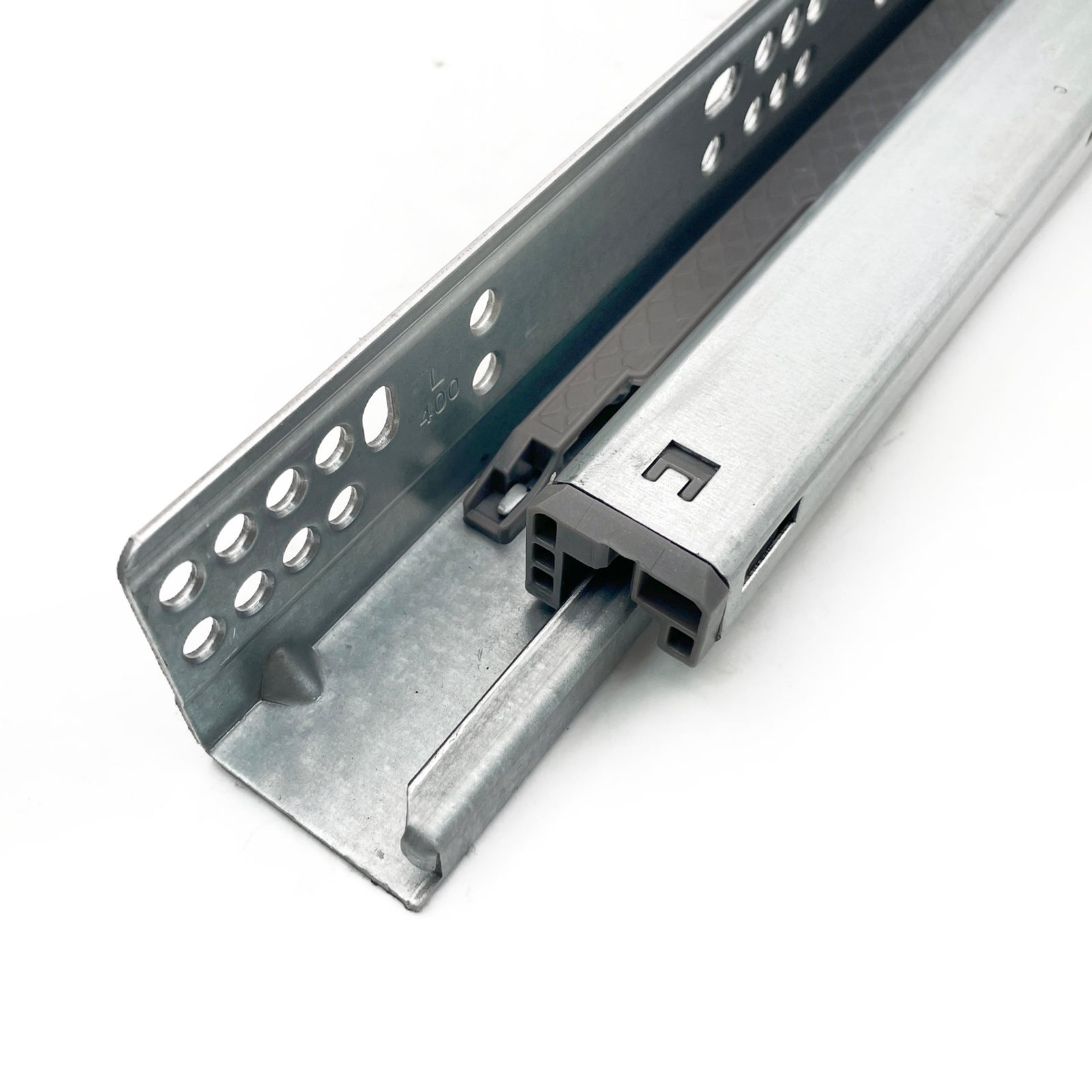
Integration is where many heavy slide complaints begin. The slide may be acceptable, but the drawer box, side panel, screw fixing, or lock access is not designed around it.
Use-case checklist before sample sign-off
- Define the real loaded weight, not only drawer size.
- State whether the drawer must stay closed, stay open, or do both.
- Use the required extension, especially for full-access drawers.
- Operate the lock with realistic contents inside the drawer.
- Look for visible sagging at full extension.
- Review drawer width and cabinet rigidity for wide industrial drawers.
- Match hole position and mounting surfaces before bulk drilling.
- Separate left and right orientation, release position, and operator access.
- Judge movement noise in the finished cabinet.
- Keep packaging and labels clear if several slide versions look similar.
In factory production, hardware that needs extra adjustment on every unit is not cheap. It only moves the cost from purchasing to assembly. For project buyers, the problem appears during handover: uneven drawers and unreliable locks are easy for installers and end users to notice.
Production may include material preparation, stamping, assembly, packaging, and QC inspection depending on the product. Automated processes in stamping, assembly, and selected packaging steps can support more consistent furniture-hardware production when matched with QC checks. That helps repeat orders, but it does not replace cabinet-level sample review.
Common Selection Risks and How to Verify
Heavy duty locking drawer slides carry higher risk than standard light-duty slides because the punishment is higher. The complaints are usually direct: the drawer sags, the lock misses, the slide feels rough, or the finished cabinet makes noise.
Technical breakdown table: risks, causes, and rejection points
| Risk | Likely cause | Business consequence | Reject the sample when… |
|---|---|---|---|
| Drawer sagging | Slide tier too light, weak rail structure, poor cabinet support | Returns, rework, brand damage | Full extension creates visible drop in the finished cabinet |
| Drawer drift | Lock-in behavior or alignment not suited to mobile use | Damage during movement, user complaints | The drawer moves when the cabinet is pushed or tilted within normal handling |
| Stiff lock release | Load pressure, poor access, misalignment | Slow operation and field complaints | Release force becomes uncomfortable after loading |
| Rough movement | Rail structure, ball track quality, overload, installation error | Poor user feel and higher complaint rate | Loaded travel feels rough or uneven compared with the agreed standard |
| Noise | Cabinet resonance, loose fit, movement structure mismatch | Handover issues and channel complaints | Noise appears in the final cabinet sample, even if the loose slide was quiet |
| SKU confusion | Similar-looking slides with different load tiers or lock behavior | Wrong product shipped or sold | Labels, drawings, and model codes cannot clearly separate versions |
| Assembly rework | Hole position or fit differs from the sample or drawing | Slower installation and labor cost | Production drilling does not match the agreed sample or drawing |
Avoid two bad habits. The first is buying the heaviest-looking slide and assuming it is correct. Heavy does not automatically mean suitable. The second is using one slide across too many load cases to simplify inventory. That may look efficient until returns show which applications were mismatched.
Choosing Based on Durability and Testing Data
Durability data gives purchasing and quality teams a better starting point than product photos. For drawer slides, MINGYI references 60,000 continuous opening-and-closing lifecycle testing under load where applicable. Drawer slide load-test references include 35kg and 50kg, subject to the exact product being quoted.
The words where applicable matter. Each test reference needs to connect to the exact model, slide length, load tier, and application requirement. Custom or special products should not inherit a test claim without product-level confirmation.
For heavy duty locking drawer slide projects, evaluation usually comes down to four practical areas:
- Load support: the quoted slide tier must suit the loaded drawer weight.
- Cycle durability: lifecycle reference, such as 60,000 cycles, should apply to the relevant product type where applicable.
- Movement quality: the drawer must remain smooth under realistic load.
- Lock reliability: engagement and release must work after repeated loaded operation.
Match the lock type to the cabinet job
| Cabinet job | Best-fit use | What to prioritize | Main caution |
|---|---|---|---|
| Keep drawers closed during movement | Tool cabinets, carts, mobile storage | Locked-closed control, loaded movement, rail strength | Drawer drift is a deal-breaker |
| Hold drawers open for access | Service drawers, maintenance furniture, parts selection | Locked-open behavior, release access, operator reach | Stiff release under load causes complaints |
| Control both open and closed positions | Drawers needing controlled open and closed positions | Both engagement points, alignment tolerance, user operation | More functions mean more sample review points |
| Carry dense stored contents | Industrial drawers and heavy storage systems | Load tier, rail rigidity, full-extension sag control | Cabinet frame weakness can defeat a strong slide |
| Repeat across project furniture | Repeated units across a building or program | Consistent fit, labels, packaging, sample-to-bulk control | Wrong SKU substitution creates costly rework |
This is more useful than asking for the strongest slide. It ties the slide to the failure mode the buyer is actually trying to prevent.
Key Considerations for Bulk Purchasing
Bulk purchasing is where a good sample can still become a bad program. The usual cause is loose specification control: one model discussed, another version quoted, a similar SKU shipped, or packaging labels that do not separate lock behavior clearly.
Wholesalers often need broad SKU coverage, packaging support, stable supply planning, and clear product positioning. Furniture factories care more about installation efficiency, repeat-order consistency, and fewer adjustments on the line. Project buyers focus on bulk fulfillment coordination, quality consistency, and avoiding hardware gaps during installation.
MINGYI can support broader cabinet-hardware sourcing discussions for buyers who want to coordinate related items, product style, or packaging presentation. Cabinet-hardware discussions may include drawer slides, hinges, tandem boxes, cabinet baskets, gas springs, cabinet connectors, furniture legs, and push openers, depending on project needs and product confirmation.
Logo and packaging customization can also be discussed for suitable furniture-hardware products and order requirements. Packaging conversations may include branded packaging, color boxes, labels, and carton presentation depending on the product and order. These details need to be settled before the buyer builds a launch plan or distributor catalog.
For quotation, send the information that prevents wrong matching:
- Required locking behavior: closed, open, or both
- Drawer dimensions and target loaded weight
- Required extension
- Cabinet application and operating environment
- Quantity and order schedule for discussion
- Packaging, label, carton, or barcode needs
- Sample review requirements
- Any arranged inspection or documentation needs
A quotation discussion usually covers product pricing, MOQ, packaging, lead time, and payment terms. Those details depend on the exact product and order. Do not assume one MOQ, one delivery arrangement, or one payment structure applies across every slide model.
Match the slide to the drawer first, then negotiate the order. If the technical match is wrong, the lowest price will not stay low after complaints, rework, or returns.
FAQ
What materials are used in MINGYI’s heavy duty drawer slides?
MINGYI drawer slide material options include high-strength cold-rolled steel and thickened steel, depending on product tier and application. The exact material, rail structure, and whether thickened steel applies should be reviewed at model level, because not every drawer slide uses the same structure.
How do the locking mechanisms affect performance?
Locking behavior affects how the drawer performs in use. A locked-closed requirement focuses on preventing drift during movement. A locked-open requirement focuses on stable access and release feel under load. Dual-position locking requires both open and closed engagement to work in the finished cabinet, with realistic contents inside the drawer.
What are the bulk purchase options for drawer slides?
Bulk purchase discussions usually cover the selected slide model, quantity, MOQ, packaging, labels, lead time, and payment terms. MINGYI can discuss OEM logo and packaging customization for suitable products and order requirements, but final details should be confirmed by product, quantity, and order arrangement.
Match the Slide to the Locking Job
Start with the locking job: does the drawer need to stay closed during movement, stay open during access, or do both?
Send the drawer size, target loaded weight, required extension, cabinet type, movement need, quantity range, target product tier, and packaging or label requirements. MINGYI can review suitable drawer slide options, heavy-duty categories, and relevant load or lifecycle test references where applicable, then prepare a practical shortlist for sample confirmation or bulk purchasing discussion.
Standard-grade figures: the figures in this guide (60,000 open-close cycles, 48-hour salt spray, 25–50 kg load) are MINGYI (Furnihard) standard-grade figures. Higher grades are available on request: higher load, 72-hour salt spray and 70,000 open-close cycles. Warranty is 3 years and the minimum order quantity for drawer slides is 1,000 pairs.
Talk to MINGYI (Furnihard)
Send us your drawing, photo, quantity and target market, and we will recommend suitable models and quote FOB Shenzhen. Chat with us on WhatsApp (+86 183 1221 8218) or use our contact page.