
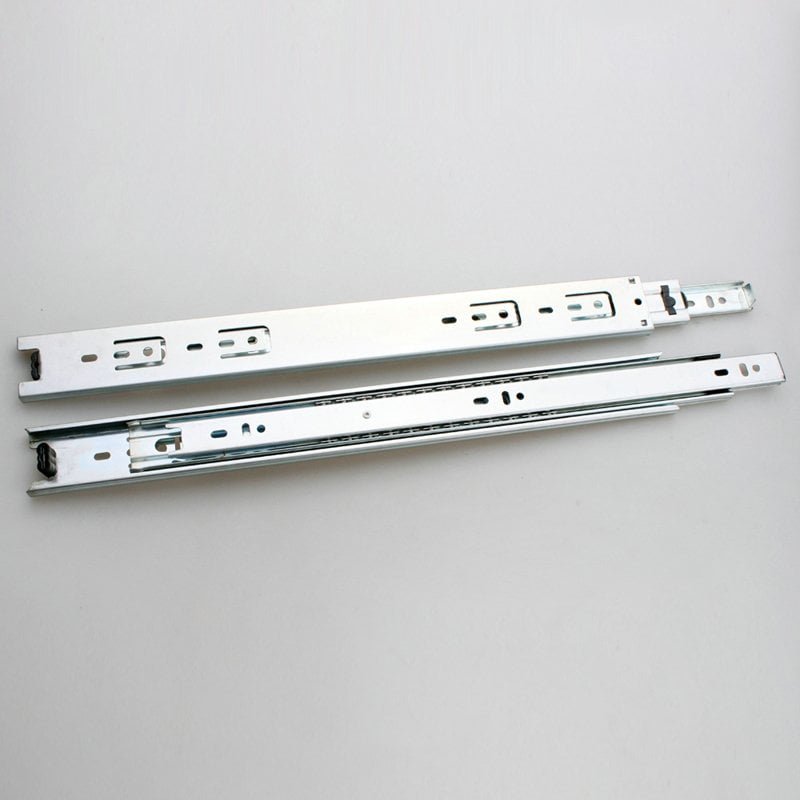
A ball bearing drawer slide can feel fine in a buyer’s hand and still be wrong for the cabinet. Empty, it moves smoothly. Loaded into a wide kitchen drawer, an office storage unit, or a tool cabinet, the same slide may drag, sag, rebound poorly, or sound louder than expected. For furniture factories, wholesalers, and project buyers, slide selection is not a beauty contest between smooth samples. It is a fit decision: drawer size, load tier, rail structure, closing function, installation tolerance, and repeat-order control all have to line up.
Introduction to Ball-Bearing Drawer Slides
In furniture manufacturing, drawer slides are small parts with large complaint potential. If the drawer feels rough, drops at the front, closes unevenly, or becomes noisy after installation, the end user rarely separates the hardware from the furniture. They blame the cabinet.
A ball bearing drawer slide uses steel balls inside the rail structure to reduce friction during opening and closing. When the slide is matched to the drawer design and load, a drawer slide ball bearing structure can support smoother travel and a more controlled user feel than very basic rail options.
The buying question is not whether ball-bearing slides are good. They often are. The real question is where they fit, and where another slide type or a higher load tier is safer.
Start from the cabinet scenario, not the catalog photo.
| Manufacturing scenario | Main risk if the slide is under-specified | Practical approval point |
|---|---|---|
| Kitchen cabinet drawers | Frequent opening, cookware load, noise complaints | Load tier, installed movement, finish suitability where relevant |
| Wardrobe drawers | Wider drawer fronts, uneven loading, alignment sensitivity | Rail length, side clearance, loaded travel, installation tolerance |
| Office cabinets | Repeated daily use and expectation of quiet movement | Lifecycle-test discussion, low-noise result in a finished sample, repeat-order consistency |
| Tool cabinets or heavy storage | Drawer sagging, rail deformation, hard closing | 35kg or 50kg load-test references for the selected tier, rail-structure review, loaded sample trial |
| Industrial drawers | High load, rougher handling, project handover risk | Heavy-duty slide selection, load margin, mounting strength, inspection arrangement |
This application-first view prevents a common sourcing mistake: approving one attractive sample and spreading it across drawers that do not behave the same.
Key Features and Benefits for Manufacturers
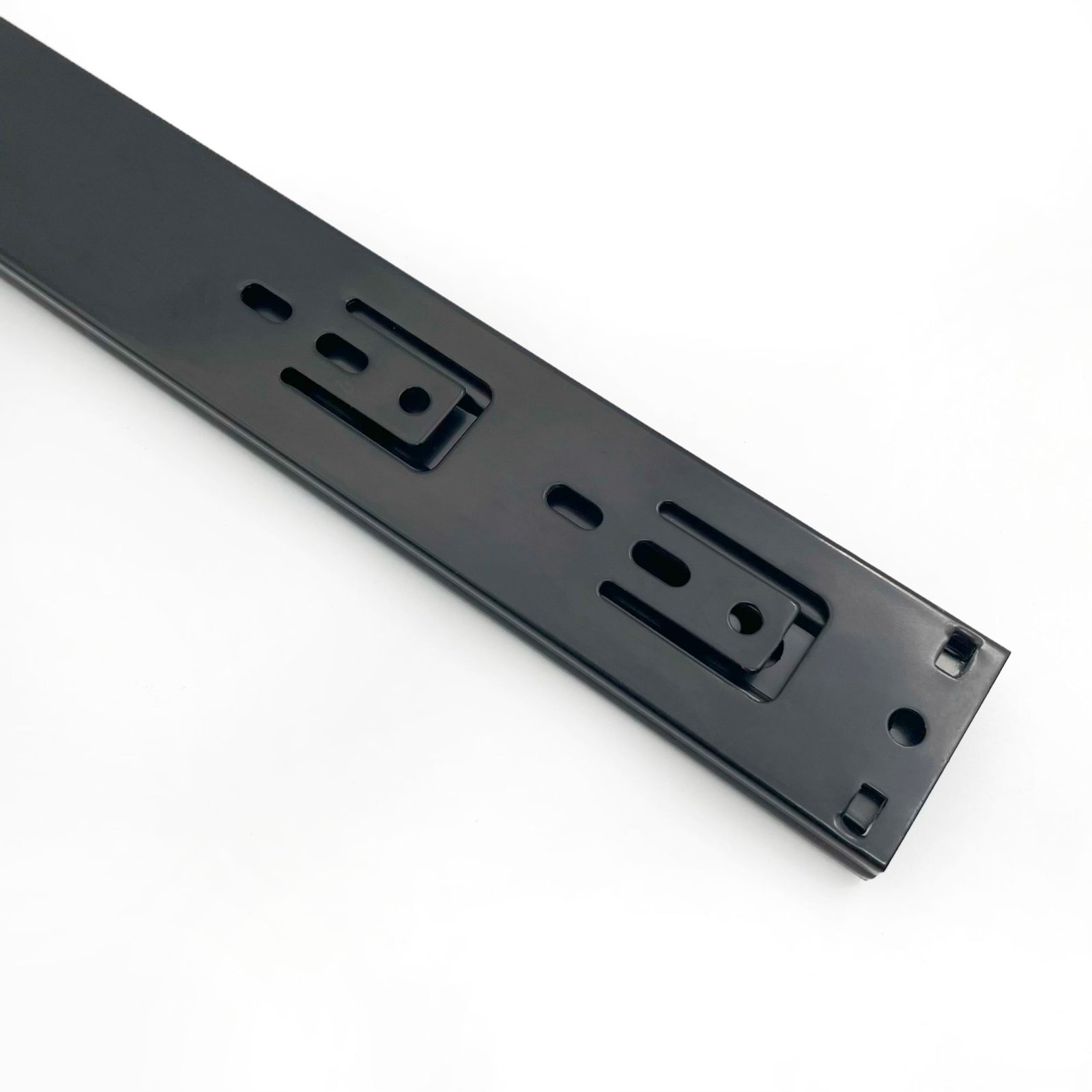
Ball-bearing drawer slides matter because they can improve user feel without making cabinet production overly complicated. For repeat furniture lines, that feel affects showroom samples, distributor confidence, customer reviews, and after-sales workload.
The benefits are practical rather than decorative:
- Smoother pushing and pulling when the precision steel ball structure is paired with the right rail design, load tier, and assembly quality.
- More stable drawer travel than poorly built low-end slides, provided the cabinet is installed correctly.
- A wider product range, including 2-fold, 3-fold, soft-closing, push-open, heavy-duty, and undermount drawer slide options.
- Load-tier planning across 25kg, 35kg, and 50kg categories depending on product quality tier and application.
- Better repeat specification control for manufacturers using the same hardware across production batches.
That last point is easy to underestimate. A furniture factory does not buy a slide for one drawer. It buys a component that affects drilling positions, assembly rhythm, carton labeling, replacement parts, and future repeat orders.
A loose slide sample tells only part of the story. Once panel tolerance, drawer weight, screw fixing, side clearance, and front alignment are added, the result can change. A loose slide on a table is not the test. The cabinet is.
For soft-closing or buffering models, the function has to be tied to the exact SKU. Not every drawer slide includes buffering, and not every application needs it. A utility drawer may only need reliable movement. A kitchen or wardrobe drawer often needs quieter closing because users touch it every day.
Comparing Drawer Slide Types: Which Is Best?
There is no single best drawer slide for all furniture. A suitable slide matches drawer weight, extension requirement, cabinet construction, user expectation, and target price level.
MINGYI (Furnihard)’s drawer slide categories include 2-fold, 3-fold, soft-closing, push-open, heavy-duty, and undermount options. Each type answers a different manufacturing problem.
| Drawer slide type | Where it usually fits | Main advantage | Watch-out point |
|---|---|---|---|
| 2-fold ball-bearing slide | Standard drawers where full access is not required | Simple movement and practical cost control | Poor fit when the user needs full drawer access |
| 3-fold ball-bearing slide | Kitchen, wardrobe, and office drawers needing fuller access | Better access to the back of the drawer | Load tier and alignment matter more in the finished cabinet |
| Soft-closing slide | Furniture lines where quiet closing is part of the selling point | Reduced slamming and improved user feel | Soft-closing must belong to the exact model quoted |
| Push-open slide | Handle-free cabinet designs and selected modern furniture | Clean front design without visible handles | Front weight and rebound feel can affect user satisfaction |
| Heavy-duty slide | Tool cabinets, industrial drawers, heavy storage systems | Higher load support when correctly specified | Empty-sample approval is risky; loaded movement tells the truth |
| Undermount slide | Higher-end or concealed hardware designs | Cleaner appearance and hidden installation | Cabinet accuracy and installation discipline become more important |
Most specification failures are not deliberate. They come from drift.
A buyer approves a medium-load slide for a kitchen series. Two weeks later, the design team widens the drawer, adds a heavier front panel, and upgrades the inner storage basket. The drawing still carries the old slide code because nobody wants to reopen the hardware discussion. On the line, the drawer still assembles. In use, the front starts to dip and the closing feel becomes uneven.
That small design change can move the drawer into a different load or structure requirement. Wider drawers, heavier baskets, thicker panels, project-use storage, or mixed drawer sizes under one product series all deserve a second look at slide tier and rail structure.
B2B Application Scenarios for Ball-Bearing Drawer Slides
Furniture manufacturers do not evaluate slides like retail DIY users. The decision sits between design, purchasing, assembly, sales channel, and after-sales teams.
Four questions usually expose the risk fast:
- What will the drawer actually carry?
- How often will it be opened?
- What user feel is expected at this price level?
- What is the cost if the drawer fails after installation?
For furniture factories
Factories need stable installation and repeat-order consistency. The slide has to work with hole positions, side clearance, panel thickness, worker habits, and cabinet tolerances. If every drawer needs hand adjustment, the low-cost slide is no longer low cost.
The cleaner approval method is simple: map drawer width and depth across the furniture series, separate slide length and load tier by SKU, and judge movement after assembly with realistic drawer weight. Noise belongs inside the cabinet, not in a loose rail sample. Packaging and labels also matter because a 25kg, 35kg, and 50kg slide can look too similar at line side when cartons are poorly marked.
Wrong approval gets expensive quickly. The factory may have to adjust holes, slow the line, replace installed slides, separate mixed cartons, or explain to sales why a finished cabinet does not feel like the approved showroom sample. None of that is visible in the first unit price.
For wholesalers and distributors
Wholesalers need broad SKU coverage and clear presentation. Two slides may look almost identical but belong to different load tiers. If cartons, labels, or product descriptions are vague, channel complaints become likely.
A safer range separates 25kg, 35kg, and 50kg tiers where applicable. It also keeps standard, soft-closing, push-open, and heavy-duty demand from being forced onto one model. For distributor channels, branded packaging, labels, carton presentation, or color box discussions may also matter, depending on the product and order requirements.
For project buyers
Project buyers care about handover risk. A failed drawer on a project can mean site rework, replacement coordination, and damage to the buyer’s reputation.
Drawings are not enough. Real storage use matters. A cabinet described as office storage may end up carrying files, equipment, or tools. That changes the hardware risk. Product-level load references, realistic sample review, and relevant QC discussions need to happen before bulk commitment.
Ball-bearing slides are a strong fit when the drawer needs controlled movement, repeated use, and a better feel than the most basic rail options. Heavy storage, industrial drawers, and wide drawers need more caution. Not more paperwork. Better proof.
Integrating with MINGYI’s Production Capabilities
For B2B buyers, slide selection and supplier coordination belong in the same conversation. A technically suitable slide still has to be produced, packed, labeled, and repeated with stable specifications across future orders.
MINGYI offers drawer slide categories including 2-fold, 3-fold, soft-closing, push-open, heavy-duty, and undermount options. Its broader cabinet-hardware range also includes related items such as hinges, tandem boxes, cabinet baskets, gas springs, cabinet connectors, furniture legs, and push openers. That matters when a buyer wants coordinated cabinet-hardware sourcing instead of managing every component separately.
The useful supplier conversation is not a broad capability claim. It is about order control.
| Buyer requirement | What to settle before order planning | Why it matters |
|---|---|---|
| Product series planning | Slide type, length range, load tier, and matching application | Avoids using one slide across unsuitable drawers |
| OEM presentation | Logo, labels, branded packaging, color boxes, carton presentation where suitable | Helps distributors keep channel presentation consistent |
| Customization review | Hole position, thickness, surface treatment, accessory combinations, and packaging requirements based on product and order conditions | Aligns the slide with furniture design and market position |
| Repeat-order stability | Material, structure, assembly, packaging, and QC inspection points | Reduces specification drift between orders |
| Multi-category sourcing | Drawer slides plus related cabinet hardware where confirmed | Can reduce supplier coordination and style mismatch |
MINGYI’s production discussion can include automation in stamping, assembly, and selected packaging processes, which can help improve consistency in furniture-hardware production when paired with QC checks. Production may include material preparation, stamping, assembly, packaging, and QC inspection depending on the product.
For a buyer, the value is practical. Clear SKU separation reduces mixed-packing mistakes. Stable product descriptions reduce repeat-order confusion. Packaging review keeps a distributor from receiving a good slide in a carton that does not match the channel promise.
Serious quotations need application details, images or drawings, size range, quantity plan, packaging expectations, and any load concern that could affect slide selection.
Ensuring Long-Term Performance and Durability
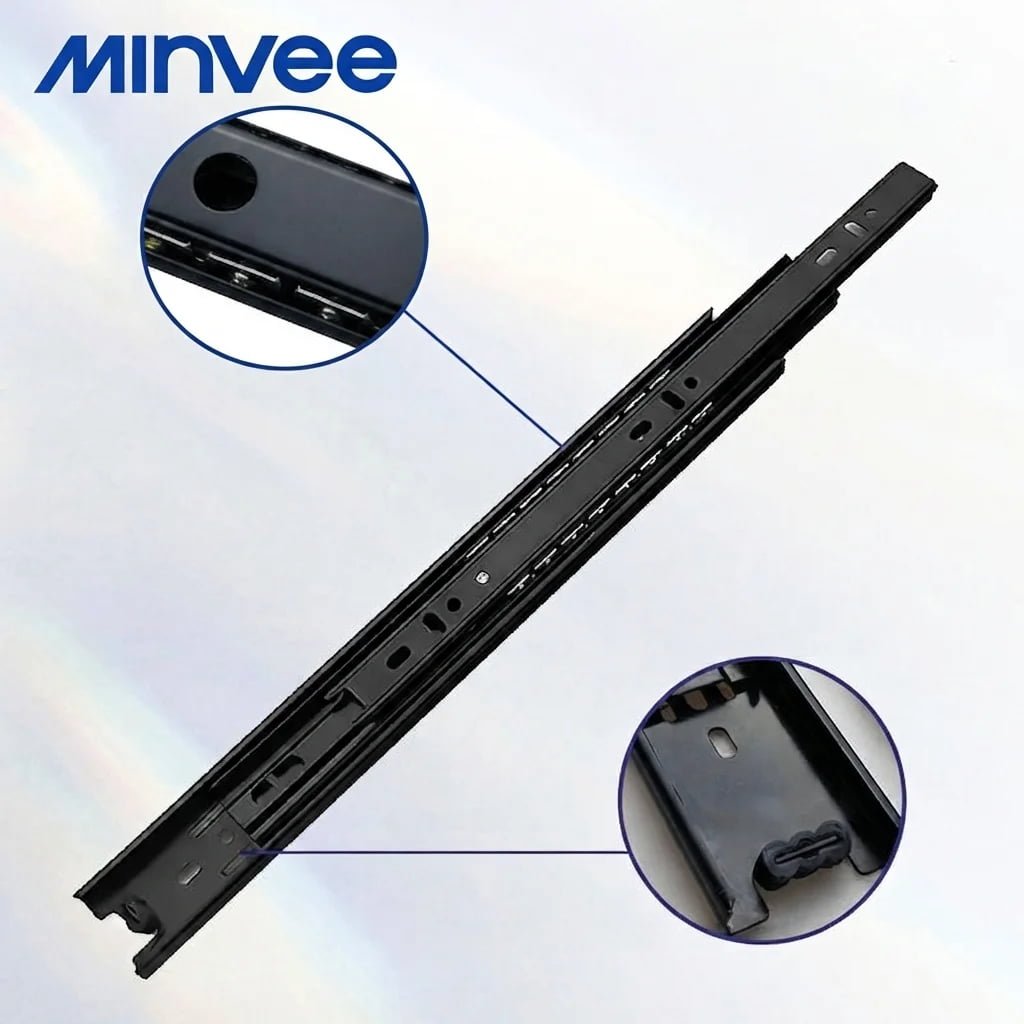
Long-term performance is not created by steel balls alone. The ball structure matters, but it works with rail material, thickness tier, assembly quality, mounting accuracy, load, and user behavior.
MINGYI drawer slide material options include high-strength cold-rolled steel and thickened steel depending on product tier and application. For durability discussions, relevant test references may include 60,000 continuous opening-and-closing lifecycle testing under load for drawer slides where the quoted product supports that reference. For heavier applications, 35kg or 50kg load-test references may be relevant to the selected drawer slide tier.
Test data has to connect to the exact product being quoted. It cannot be borrowed casually from a different SKU.
A practical durability review covers six points:
- Load tier: Is the drawer closer to 25kg, 35kg, or 50kg use?
- Drawer width: Wider drawers increase leverage and alignment sensitivity.
- Extension requirement: Full extension can change stress on the rail structure.
- Closing function: Soft-closing or buffering applies only to models that include it.
- Installation quality: Poor side clearance and weak screw fixing can ruin a good slide.
- Real cabinet behavior: Movement and noise need to be judged after installation.
A quiet loose sample is useful. A quiet loaded drawer in the buyer’s cabinet is worth more.
For low-noise performance, evaluate the finished assembly. Low-noise movement is a listed drawer-slide strength, but no responsible supplier can guarantee complete silence in every cabinet environment. Panel resonance, drawer weight, screw fixing, and installation accuracy all affect the result.
Best Practices for Industrial Load Capabilities
Industrial and heavy-storage applications need a tougher approval habit because the failure mode is more visible. Drawer sagging may not appear during the first opening. It shows after real loaded use, especially when the slide structure is under-specified or the drawer is wider than the rail system can comfortably support.
For heavy-use slide selection, load tier, rail structure, ball-track design, and loaded movement belong together. In some heavy-use applications, reinforced middle-rail ball-track designs may be worth discussing as a product-level design point to reduce sagging risk. Verify that point against the exact model before using it as an approval basis.
Use the load table as a rejection tool before bulk approval:
| Load consideration | Practical buying question | Risk if ignored |
|---|---|---|
| Rated load tier | Is the selected SKU intended for 25kg, 35kg, or 50kg use? | Smooth empty movement turns into dragging or sagging under load |
| Real drawer contents | Will users store tools, files, equipment, cookware, or light clothing? | Load is underestimated and complaints appear after installation |
| Drawer width and depth | Is the production drawer wider or deeper than the sample condition? | Increased leverage affects alignment and rail stability |
| Rail structure | Does the slide tier match use frequency and load? | Looseness, rough movement, or sagging appears early |
| Cabinet fixing | Are screw positions and panel strength suitable? | Hardware gets blamed for cabinet or installation weakness |
| Sample method | Was the slide tested loaded and installed? | Approval does not represent real use |
For tool cabinets, industrial drawers, and heavy storage systems, 35kg and 50kg references should enter the discussion early. Late changes can affect side clearance, hole positions, packaging, and cost.
The best rule is blunt: test the drawer the way the customer will use it. Heavy drawer, heavy test. Wide drawer, wide test. Quiet-closing furniture line, sound test inside the finished cabinet.
Practical Selection Notes Before Bulk Purchase
Before moving from sample approval to bulk order planning, separate the items that create claims later from the items that only look good in a catalog.
- Name the exact slide category: 2-fold, 3-fold, soft-closing, push-open, heavy-duty, or undermount.
- Match load tier to the application, not to surface appearance.
- Treat soft-closing and buffering as model-specific functions.
- Run movement trials after installation with realistic drawer weight.
- Keep heavy-use SKUs clearly separated in packaging and labels.
- Ask which lifecycle and load-test references apply to the quoted product.
- Discuss logo, packaging, labels, hole position, thickness, surface treatment, or accessory combinations within the limits of the product and order requirements.
This is where a good sourcing conversation saves money. Correcting a slide specification before production is much cheaper than sorting returns, site complaints, or project rework later.
FAQ
Frequently Asked Questions
What are the key benefits of ball-bearing drawer slides for manufacturers?
Ball-bearing drawer slides can support smoother pushing and pulling, controlled drawer travel, and a better user feel when the rail structure, load tier, and installation match the cabinet. For procurement, approve the slide inside the real drawer design, not only as a loose bench sample.
How do different load capacities affect drawer slide selection?
Load tier decides whether a slide is suitable for light, medium, or heavier drawer use. MINGYI drawer slides are positioned across 25kg, 35kg, and 50kg load tiers depending on product quality tier and application. If the drawer becomes wider, heavier, or used for tools, files, cookware, or storage baskets, reopen the load-tier discussion before bulk order planning.
What are MINGYI’s production capabilities for custom drawer slide orders?
MINGYI can discuss drawer slide requirements such as logo, packaging, hole position, thickness, surface treatment, and accessory combinations depending on product and order requirements. For a useful quotation, send drawings or images, size range, expected load, quantity plan, and packaging needs. MOQ, timing, sample cost, and technical feasibility should be settled during quotation.
Match the Slide to the Drawer Before You Commit
Send MINGYI the drawer application, cabinet type, size range, expected loaded weight, preferred movement function, target load tier, quantity plan, and packaging needs.
With those details, MINGYI can help narrow the catalog to suitable 2-fold, 3-fold, soft-closing, push-open, heavy-duty, or undermount options and identify the load, movement, packaging, and customization points that need product-level confirmation before bulk ordering.
Standard-grade figures: the figures in this guide (60,000 open-close cycles, 48-hour salt spray, 25–50 kg load) are MINGYI (Furnihard) standard-grade figures. Higher grades are available on request: higher load, 72-hour salt spray and 70,000 open-close cycles. Warranty is 3 years and the minimum order quantity for drawer slides is 1,000 pairs.
Talk to MINGYI (Furnihard)
Send us your drawing, photo, quantity and target market, and we will recommend suitable models and quote FOB Shenzhen. Chat with us on WhatsApp (+86 183 1221 8218) or use our contact page.