
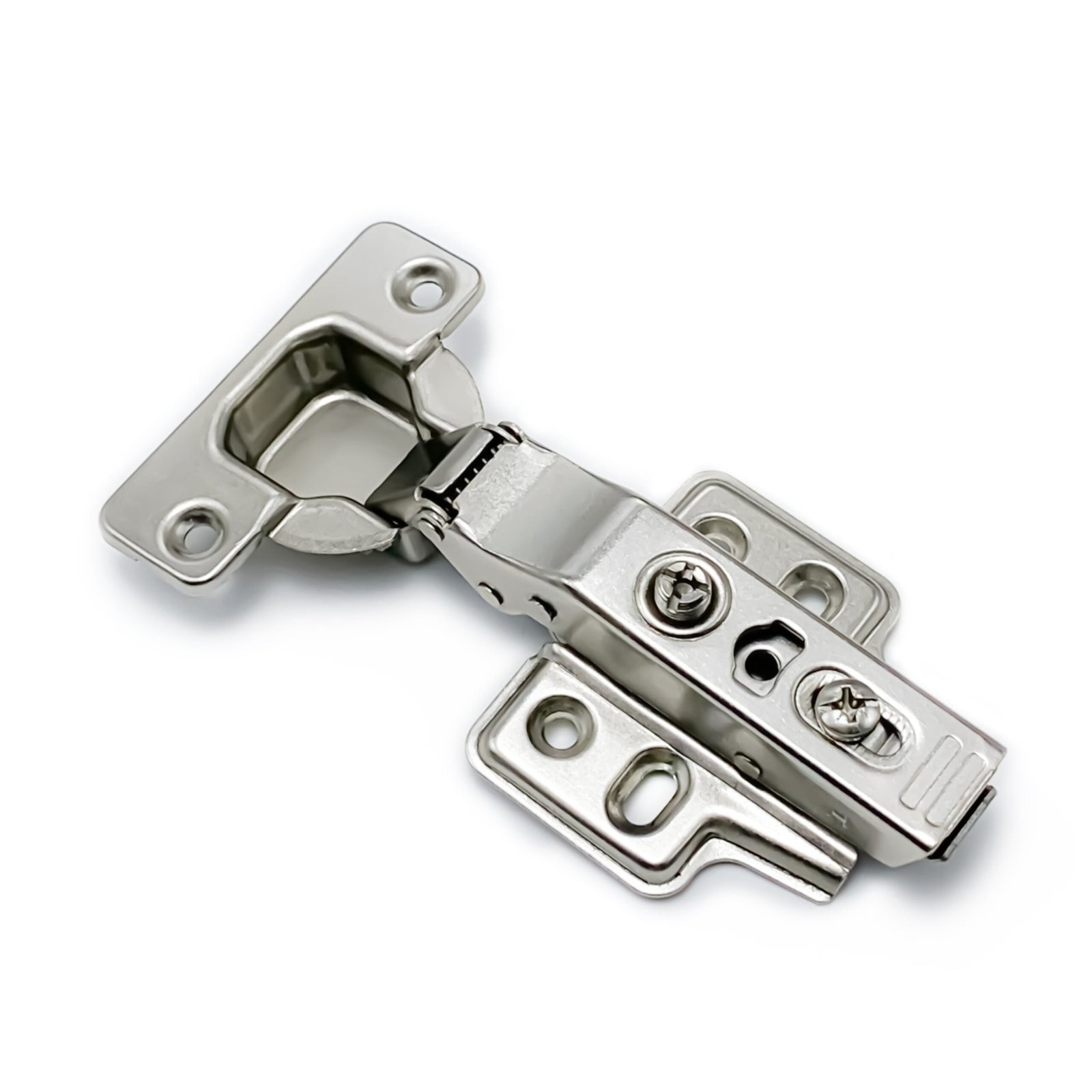
A kitchen line can pass factory inspection and still create complaints if the frameless cabinet hinges are wrong. One mismatched overlay, one weak soft-close sample, or one finish unsuited to a humid market gets repeated across hundreds or thousands of doors. For B2B buyers, hinge selection starts with the cabinet application: door coverage, material, adjustment tolerance, environment, and how the hinge behaves after installation.
Start with the Cabinet Application, Not the Hinge Photo
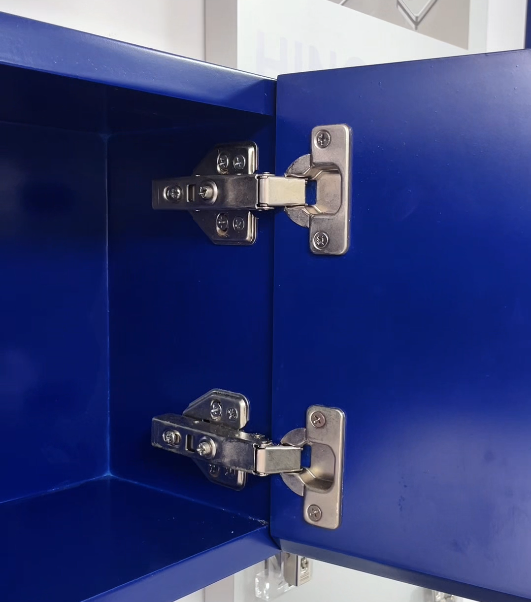
Frameless cabinet hinges are used on European-style cabinets where the door mounts directly to the cabinet side panel instead of a front face frame. That sounds like a construction detail. In production, it controls reveal gaps, door alignment, assembly time, and the way the finished cabinet feels when a customer uses it.
The weak buying habit is simple: send a hinge photo, ask for a similar model, then solve the real fit problems during sampling. That wastes time. Cabinet hinges frameless applications need the cabinet drawing and use condition first.
| Cabinet application | Hinge question that matters early | Buyer consequence if missed |
|---|---|---|
| Kitchen cabinets | Overlay, soft-close feel, adjustment range | Frequent use exposes slamming, rebound, and reveal problems quickly |
| Wardrobes | Door height, hinge count, adjustment stability | Tall doors make small alignment errors obvious |
| Bathroom cabinets | Material and surface treatment | Humidity can turn a cheap finish into a complaint issue |
| Office furniture | Repeatable installation and controlled movement | Batch inconsistency slows assembly and handover |
| Project cabinets | Durability reference, labels, SKU separation | Mixed rooms and similar-looking hinges create site confusion |
| Custom furniture | Hole position, special angle, panel compatibility | Non-standard panels can reject a normal hinge even when the photo looks right |
MINGYI (Furnihard)’s hinge range includes normal, two-way, soft-closing, clip-on, stainless steel, aluminium-framed, glass, 3D, and corner hinge types. The range is broad, but no serious buyer should assume every type comes in every size, finish, or application. The safer order of work is cabinet first, hinge second, quotation third.
A useful plain rule: approve the hinge against the worst normal use case, not the neat showroom door.
Match Overlay and Hinge Type Before Sampling
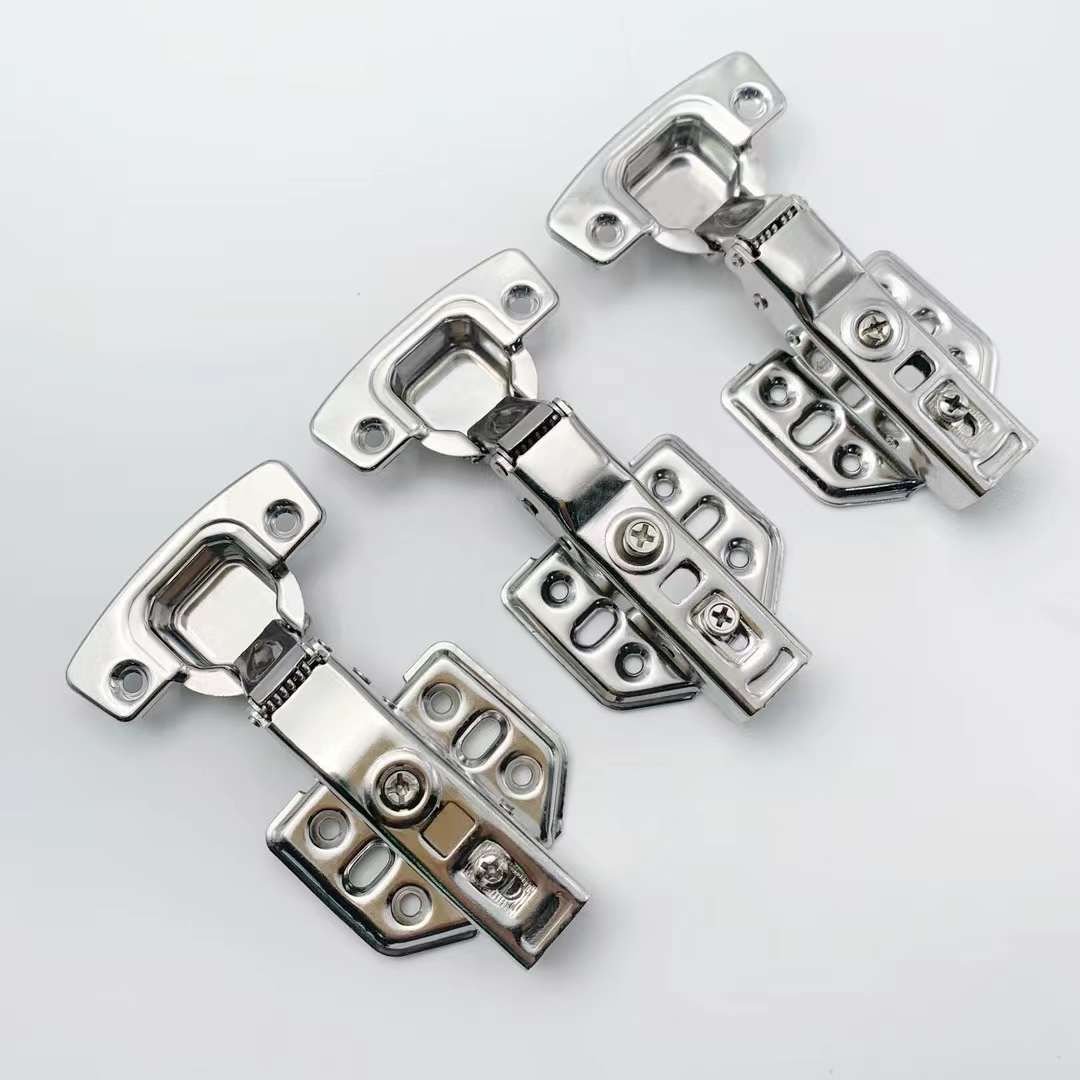
For most frameless cabinet programs, hinge selection begins with door overlay. Full overlay frameless cabinet hinges are common in modern kitchens and wardrobes because the door covers most or all of the cabinet side panel edge. Other frameless designs may use half overlay, inset-style mounting, corner hinges, or specialty hinges for glass and aluminium-framed doors.
The hinge type is not only a product category. It decides drilling, mounting plate, adjustment, installation speed, and later service work.
| Hinge type | Typical B2B use | What can reject the sample |
|---|---|---|
| Standard concealed hinge | General cabinet doors with basic movement needs | Wrong overlay, wrong cup drilling, poor reveal after assembly |
| Soft-closing hinge | Kitchens, wardrobes, higher-value furniture lines | Door does not pull in smoothly on the actual cabinet |
| Clip-on hinge | Factory lines needing faster installation or easier removal | Clip action feels loose or workers cannot repeat the fit consistently |
| 3D adjustable hinge | Tall doors, visible project cabinets, tighter reveal control | Adjustment slips or cannot correct normal cabinet tolerance |
| Stainless steel hinge | Humid, bathroom, or corrosion-sensitive markets | Material grade or finish does not match the environment |
| Corner hinge | Special cabinet angles | Door movement collides with the cabinet structure |
| Glass or aluminium-framed hinge | Display and specialty panels | Fixing method does not suit the real panel material or thickness |
MINGYI hinge material options include cold-rolled steel, SUS201 stainless steel, and SUS304 stainless steel depending on product type and application. Cold-rolled steel is widely used in cabinet hardware. Stainless steel options may be relevant where corrosion resistance has higher priority. SUS304 should not be treated as a default for all hinges; the model has to support it.
Nickel plating is listed as a hinge surface-treatment option. For hinge corrosion discussions, MINGYI references 48-hour salt spray testing as a baseline test point for hinge products where it applies to the selected product. In bathroom, laundry, and coastal-market cabinets, broad anti-rust wording is not enough. Material, finish, and test reference need to line up with the market.
Frameless vs Framed Hinges: The Mounting Difference That Costs Labor
Frameless and framed hinges can both be concealed, so they are easy to confuse from a distance. The cabinet structure is different. A framed cabinet uses a face frame at the front of the box. A frameless cabinet does not. That changes the mounting base, overlay calculation, and adjustment demand.
In a factory, a wrong assumption may still produce a door that closes. That is not the same as a door that meets the drawing. The reveal may be uneven, the door may sit proud, or the installer may spend extra minutes on every unit. Multiply that by a project order and the hinge becomes a labor problem, not a hardware saving.
| Comparison point | Frameless cabinet hinges | Framed cabinet hinges | B2B risk if mixed |
|---|---|---|---|
| Mounting base | Fixes to the cabinet side panel | Often works with a face frame structure | Wrong plate or unstable fit |
| Overlay calculation | Based on side panel coverage | Based on face frame coverage | Door coverage misses the drawing |
| Adjustment need | Often needs precise side, depth, and height adjustment | Depends on frame and hinge style | Extra line adjustment and slower assembly |
| Visual result | Clean front with narrow, controlled gaps | More traditional framed appearance | Product line looks inconsistent |
| Sourcing mistake | Ordering by photo only | Reusing old framed-cabinet habits | Sampling delays and wrong SKU approval |
Full overlay frameless cabinet hinges need extra care because any small alignment error is visible between doors. End users do not care that the hinge was almost right. They see an uneven gap.
For the first inquiry, share door size, panel thickness, desired overlay, cup drilling requirement, opening angle expectation, finish preference, and whether soft-close or clip-on function is needed. That information prevents the wrong model from entering the sample box.

Soft-Close Hinges Need Cabinet-Mounted Approval
Soft-close is often sold as a comfort feature. For B2B furniture programs, it is also a product-positioning and complaint-control feature. A cabinet door that slams, bounces, or stops short makes the whole cabinet feel cheaper than its materials.
For suitable hinge types, hydraulic soft-closing performance can support quieter and more controlled door movement. Exact closing time claims should not drive purchasing unless they are approved for the specific product. The useful test is simpler: does the door close smoothly in the real cabinet, with the intended door size and material?
Do not approve soft-close by holding one loose hinge in your hand. Mount it. Then look for these signals:
- The door pulls in cleanly near the final closing stage instead of stopping short or snapping shut.
- Reveal gaps stay consistent after repeated opening and closing.
- Several samples feel similar, not one good piece and two questionable ones.
- Workers can install the hinge without creating avoidable alignment variation.
- The movement still feels acceptable on the intended door, not only on a small demo panel.
MINGYI references 50,000-cycle opening-and-closing testing for hinge durability discussions. This gives buyers a more objective comparison point than vague durable claims, especially for repeat furniture lines and project cabinets. The applicable model and test context still matter.
A smooth empty sample is cheap evidence. A mounted door after repeated use is better evidence.
Production Specs That Deserve Real Attention
Large-scale cabinet manufacturing changes the risk. In a small shop, one skilled installer can adjust around a minor mismatch. On a line, the same mismatch becomes repeated labor. In a project, it becomes handover pressure.
The best frameless cabinet hinges for bulk use are not always the most complex hinges. They are the ones that match the drawing, install cleanly, hold adjustment, maintain movement quality, and arrive with labels that workers can understand.
Before approving a hinge SKU, keep the review practical:
- Cabinet construction: frameless side panel, door thickness, mounting position, and cup drilling.
- Overlay: full overlay, half overlay, inset-style mounting, or special angle.
- Door size and weight: larger or heavier doors may need more careful hinge count and load review.
- Adjustment: 3D hinges can help where tall doors or visible gaps leave little room for error.
- Material: cold-rolled steel, SUS201, or SUS304 stainless steel depending on cabinet tier and environment.
- Surface treatment: nickel plating or another product-supported finish option.
- Soft-close: cabinet-mounted pull-in behavior, not loose-sample feel.
- Packaging: label clarity for mixed SKUs, especially for wholesalers and project buyers.
For suitable hinge applications, MINGYI references 15kg hinge load testing as a product-verification point. That number should not be applied to every model. It is useful when the selected hinge and application are being reviewed together.
Automated hinge assembly can support more consistent production when it is matched with QC checks. It does not remove the need for specification discipline. MINGYI’s production-related materials support automated hinge assembly as a consistency factor, but the buyer still needs to approve the exact hinge model, material, finish, and cabinet use.
A good factory trial checks more than open and close. It checks hole fit, screw holding, worker speed, adjustment range, reveal consistency, and whether several assembled cabinets look like the same product. That is where a hinge either saves labor or quietly consumes it.
Bulk Purchase Advantages Only Work When SKUs Are Controlled
Bulk purchasing frameless cabinet hinges can improve cost control, product consistency, packaging coordination, and repeat-order planning. It can also create a bigger mistake if the wrong specification gets locked in.
Different B2B buyers value bulk sourcing in different ways. Furniture factories usually care about repeatable installation and line stability. Hardware wholesalers need SKU coverage, carton presentation, and label discipline. Building-material distributors often need series-based product presentation and branding discussions. Project buyers look for coordinated supply, consistent quality, and fewer surprises across many rooms or units.
MINGYI can discuss broader cabinet-hardware sourcing for buyers who want to reduce supplier count and coordinate product style or packaging. The cabinet-hardware range includes hinges, drawer slides, cabinet hardware, and furniture-hardware accessories such as tandem boxes, cabinet baskets, gas springs, cabinet connectors, furniture legs, and push openers. That does not mean every item in a buyer’s bill of materials is automatically available. It means the scope can be discussed when the product fit is clear.
Packaging deserves more attention than it usually gets. Many site problems do not begin with the hinge body. They begin with similar-looking SKUs, weak carton marks, missing label details, or mixed hinges opened in the wrong room.
MINGYI can support logo customization discussions for suitable furniture-hardware products and order requirements. Packaging customization can also be discussed, including branded packaging, color boxes, labels, and carton presentation depending on order requirements. MOQ, lead time, pricing, mixed-model planning, and payment terms belong in the quotation discussion and vary by product and order conditions.
Field Lessons from B2B Frameless Hinge Sourcing
The useful lessons in hinge sourcing are usually not dramatic success stories. They are problems that were prevented before the container moved.
One recurring risk is corrosion mismatch. A hinge may be acceptable for a dry wardrobe program and a poor choice for bathroom cabinets or coastal-market furniture. Material, surface treatment, and salt-spray reference need to be reviewed at product level. For standard products where applicable, MINGYI references 48-hour neutral salt spray testing support. Higher salt-spray discussions require product-level review before they become purchasing claims.
Another risk is tall-door alignment. A hinge that behaves well on a small door can show reveal drift on a wardrobe panel. In that situation, adjustment range and screw stability are worth more than a tiny unit-price saving. The return visit to realign doors rarely appears in the hinge quotation, but it appears in the project cost.
Soft-close approval creates its own trap. One loose sample can feel fine. After installation, with the real door weight and drilling position, the closing action may change. The clean review method is to mount several samples, cycle the door repeatedly, and compare pull-in behavior across pieces.
Labeling is the last boring detail that becomes expensive. Full overlay, half overlay, soft-close, non-soft-close, and similar plate combinations can look too similar on site. If workers open the wrong carton, the project loses time before anyone talks about hinge quality.
For large-scale furniture manufacturing, treat frameless cabinet hinges as production components. Match the hinge to the cabinet, then match the order plan to the factory or project workflow. When that is done well, the cabinet line runs cleaner. When it is not, the same problem repeats door by door.
FAQ
What types of hinges are best for frameless cabinets?
Common options include concealed hinges, full overlay frameless cabinet hinges, soft-closing hinges, clip-on hinges, 3D adjustable hinges, stainless steel hinges, and specialty hinges for corner, glass, or aluminium-framed applications. The best fit depends on overlay, door size, cabinet construction, material, finish, and use environment.
What are the benefits of bulk purchasing frameless cabinet hinges?
Bulk purchasing can improve SKU consistency, packaging coordination, repeat-order planning, and cost control when the hinge specification is already correct. It helps furniture factories, wholesalers, distributors, and project buyers keep repeated cabinet programs more stable. MOQ, lead time, pricing, packaging, and mixed-model details still need product and order review.
How do soft-close mechanisms enhance cabinet hinge functionality?
Soft-close mechanisms help cabinet doors close more quietly and with better control. For B2B buyers, the value is better finished-product feel, reduced slamming, and stronger suitability for kitchens, wardrobes, office furniture, and project cabinets. The sample should be tested in the finished cabinet setup, not judged only as a loose hinge.
CTA
Match the Hinge Before You Sample
Send MINGYI your cabinet application, door size, overlay requirement, panel material, target finish, quantity plan, and packaging needs.
MINGYI can help discuss suitable frameless cabinet hinge options, catalog references, OEM logo or packaging requirements, and sample review points so you avoid wrong overlay sampling, corrosion mismatch, and soft-close approval errors before bulk ordering.