
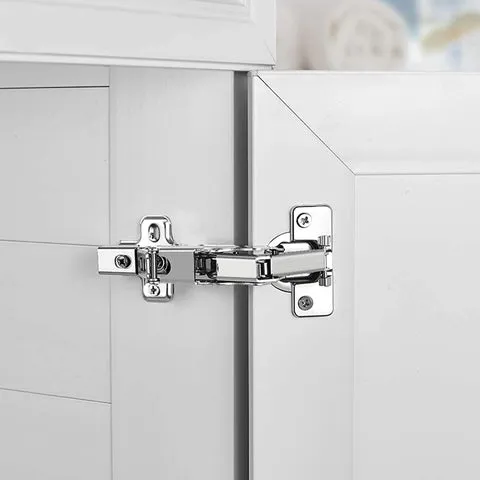
Requesting a cabinet hinge quotation may seem straightforward: choose a hinge, provide a quantity, and ask for the price. In practice, missing specifications can lead to repeated clarification, inaccurate quotations, and differences between the quoted product and the one you actually need.
For cabinet manufacturers, furniture hardware wholesalers, importers, and private-label brands, a clear request for quotation (RFQ) helps suppliers evaluate product suitability, calculate costs, and confirm production requirements more efficiently.
This cabinet hinge RFQ checklist explains what to prepare before contacting a supplier.
Identify the Hinge Type and Application
Start by identifying the type of hinge you need and where it will be used.
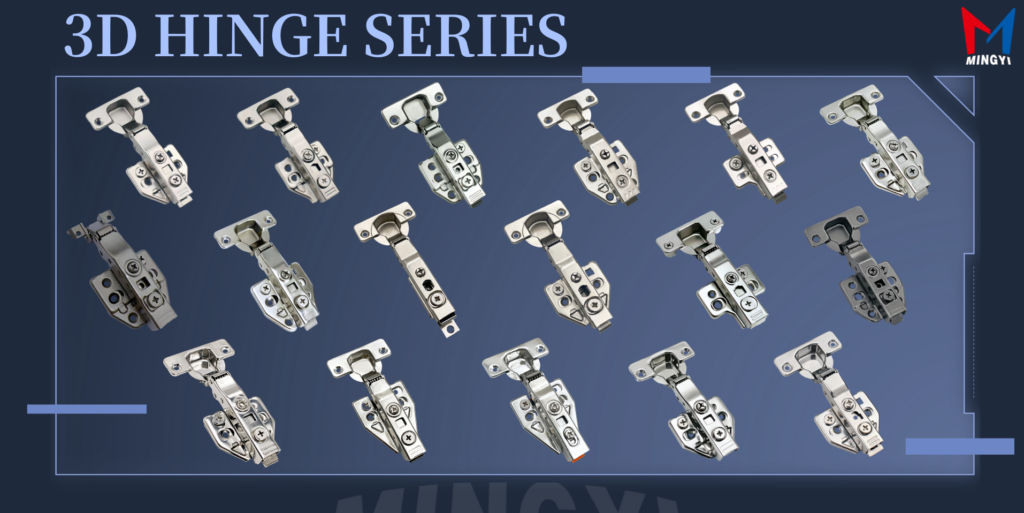
Common cabinet hinge categories include:
- Concealed cabinet hinges: Installed inside the cabinet and generally hidden when the door is closed.
- Hydraulic or soft-close hinges: Designed to control closing movement and reduce door slamming.
- 3D adjustable hinges: Allow adjustment in multiple directions, depending on the design.
- Special-angle hinges: Designed for particular opening requirements or cabinet configurations.
- Frog hinges and other specialized hinges: Used in applications that require a specific structure or mounting arrangement.
Also describe the intended application. For example, the hinge may be used for kitchen cabinets, wardrobes, bathroom furniture, office furniture, or commercial cabinetry.
If you are replacing an existing hinge, provide clear photos of the hinge, mounting plate, and installation position. A product link, drawing, or physical sample is even more useful when available.
Why it matters: Similar-looking hinges may have different dimensions, mounting methods, adjustment ranges, or closing mechanisms. Identifying the application and hinge type helps prevent an unsuitable quotation.
Provide Dimensions and Compatibility Requirements
Dimensions are especially important when the hinge must fit an existing cabinet design.
Depending on the hinge type, relevant specifications may include:
- Cup diameter and cup depth for concealed hinges
- Mounting-hole spacing
- Hinge arm and mounting-plate configuration
- Door thickness
- Door overlay or inset arrangement
- Required opening angle
- Available installation space
- Adjustment requirements
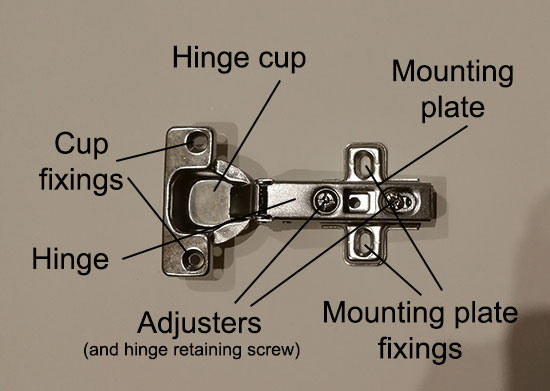
Not every specification applies to every hinge. The supplier should confirm which dimensions are relevant to the selected model.
If you do not know the technical terms, send dimensioned drawings or clear photos with measurements. For replacement projects, a physical sample can help the supplier check compatibility more accurately.
Do not assume that hinges with the same cup diameter or opening angle are interchangeable. Other dimensions and mounting details may still differ.
Confirm the Required Material and Surface Finish
Material and finish can affect corrosion resistance, appearance, cost, and suitability for the intended environment.
When requesting a quotation, specify your preference if it is already defined:
- Substrate material: For example, cold-rolled steel or stainless steel.
- Stainless steel grade: If required, identify the grade, such as SS304 or SS201, half SS or full SS.
- Surface finish: Specify the required finish or provide a reference sample.
- Corrosion-resistance requirement: State the required salt spray test duration and any applicable acceptance criteria.
If you are unsure which material is suitable, explain the installation environment and performance expectations. A supplier can then advise which available options should be evaluated.
Avoid using general descriptions such as “rust-proof” as the only technical requirement. A clear material specification and a defined test requirement provide a more practical basis for comparison.
Specify Functional and Durability Requirements
The quotation should reflect how the hinge is expected to perform, not just how it looks.
Depending on the application, clarify requirements such as:
- Soft-close or hydraulic closing function
- Opening and closing behavior
- Required adjustment range
- Cycle-test target
- Corrosion-test target
- Applicable load or test conditions
- Any required inspection reports or supporting documents
For example, if your project requires a 48-hour salt spray test or 50,000 opening-and-closing cycles, state these requirements before the supplier quotes.
However, test duration alone does not establish that two products are equivalent. Ask which model was tested, what test conditions were used, and whether a report is available. If a particular load is specified in a cycle test, distinguish the test load from the product’s rated load capacity.
Important: Do not assume that every model from the same supplier meets the same performance level. Confirm the requirements for the exact model being quoted.
State the Order Quantity and Unit Clearly
Quantity has a direct impact on pricing, packaging, and production planning.
Your RFQ should specify:
- Estimated order quantity
- Expected number of models or sizes
- Whether the quantity is for an initial trial order or recurring purchases
- Expected annual demand, if known
- Whether multiple models will be combined in one order
Be precise about the unit of measurement. For example, clarify whether the quantity refers to individual hinges, pairs, sets, cartons, or complete hardware kits.
If you need several models, list the quantity for each one rather than providing only a combined total.
For an initial order, you can also ask the supplier to quote different quantity levels if you want to compare pricing at different purchase volumes.
Define Packaging and Private-Label Requirements
Packaging requirements should be discussed before the quotation is finalized, especially for importers and brands selling under their own labels.
Specify what you need, such as:
- Bulk packing or individual retail packaging
- Pieces per inner box and outer carton
- Neutral packaging or branded packaging
- Product labels, barcodes, or SKU information
- Logo printing or other customization
- Required carton markings
- Packaging artwork or design references
If you require a custom color box, ask whether there are separate artwork, printing-plate, setup, or minimum-order costs. These charges can vary according to the packaging design, product model, box specifications, and supplier’s production process.
Also clarify whether packaging requirements apply to every model or whether a common design can be used across multiple products.
Do not assume that a custom package is included in the unit price. Request a breakdown of any additional charges before approving the order.
Confirm the Quotation and Shipping Terms
A product price is only one part of the total purchasing cost. To compare quotations fairly, make sure the commercial terms are clear.
Your RFQ should include:
- Destination country and port, city, or delivery address as applicable
- Preferred trade term, such as EXW or FOB
- Required delivery schedule
- Preferred payment terms, if known
- Whether samples are needed before mass production
- Any documentation requirements for import or customs clearance
If you are comparing several suppliers, use the same trade term, quantity, packaging specification, and destination assumptions wherever possible.
For example, an EXW price and an FOB price do not cover exactly the same services or costs. Comparing the unit prices alone may therefore give a misleading impression of which offer is more competitive.
If you need door-to-door delivery, state this separately and ask the supplier to confirm whether the requested service is available.
Ask What Is Confirmed and What Still Needs Verification
A quotation may contain both confirmed specifications and items that require further checking.
Before placing an order, ask the supplier to confirm:
- Exact product model and drawing
- Material and surface finish
- Performance requirements and available test evidence
- Packaging specification and customization charges
- Minimum order quantity
- Sample availability and sample cost
- Production lead time
- Quotation validity and payment terms
If a requirement cannot yet be confirmed, ask for it to be marked as pending rather than treating it as an agreed specification.
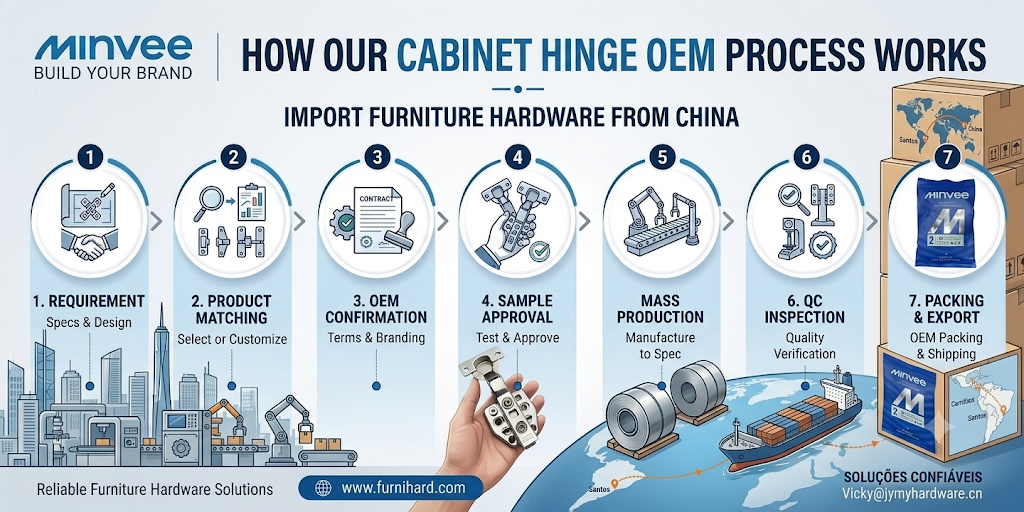
For customized orders, approve the final product details and packaging artwork before mass production. This helps reduce the risk of discrepancies between the quotation, approved sample, and delivered goods.
Cabinet Hinge RFQ Checklist: Quick Reference
Use this checklist before sending your inquiry.
| Information | What to Provide |
|---|---|
| Product | Hinge type, model, photos, drawing, or sample |
| Application | Cabinet type and intended use |
| Dimensions | Relevant measurements and mounting requirements |
| Material | Required substrate or stainless steel grade |
| Finish | Surface finish and appearance requirements |
| Performance | Closing function, cycle target, and corrosion-test requirements |
| Quantity | Quantity per model and unit of measurement |
| Packaging | Bulk or retail packing, carton details, branding |
| Shipping | Destination and preferred trade term |
| Commercial terms | Target schedule, payment preferences, documentation |
| Verification | Required reports, sample approval, and outstanding items |
Final Thoughts: A Clear RFQ Leads to a More Useful Quotation
A well-prepared cabinet hinge RFQ helps suppliers understand your requirements before pricing the order. It also makes it easier to compare offers on a like-for-like basis and identify technical or commercial issues early.
You do not need to know every technical detail before making an inquiry. If you have an existing hinge, start with photos, measurements, the required quantity, and your application. A qualified supplier can help identify the relevant specifications and confirm which requirements need further verification.
Looking for cabinet hinges for wholesale, OEM, or private-label projects? Contact Furnihard with your product reference, estimated quantity, and key requirements. Our team can review the information and help clarify the next steps for product selection and quotation.