

Introduction
Today, cabinet hinges are considered standard hardware components in kitchens, wardrobes, bathrooms, and furniture manufacturing. However, the hinge itself is one of the oldest mechanical inventions in human history.
From ancient bronze pivots used thousands of years ago to modern concealed soft-close cabinet hinges, hinge technology has continuously evolved alongside architecture, furniture making, and manufacturing.
Understanding the history of hinges helps furniture manufacturers, distributors, and hardware buyers better appreciate how modern cabinet hardware developed into the highly engineered products used today.
The Earliest Hinges in Ancient Civilizations
The earliest known hinges appeared thousands of years ago in ancient civilizations.
Archaeological evidence suggests that early Egyptians used pivoting wooden joints for doors and gates, while later civilizations began producing metal hinges from bronze and iron.
Ancient Roman builders further developed hinge designs for public buildings, furniture, and storage chests. These early hinges primarily relied on simple pivot pins and rotational joints.
Although primitive by modern standards, these inventions established the basic mechanical principle still used in hinges today.
Medieval Iron Hinges and Decorative Hardware
During the Middle Ages, blacksmiths began producing forged iron hinges for castles, churches, and wooden buildings.
Several hinge types became common:
- Strap hinges
- T-hinges
- Butterfly hinges
- Decorative forged hinges
These products served both structural and decorative purposes. Long iron straps distributed door weight over large wooden surfaces, making them ideal for heavy doors and gates.
Many antique furniture hinges still found today originate from this period.
The Industrial Revolution and Mass Production
The Industrial Revolution dramatically changed hinge manufacturing.
Machine stamping and metal processing technologies allowed hinges to be produced in large quantities with improved dimensional consistency.
By the late nineteenth century, manufacturers could produce standardized butt hinges and furniture hinges at much lower costs.
This period marked the transition from handmade hardware to industrial hardware production.
Traditional Furniture Hinges
As cabinetmaking evolved, specialized furniture hinges appeared.
Common examples included:
- Butt hinges
- Flush hinges
- Pivot hinges
- Surface-mounted hinges
These hinges were widely used in wooden cabinets, wardrobes, desks, and furniture throughout the nineteenth and early twentieth centuries.
However, most remained visible after installation.
The Development of Concealed Cabinet Hinges
One of the most important innovations in furniture hardware was the concealed cup hinge.
European manufacturers introduced the 35mm cup hinge system, allowing the hinge mechanism to remain hidden inside the cabinet door.
This innovation provided several advantages:
- Cleaner appearance
- Easier installation
- Three-dimensional adjustment
- Improved manufacturing efficiency
Today, concealed hinges have become the global standard for kitchen cabinets and residential furniture.
The Rise of Soft-Close Technology
As furniture quality expectations increased, manufacturers introduced hydraulic soft-close systems.
Modern hydraulic hinges use dampers to slow the closing movement of cabinet doors.
Benefits include:
- Reduced noise
- Improved user comfort
- Protection against door slamming
- Longer furniture lifespan
Soft-close technology is now widely used in kitchens, wardrobes, and premium furniture applications.
Modern Cabinet Hinges Today
Modern furniture hardware includes a wide variety of hinge solutions:
- Full overlay hinges
- Half overlay hinges
- Inset hinges
- Clip-on hinges
- Slide-on hinges
- Soft-close hinges
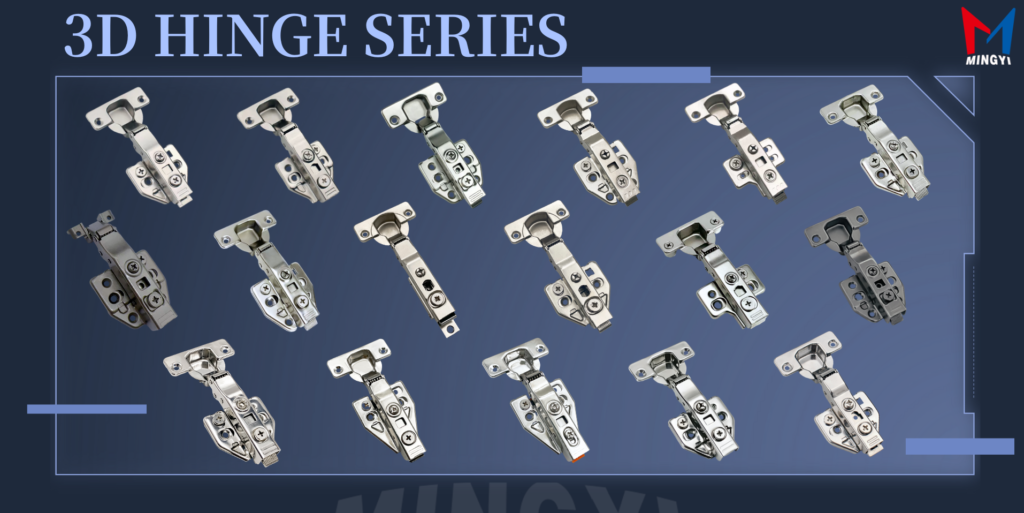
- 3D adjustable hinges
- Stainless steel hinges
- Angle hinges
Different applications require different hinge designs depending on cabinet construction, door thickness, and functional requirements.
Timeline of Hinge Development
| Period | Major Development |
|---|---|
| Ancient Egypt | Wooden pivot joints |
| Ancient Rome | Bronze and iron hinges |
| Middle Ages | Forged iron strap hinges |
| Industrial Revolution | Mass-produced metal hinges |
| 20th Century | Concealed cup hinges |
| Late 20th Century | Soft-close technology |
| Today | Hydraulic and adjustable hinges |
Frequently Asked Questions
When were hinges invented?
Early hinge mechanisms appeared thousands of years ago in ancient civilizations, including Egypt and Rome.
When were metal hinges invented?
Metal hinges made from bronze and iron became common in ancient civilizations and continued to evolve throughout the Middle Ages.
What are antique cabinet hinges?
Antique cabinet hinges typically include butt hinges, butterfly hinges, strap hinges, and decorative forged iron hinges.
What is the most common cabinet hinge today?
The concealed 35mm cup hinge is the most widely used cabinet hinge in modern furniture manufacturing.
Why are soft-close hinges popular?
Soft-close hinges improve comfort, reduce noise, and protect cabinet doors from impact damage.
Conclusion
From ancient wooden pivots to modern hydraulic cabinet hinges, the evolution of hinge technology reflects thousands of years of engineering development.
Today’s furniture hinges combine precision manufacturing, advanced materials, and ergonomic design to meet the demands of modern cabinet production.
Understanding the history of hinges not only provides insight into furniture hardware development but also helps manufacturers and buyers appreciate the engineering behind modern cabinet solutions.