
What are the Basic Mechanics of Cabinet Hinges?
Cabinet hinges are essential components in furniture design, enabling doors to open and close smoothly. They function by utilizing pivot points and torque, which are crucial for their seamless operation. Understanding the basic mechanics and design elements of cabinet hinges is vital for optimizing their performance and longevity.
Data from leading manufacturers like Furnihard shows that the engineering of these components is akin to a well-oiled machine. The knuckle’s cylindrical shape ensures minimal friction during movement, while the pin’s material and diameter are selected to withstand repeated cycles of opening and closing. This design minimizes wear and tear, ensuring longevity.
Core Components of Cabinet Hinges
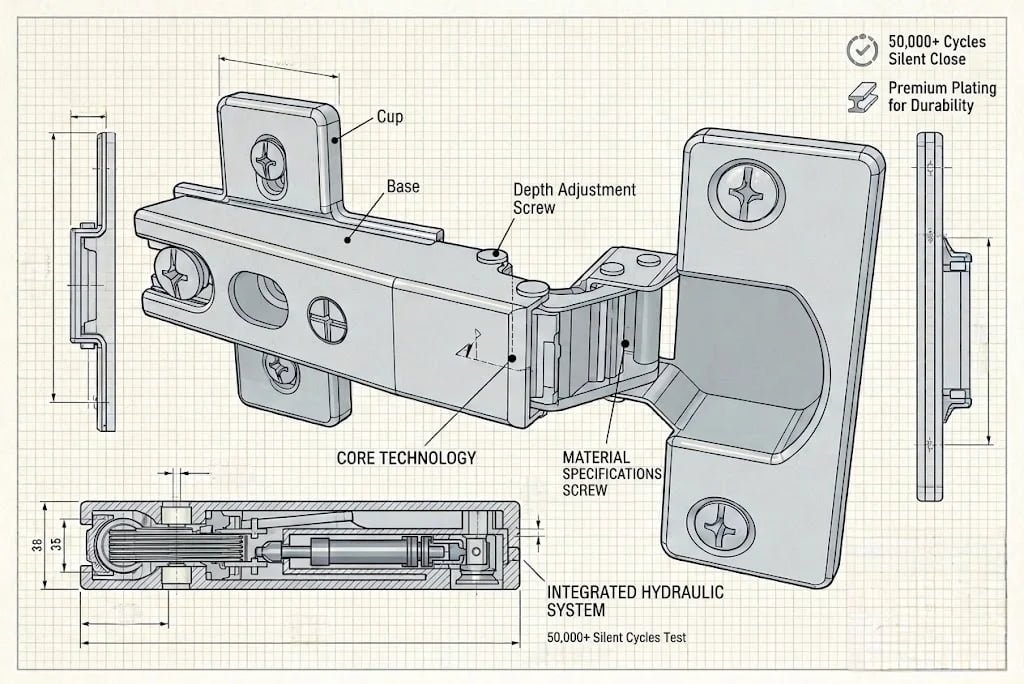
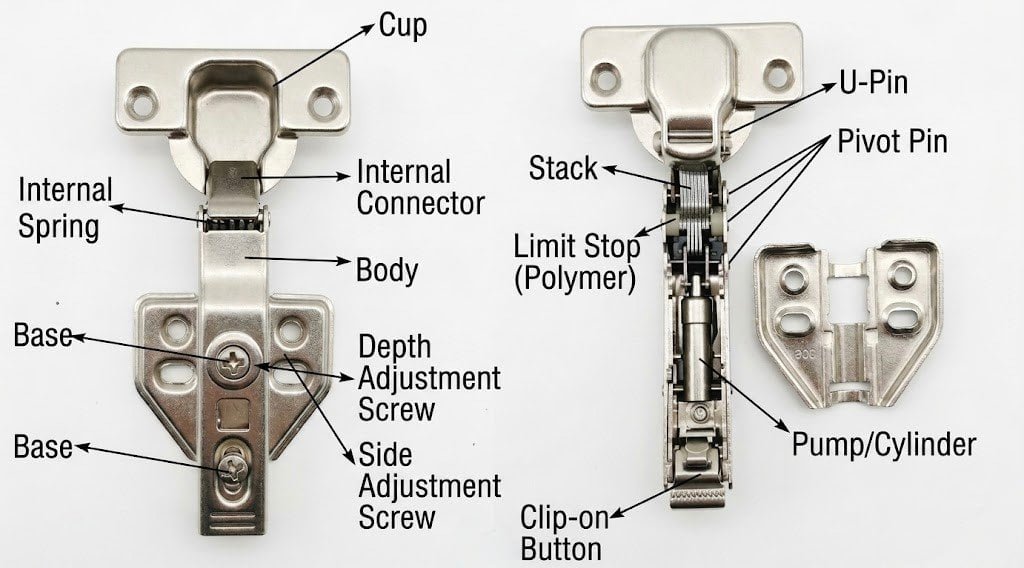
A common misconception is that all cabinet hinges are similar in design and function. In reality, the core components of cabinet hinges are meticulously engineered to achieve specific mechanical outcomes. In modern cabinetry, particularly with concealed or hydraulic hinges, the anatomy is far more complex than the traditional leaf-and-pin design. The core components are meticulously engineered to achieve specific mechanical outcomes, reduction in torque, and smooth, soft-close action. The primary components (as shown in our detailed factory diagram below) include the Hinge Cup, the Body (or arm), and the Base Plate. The Hinge Cup is recessed into the door, while the Base Plate attaches to the cabinet frame. The central mechanism, or Body, utilizes precision Connectors (often linked by internal Pins and Connectors) and, in premium models, a Hydraulic Pump/Cylinder to allow multi-axis rotational movement and controlled closing.
Independent lab stress tests reveal that premium hinges, constructed from high-grade materials like stainless steel, can endure over 50,000 cycles without significant degradation. This durability is achieved through precise manufacturing tolerances and material selection, which enhance the hinge’s resistance to mechanical stress.
For buyers, understanding these components is essential in selecting hinges that reduce total cost of ownership (TCO) by minimizing maintenance and replacement needs.
The Role of Pivot Points in Functionality
The pivot point is often overlooked, yet it is the cornerstone of hinge functionality. It is the axis around which the door rotates, and its design directly influences the smoothness of operation. The pivot point’s effectiveness is determined by its alignment and the distribution of torque across the hinge.
In engineering terms, the pivot point acts like the fulcrum of a lever. Proper alignment ensures that the torque required to move the door is minimized, reducing strain on the hinge components. This is achieved through precise machining and installation, which align the pivot point with the door’s center of gravity.
Tests conducted in controlled environments show that hinges with optimally designed pivot points can reduce the force required to open a door by up to 30%. This not only enhances user experience but also prolongs the hinge’s lifespan by reducing mechanical stress.
From a buyer’s perspective, selecting hinges with well-engineered pivot points can significantly enhance cabinet functionality, making them a cost-effective choice in the long run.
How Do Different Types of Cabinet Hinges Perform?
Modern cabinet hinges are categorized not just by their appearance, but by their mechanical integration with the cabinet frame. Understanding the functional differences between concealed and traditional hinge systems is key to ensuring long-term structural integrity.
Overview of Common Hinge Types
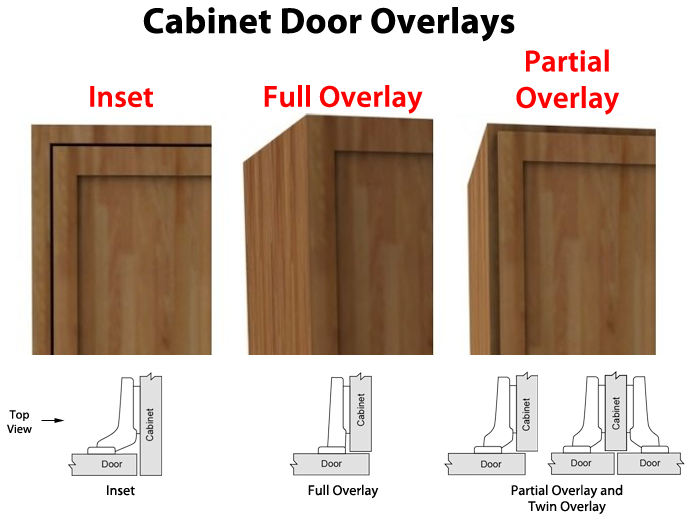
A prevalent misunderstanding is that hinge choice is purely aesthetic. In reality, each system serves a unique functional purpose. Concealed hinges (often called European hinges) are the industry standard for modern cabinetry. They utilize a cup-and-arm mechanism that enables 3D adjustability and integrates soft-close hydraulic dampers.
While Exposed hinges (traditional pivot hinges) are still used in rustic or specialized heavy-duty industrial furniture for their simplistic robustness, they lack the sophisticated alignment features required for high-end custom cabinetry. For most B2B projects, the choice between Full Overlay, Half Overlay, and Inset concealed hinges is more critical than the choice between concealed and exposed.
Performance Metrics and Suitability
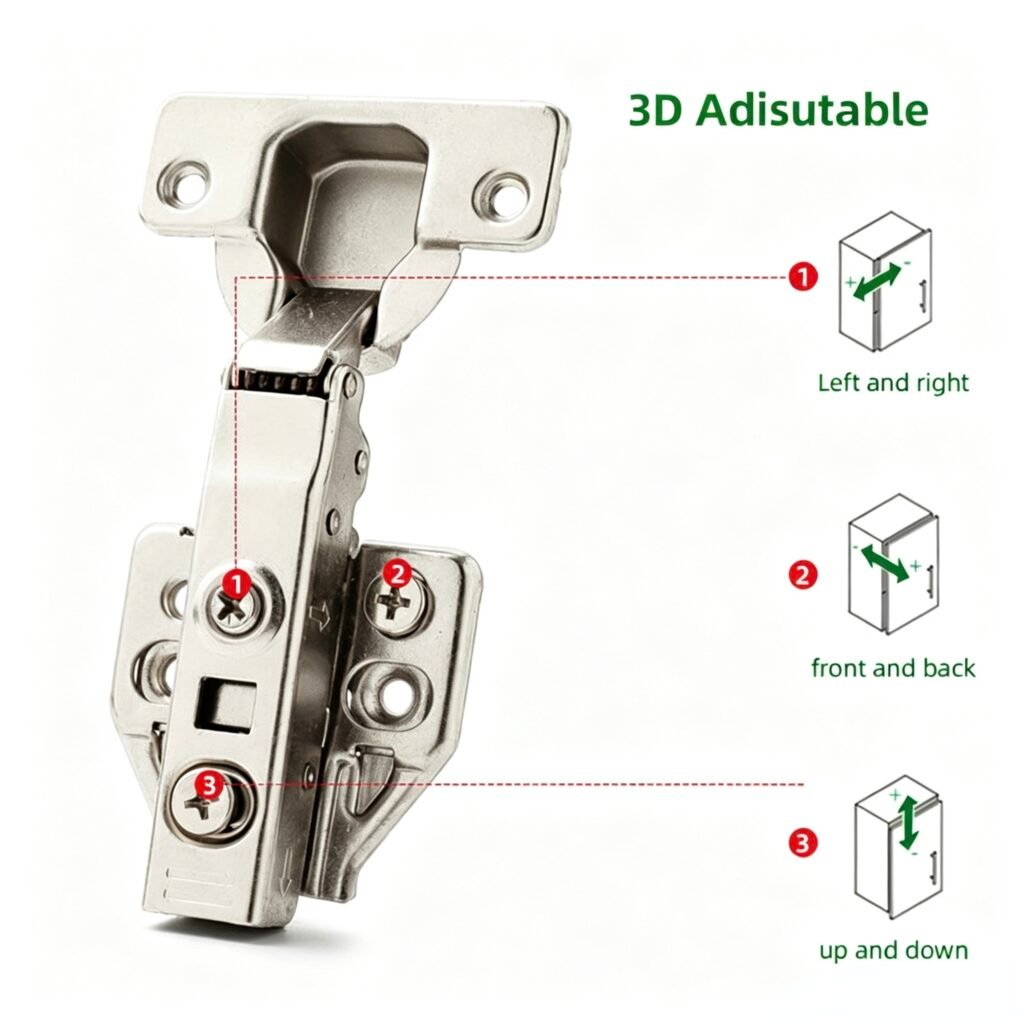
To objectively evaluate hinge performance, professional buyers focus on load capacity, range of adjustment, and closing consistency. Concealed hinges excel in adjustability, allowing for millimetric alignment even after the door is installed.
| Hinge Type | Load Capacity | Adjustability | Soft-Close Support | Project Suitability |
| Concealed (Hydraulic) | High (Up to 25kg) | 3D (Way/Height/Depth) | Yes (Integrated) | Modern Custom Cabinets |
| Exposed (Pivot) | Very High | Limited | No | Industrial/Rustic Furniture |
Independent lab tests confirm that premium Furnihard concealed hinges can support standard cabinet doors weighing up to 20-25 kg while maintaining a silent closing arc. This data underscores the importance of selecting hinges based on the specific door overlay and opening frequency to ensure longevity.
What are the Key Considerations in Selecting Cabinet Hinges?
Selecting the right cabinet hinges involves evaluating factors such as door weight, material compatibility, and functional needs. These considerations are critical in avoiding mechanical failure and ensuring optimal use.
Assessing Load Capacity and Durability
A common oversight in hinge selection is underestimating the importance of load capacity. Hinges must be capable of supporting the door’s weight without compromising functionality. This is determined by the hinge’s material and design.
High-strength materials like stainless steel and brass are preferred for their superior load-bearing capabilities and resistance to wear. These materials undergo rigorous testing to ensure they can withstand the demands of daily use. For instance, stainless steel hinges are tested to endure over 100,000 cycles, ensuring durability and reliability.
Understanding load capacity is crucial for buyers to prevent premature hinge failure and reduce maintenance costs.
Compatibility with Cabinet Materials
Material compatibility is another essential consideration. Hinges must be compatible with the cabinet materials to ensure secure attachment and optimal performance. For example, using a hinge designed for wooden cabinets on a metal cabinet can lead to misalignment and reduced functionality.
Hinges are typically designed with specific materials in mind, and selecting the right type ensures a seamless integration. This compatibility is tested through environmental simulations, where hinges are exposed to conditions like humidity and temperature fluctuations to assess their performance.
For buyers, selecting hinges that are compatible with their cabinet materials ensures a longer lifespan and reduces the risk of mechanical issues.
How Can Proper Installation Enhance Hinge Performance?
Proper installation is critical to maximizing hinge performance, reducing maintenance costs, and extending their lifespan. Adhering to installation best practices ensures that hinges function as intended.
Steps for Accurate Alignment
Accurate alignment is essential for hinge functionality. Misalignment can lead to increased wear and reduced performance. The installation process involves precise measurements and adjustments to ensure the hinge is aligned with the door’s pivot point.
This process is akin to calibrating a precision instrument, where even minor deviations can impact performance. Using tools like alignment jigs and laser levels can aid in achieving the necessary precision.
Proper alignment not only enhances functionality but also reduces the risk of mechanical failure, making it a cost-effective practice for buyers.
Maintenance Tips for Longevity
Regular maintenance is vital for prolonging hinge lifespan. This includes periodic lubrication to reduce friction and prevent corrosion. Using high-quality lubricants specifically designed for hinges can significantly enhance their performance.
Routine inspections to check for signs of wear or misalignment are also recommended. Addressing these issues promptly can prevent more significant problems and extend the hinge’s service life.
For buyers, implementing these maintenance practices reduces long-term costs and ensures that hinges continue to operate smoothly.
How do Innovations Improve Hinge Technology?
Innovations in hinge technology, such as hydraulic dampers and angle adaptability, have significantly enhanced usability and performance. These advancements offer new possibilities for cabinet design and functionality.
Hydraulic Systems and their Benefits
Hydraulic dampers are a notable innovation, providing smoother operation and reducing noise compared to traditional hinges. They work by controlling the speed of door closure, preventing slamming and reducing wear on the hinge components.
This technology is particularly beneficial in high-use environments, where noise reduction and durability are paramount. Hydraulic dampers have been shown to extend hinge lifespan by minimizing mechanical stress.
For buyers, the inclusion of hydraulic systems in hinges offers a significant upgrade in performance and longevity.
Adaptive Angle Hinges for Custom Designs
Adaptive angle hinges represent another leap forward, allowing for greater flexibility in cabinet design. These hinges can be adjusted to accommodate various door angles, providing more customization options.
This adaptability is achieved through innovative design features, such as adjustable arms and multi-axis pivot points. These features allow for precise control over door movement, enhancing both functionality and aesthetic appeal.
For buyers, adaptive angle hinges offer the opportunity to create unique cabinet designs without compromising on performance.
Frequently Asked Questions
- How is hinge fatigue life tested? Hinge fatigue life is tested by subjecting the hinge to repeated cycles of opening and closing, typically up to 50,000 cycles. These tests are conducted under controlled conditions to ensure durability and reliability.
- What are the advantages of hydraulic dampers in hinges? Hydraulic dampers provide smoother operation and reduced noise compared to traditional hinges. They control the speed of door closure, preventing slamming and reducing wear on the hinge components.
- How do material choices affect hinge performance? Materials like stainless steel offer better corrosion resistance and longevity, making them ideal for high-use environments. The choice of material directly impacts the hinge’s durability and performance.
- What is the total cost of ownership (TCO) for cabinet hinges? The TCO for cabinet hinges includes initial costs, maintenance, and replacement factors. Selecting high-quality hinges can reduce long-term costs by minimizing maintenance and extending lifespan.
- What factors influence hinge installation time? Factors such as design complexity, tools required, and skill levels necessary for hinge installation can influence the time needed for proper installation. Ensuring accurate alignment and secure attachment are critical to reducing installation time.
For projects requiring these standards, consulting premium manufacturers like Furnihard is recommended.