
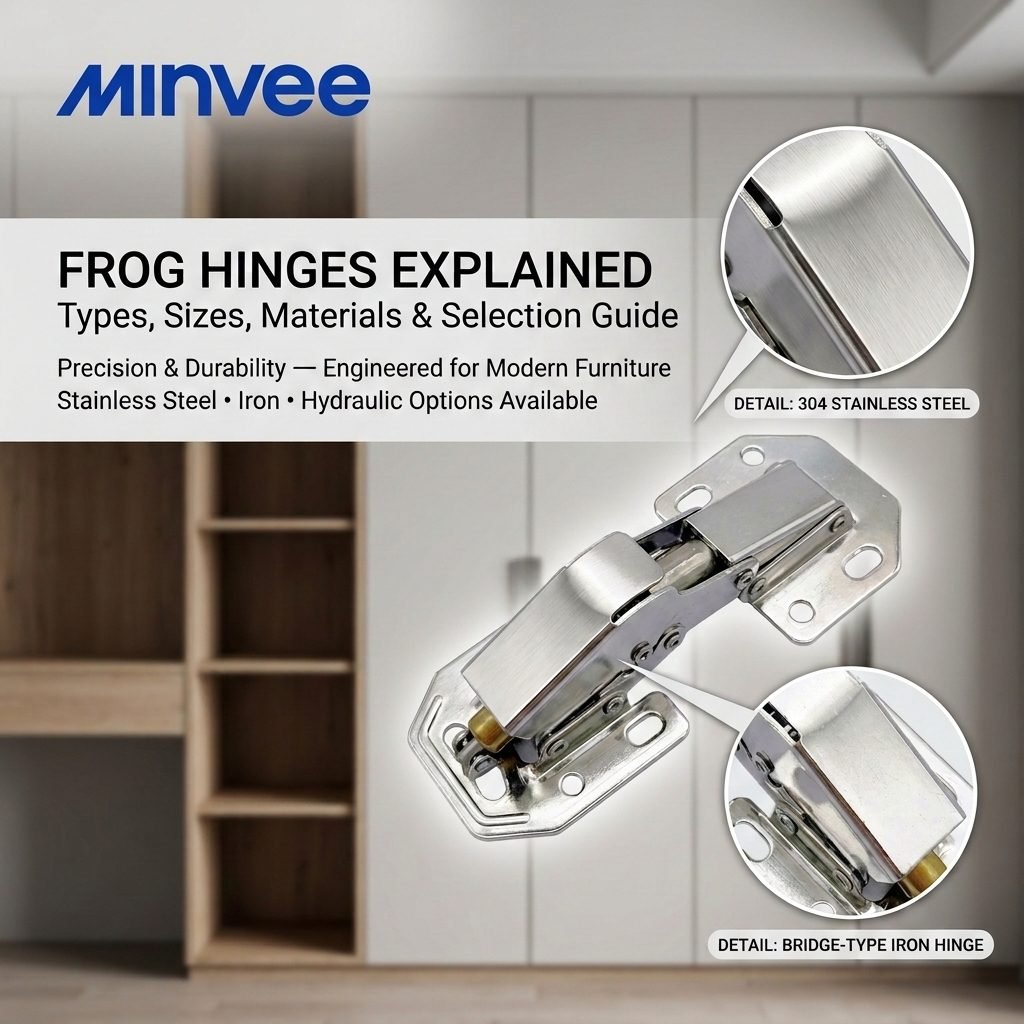
Frog hinges are a type of furniture hinge used in cabinet and furniture applications where the hinge structure and mounting method differ from conventional concealed cup hinges. For furniture manufacturers, importers and hardware distributors, choosing the right frog hinge involves more than comparing appearance or price.
Material, hinge dimensions, closing function, door construction and installation requirements all affect whether a model is suitable for a particular project.
In this guide, we explain the main frog hinge selection factors and compare stainless steel, iron and hydraulic frog hinge options to help buyers identify the right product for their applications.
What Is a Frog Hinge?
A frog hinge is a furniture hinge design commonly associated with a bridge-like or clip-style structure. Its exact shape, mounting method and operating mechanism can vary by model and manufacturer.
Unlike a conventional 35 mm concealed cabinet hinge, a frog hinge does not necessarily use the same recessed cup and mounting arrangement. Buyers should therefore check the actual hinge construction and installation instructions rather than assuming that all frog hinges are installed in the same way.
Frog hinges may be considered for furniture projects where their particular structure, appearance or installation method suits the cabinet design.
For bulk procurement, the most important first step is to confirm the hinge model and its compatibility with the intended door and cabinet construction.
Main Types of Frog Hinges
Frog hinges can be compared by material and closing function. These are separate selection factors: material affects corrosion resistance and durability, while the closing mechanism affects how the door moves.
1. Stainless Steel Frog Hinges
Stainless steel frog hinges are worth considering for projects where corrosion resistance is an important requirement.
However, buyers should confirm the actual stainless steel grade and which components use that material. A product described as stainless steel should not automatically be assumed to have every component made from SS304.
For procurement, check:
- Stainless steel grade and component construction
- Surface finish and corrosion-resistance evidence
- Hinge dimensions and mounting requirements
- Sample consistency and intended application
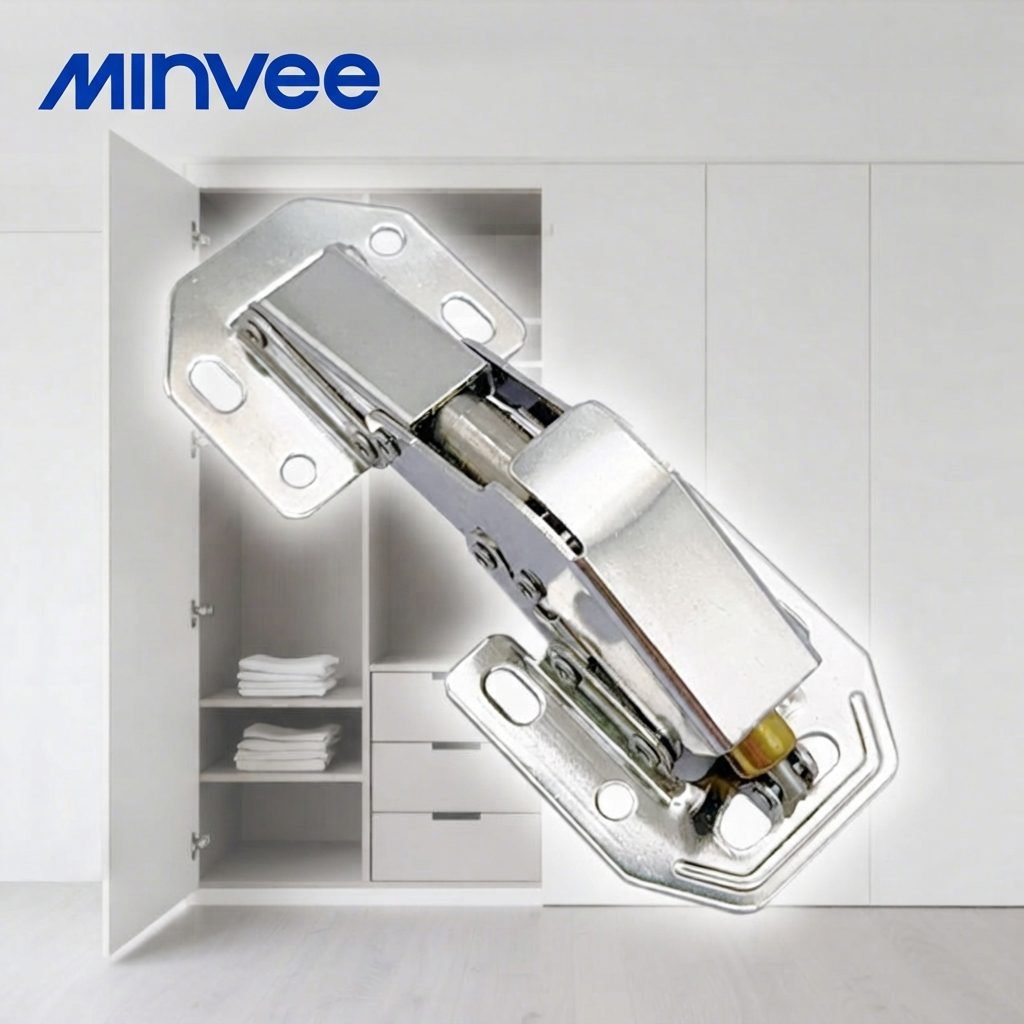
For buyers seeking a hydraulic option, see our 304 Stainless Steel Hydraulic Frog Hinge.
2. Iron Frog Hinges
Iron frog hinges can be suitable for projects where the product’s cost, construction and surface finish meet the application requirements.
The key is to evaluate the complete specification rather than judging quality from material name alone. Buyers should confirm the base material, surface treatment, operating performance and suitability for the installation environment.
For projects specifying a 4-inch iron frog hinge, explore our 4-Inch Bridge-Type Iron Frog Hinge.
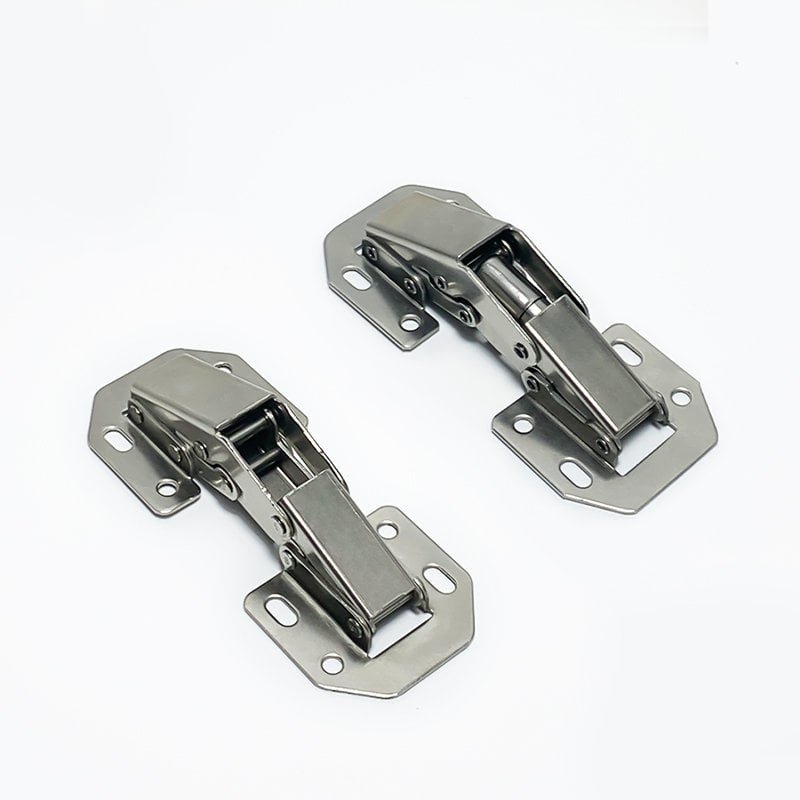
3. Hydraulic Frog Hinges
Hydraulic frog hinges incorporate a hydraulic closing mechanism intended to control the door’s closing movement.
They may be suitable for projects where a controlled closing action is required, but performance depends on the specific hinge design and damper configuration.
Before ordering, confirm:
- Whether the model includes an integrated hydraulic mechanism
- How the closing function operates
- Whether the mechanism suits the door’s size and weight
- The available cycle-test data and product specifications
- Whether the closing performance remains consistent across samples
Do not assume that every frog hinge has a soft-close function. Standard and hydraulic models should be identified and quoted separately.
Frog Hinge Sizes: How to Choose the Right Dimensions
Frog hinges may be marketed by nominal length, such as 4-inch models. However, the nominal size alone does not establish whether two hinges are interchangeable.
Before selecting a size, compare the manufacturer’s drawing and actual product dimensions.
Important measurements include:
- Overall hinge length and width
- Mounting or fixing positions
- Door thickness and cabinet construction
- Required opening clearance
- Door alignment and clearance around adjacent panels
A longer hinge is not automatically suitable for a heavier door. Load performance depends on the complete hinge structure, fixing method, door dimensions and test conditions.
For standardization across a furniture production line, request samples and drawings before confirming the final specification.
Is a 4-Inch Frog Hinge Right for Your Project?
A 4-inch model may be a candidate when its dimensions and mounting arrangement match the application. It should not be selected solely because the existing hinge is described as 4 inches.
Compare the actual dimensions, fixing positions and door movement. If you are replacing an existing model, provide photographs and measurements to the supplier so that compatibility can be checked before placing a bulk order.
You can compare these two options:
Frog Hinge vs. Conventional Concealed Cabinet Hinge
Frog hinges and conventional concealed cup hinges use different designs, so the right choice depends on the furniture construction and installation requirements.
| Selection factor | Frog hinge | Concealed cup hinge |
|---|---|---|
| Hinge construction | Frog or bridge-style design; varies by model | Commonly uses a recessed cup in the door |
| Door preparation | Depends on the specific design | Usually requires a cup bore and mounting holes |
| Appearance | Depends on the hinge geometry and door position | Designed to be concealed when the door is closed |
| Adjustment | Depends on the model | Many models provide adjustment through the hinge and mounting plate |
| Closing function | Standard or hydraulic, depending on the model | Standard or soft-close, depending on the model |
| Compatibility | Must be checked against the specific hinge design | Must be checked against cup dimensions, mounting pattern and overlay |
Neither type is universally better. For furniture manufacturers, the correct choice is the one that meets the required appearance, installation process, operating performance and cost target.
If you are comparing conventional concealed hinges, see our cabinet hinge product range.
How to Evaluate Frog Hinge Quality Before Bulk Ordering
A product photograph is not enough to establish whether a hinge is suitable for repeated use in furniture production.
Before approving a model, consider the following checks.
Material and Surface Treatment
Confirm the material grade and finish in the product specification. If corrosion resistance is important, request relevant test documentation and check the tested sample, test method and exposure conditions.
Construction and Fixing Stability
Inspect the hinge body, moving parts and fixing points. Confirm that the hinge can be installed securely in the intended door and cabinet construction.
Closing Performance
For hydraulic models, check whether the closing action is suitable for the intended door. Test samples in the actual installation where possible instead of relying only on a demonstration video.
Sample and Batch Consistency
Compare multiple samples when evaluating a supplier for repeat orders. Check dimensions, finish, movement and closing performance against the approved specification.
Production and Order Requirements
Before placing a bulk order, confirm the available model, material, finish, packaging, minimum order quantity, lead time and customization options.
If cycle-test or corrosion-test claims are important to your purchasing decision, request the relevant evidence for the specific product rather than assuming that all models share the same test results.
What to Confirm Before Requesting a Frog Hinge Quotation
To help a supplier identify a suitable model, prepare the following information:
- Required hinge type: stainless steel, iron or hydraulic
- Nominal size and actual dimensions, if available
- Door material and thickness
- Required opening and closing behavior
- Installation and fixing requirements
- Surface finish and corrosion-resistance requirements
- Estimated order quantity
- Packaging, branding and customization requirements
If you are replacing an existing hinge, include clear photographs of the hinge from multiple angles and the mounting area. A dimensioned drawing or physical sample can help reduce the risk of selecting an incompatible replacement.
Explore MINVEE Frog Hinge Options
MINVEE supplies furniture hardware for manufacturers, distributors, importers and furniture brands. Our current frog hinge options include stainless steel, iron and hydraulic models.
Explore the products below to compare the available configurations:
- 304 Stainless Steel Hydraulic Frog Hinge
- 4-Inch Stainless Steel Frog Hinge
- 4-Inch Bridge-Type Iron Frog Hinge
For bulk orders or product matching, contact our team with your required material, dimensions, application and estimated quantity. We can then review the available specifications and help identify a suitable option for your project.
Frequently Asked Questions
Are all frog hinges installed without drilling?
No. Installation requirements depend on the specific design. Confirm the mounting method and door preparation requirements from the product drawing or installation instructions.
Are stainless steel frog hinges always made from SS304?
No. Stainless steel grades vary. Confirm the grade and component construction with the supplier before ordering.
Do all frog hinges have a soft-close function?
No. Hydraulic closing is model-dependent. Check the product specification to confirm whether a hydraulic mechanism is included.
How do I choose between an iron and stainless steel frog hinge?
Compare the required material, corrosion exposure, finish, operating performance and project budget. The correct choice depends on the application and verified product specifications.
Can I replace an existing hinge with a 4-inch frog hinge?
Not based on nominal length alone. Compare the mounting arrangement, dimensions, door construction and required movement before approving the replacement.
What information should I provide for a bulk quotation?
Provide the model or reference photos, material requirements, dimensions, estimated quantity, finish, packaging and intended application. This helps the supplier assess product suitability and prepare a more relevant quotation.