
What Are the Standard Cabinet Hinge Sizes and How Do They Differ?
Many DIYers and even professionals get overwhelmed by the variety of cabinet hinge sizes. I've had customers order the wrong size, leading to project delays and additional costs.
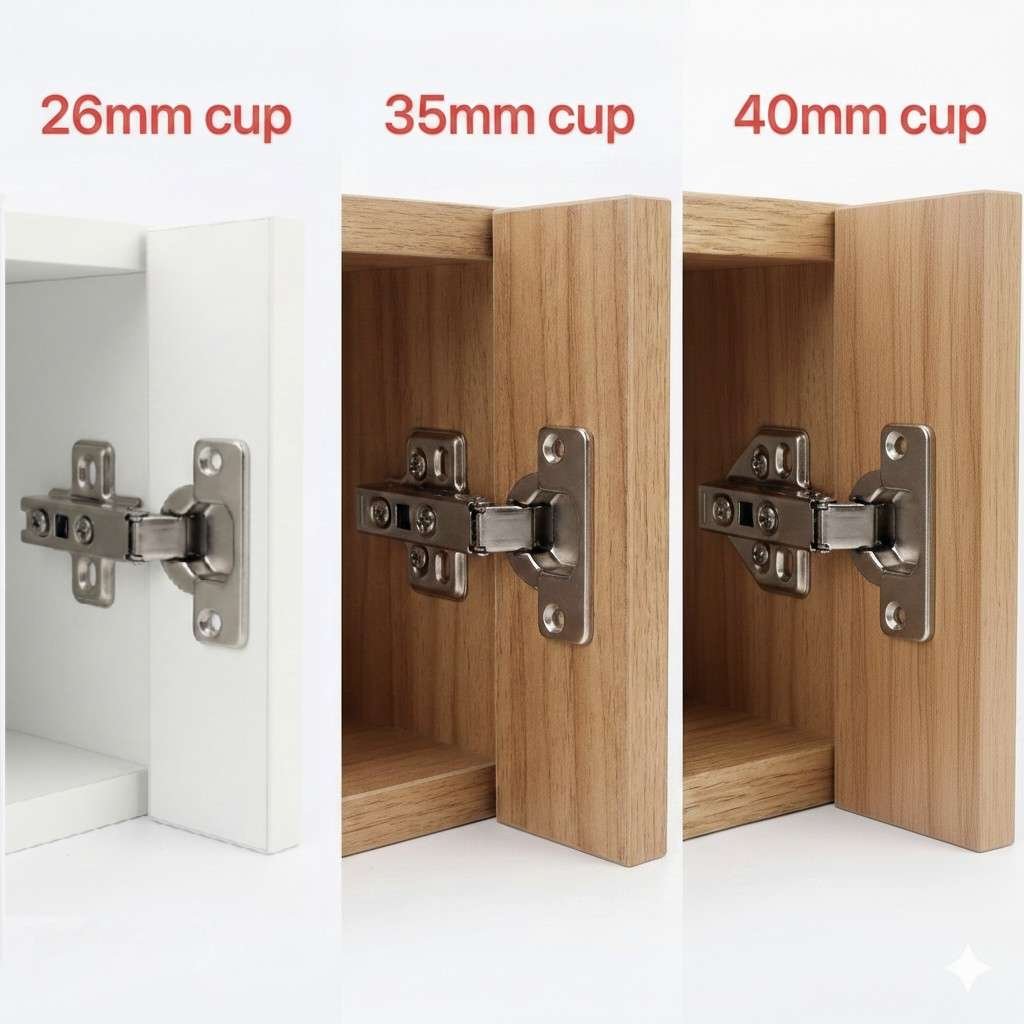
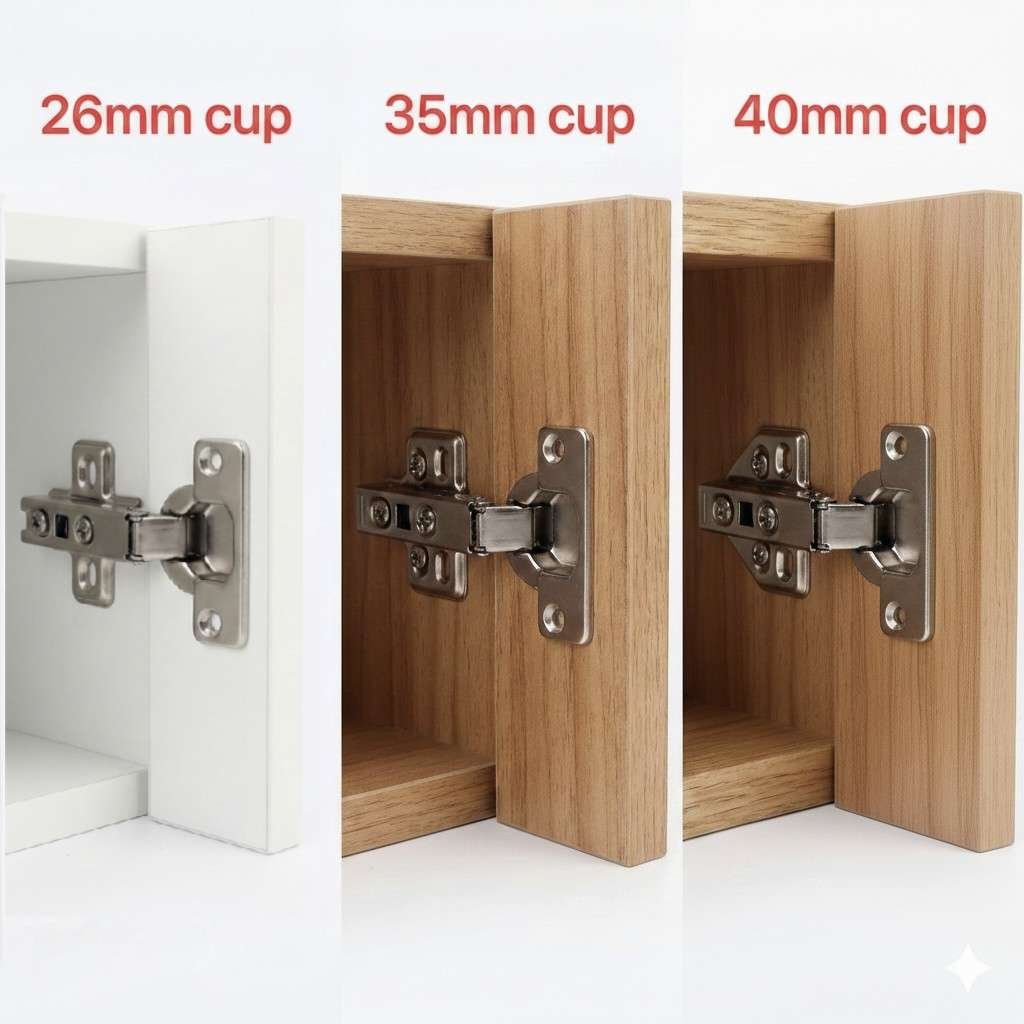
Standard cabinet hinge cup sizes are 26mm, 35mm, and 40mm in diameter. The 35mm cup is used in 90% of applications, 26mm for thin doors under 18mm, and 40mm for thick doors over 25mm.
Let's dive deeper into cabinet hinge specifications and their applications:
Cup Size Selection Guide
| Door Thickness | Recommended Cup Size | Common Applications |
|---|---|---|
| Under 18mm | 26mm | Thin overlay doors, decorative panels |
| 18-25mm | 35mm | Standard kitchen cabinets, furniture |
| Over 25mm | 40mm | Heavy-duty doors, thick solid wood |
Material Considerations
-
Steel Hinges
- More economical
- Suitable for indoor use
- Available in various finishes
- Good for standard weight doors
-
Stainless Steel Hinges
- Corrosion resistant
- Ideal for outdoor or humid environments
- Premium appearance
- Higher durability
The choice between steel and stainless steel depends on the environment and budget. For bathrooms or outdoor kitchens, I always recommend stainless steel to prevent rust and ensure longevity.
How Do You Choose the Right Cabinet Hinge Type for Your Project?
After countless consultations with cabinet makers, I've noticed that overlay type is often the most confusing aspect of hinge selection. Wrong choices here can make doors impossible to open properly.
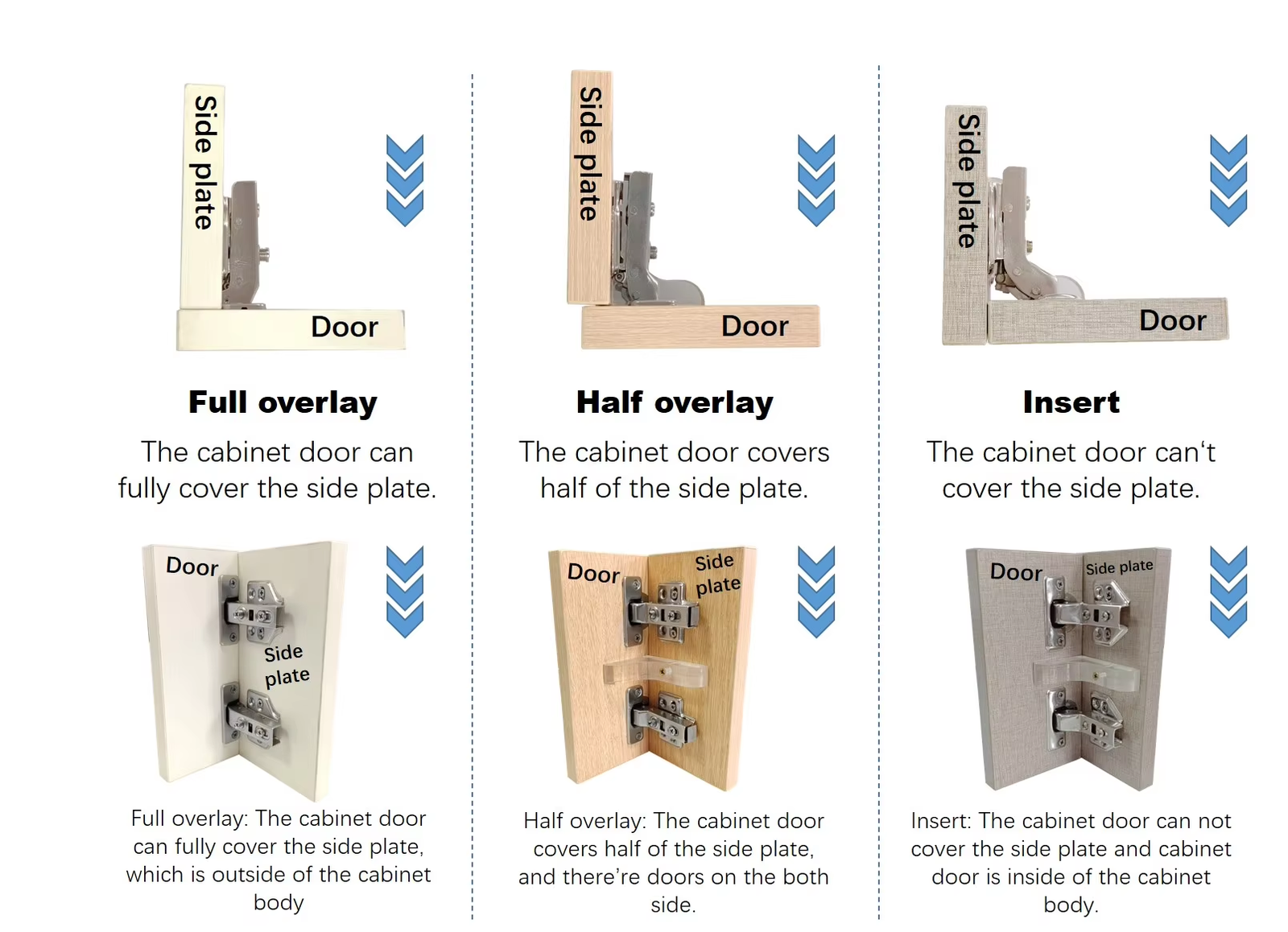
Cabinet hinges come in three main overlay types: full overlay (covering the entire cabinet face), half overlay (partial coverage), and inset (flush with cabinet face). Select based on your cabinet design and desired door placement.
Let's examine the key factors in hinge type selection:
Functionality Features
Opening Force Options:
- Single Force: Basic opening/closing
- Dual Force: Enhanced control
- Soft Close: Dampened closing
- Push-to-Open: Touch-activated opening
Mounting Methods:
-
Fixed Mount
- Permanent installation
- More stable
- Lower cost
-
- Tool-free door removal
- Easier installation
- More expensive
Adjustment Capabilities
| Type | Features | Best For |
|---|---|---|
| Standard | Basic up/down adjustment | Simple projects |
| 2D | Depth and side adjustment | Most applications |
| 3D | Complete adjustment control | Professional installations |
The choice of functionality depends on your specific needs. For example, I recommend soft-close hinges for families with children to prevent door slamming and potential injuries.
How to Measure Cabinet Hinges for Replacement?
Getting accurate measurements is crucial - I've seen too many projects delayed because of incorrect hinge measurements. This common mistake can be easily avoided.
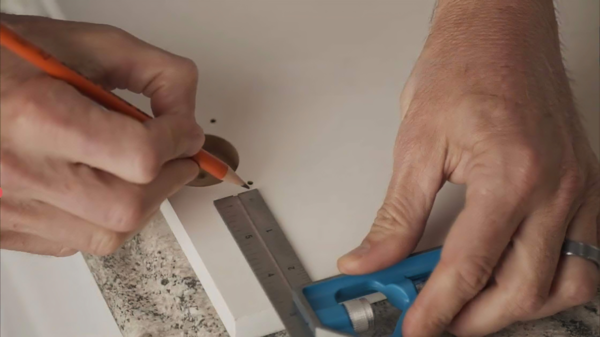
To measure cabinet hinges: First, measure the door thickness and overlay type. Then check the cup diameter (usually 35mm), the arm length, and the opening angle. Note any special features like soft-close or adjustability.
 Here's a comprehensive breakdown of measurement considerations:
Opening Angle Options
Standard Angles:
- 90-110 degrees: Most common for standard cabinets
- 165-180 degrees: For full access requirements
Special Angles:
| Angle | Application |
|---|---|
| -45 to -30 degrees | Sloped surfaces |
| 30-45 degrees | Corner cabinets |
| 135 degrees | Specialized corners |
When measuring for replacement, consider these factors:
- Original hinge specifications
- Door weight and size
- Installation space requirements
- Desired functionality upgrades
For special applications like corner cabinets or unique angles, it's crucial to measure both the door thickness and the opening angle accurately. I always recommend taking multiple measurements to ensure accuracy.
Conclusion
Choose your cabinet hinge based on door thickness (26mm, 35mm, or 40mm cup), overlay type, and required functionality. Consider material, adjustment needs, and opening angle for optimal performance.