
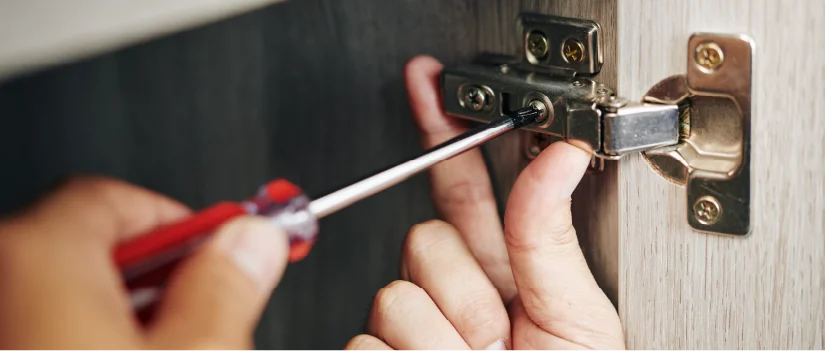
Cabinet hinges keep failing and breaking down after just a few months of use. This not only wastes money but also creates safety hazards. Understanding hinge components is key to choosing reliable ones.
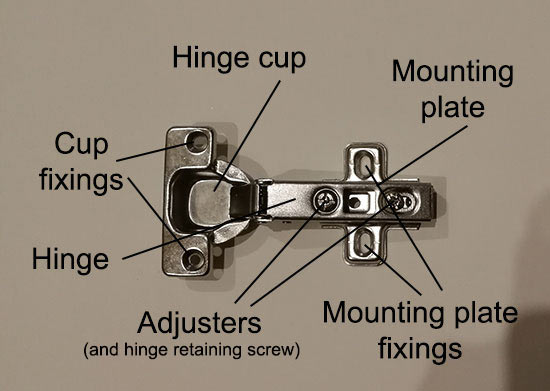
A cabinet hinge consists of four main parts: the cup, mounting plate1, arm, and U-pin. The cup attaches to the door, the mounting plate1 connects to the cabinet frame, while the arm and U-pin allow smooth door movement.
As a hinge manufacturer with over 10 years of experience, I've seen countless hinge failures due to poor component quality. Let me share what I've learned about each part and how to identify good quality ones.
What Are the Different Types of Cabinet Hinges and Their Components?
Poor quality hinges often break at the connection points between components. This leads to sagging doors and expensive replacements. Understanding hinge types helps you choose the right one.
Cabinet hinges come in three main types: overlay hinges, inset hinges, and European hinges. Each type has specific components designed for different door mounting styles and applications.
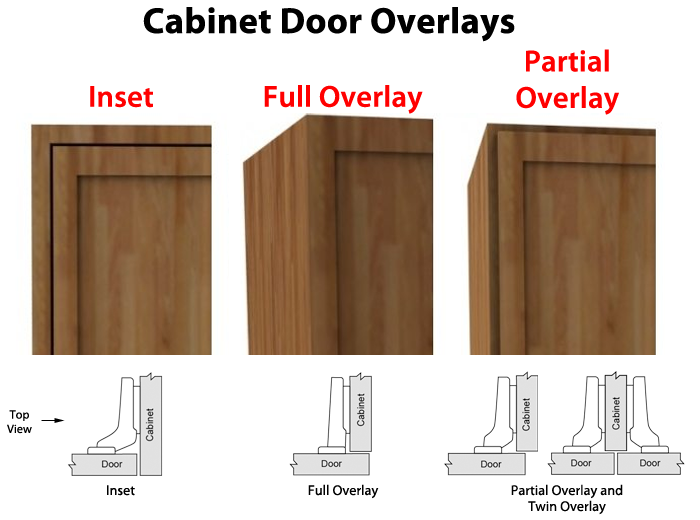
Let's examine each type in detail. The most common is the European-style concealed hinge2, which has revolutionized modern cabinetry. These hinges feature a cup that's mortised into the door and a mounting plate1 attached to the cabinet frame. The arm mechanism connects these pieces and allows for precise adjustments.
Key Components and Their Functions:
-
Cup Housing
- Made from zinc alloy or steel
- Mortised into door
- Depth affects door overlay
- Quality cups have reinforced walls
-
Mounting Plate
- Attaches to cabinet frame
- Allows height/depth adjustment
- Steel construction preferred
- Multiple hole patterns available
-
Hinge Arm
- Controls door movement
- Contains adjustment screws
- Determines opening angle
- Steel thickness impacts durability
-
U-Pin Connection
- Critical joining component
- Heat-treated for strength
- Determines hinge longevity
- Must be properly crimped
The U-pin deserves special attention as it's the most crucial yet often overlooked component. In our factory, we heat-treat all U-pins and use specialized crimping processes to ensure they can withstand over 50,000 opening cycles. This attention to detail prevents the most common hinge failure point.
How Do You Choose the Right Cabinet Hinge Components?
Selecting wrong hinge components leads to installation problems and premature failure. This costs time and money while damaging customer relationships. Let's solve this challenge.
Choose hinge components based on door style, weight, and usage frequency. For heavy doors, select hinges with thicker arms and cups. For high-traffic areas, prioritize heat-treated U-pins3 and steel mounting plate1s.
The key to selecting appropriate hinge components lies in understanding their ratings and specifications. I've developed a comprehensive evaluation system based on years of manufacturing experience and customer feedback. Here's what to consider:
Material Quality Indicators:
-
Cup Construction
- Cold-rolled steel: Good
- Zinc alloy: Better
- Nickel-plated steel: Best
-
Arm Thickness
- Light duty: 1.5mm
- Medium duty: 2.0mm
- Heavy duty: 2.5mm+
-
U-Pin Treatment
- Standard: Basic crimping
- Enhanced: Heat treatment
- Premium: Heat treatment + double crimping
Application Considerations:
-
Door Weight Capacity
- Light (0-3kg): Basic components
- Medium (3-6kg): Reinforced cup
- Heavy (6kg+): Heavy-duty all components
-
Usage Frequency
- Low: Standard U-pin
- Medium: Heat-treated U-pin
- High: Premium U-pin + steel cup
Remember that proper component selection directly impacts hinge longevity. In my experience, investing in quality components, especially heat-treated U-pins3 and steel mounting plate1s, reduces warranty claims by up to 80%.
Conclusion
Understanding cabinet hinge components4 is crucial for selecting reliable hardware. Focus on U-pin quality and material specifications to ensure long-lasting performance and customer satisfaction.
Discover how the quality and design of a mounting plate can impact the performance and adjustment capabilities of cabinet hinges. ↩
Exploring the benefits of European-style concealed hinges can help you decide if they are the right choice for modern cabinetry in your home. ↩
Learn why heat-treated U-pins are crucial for hinge longevity and how they can prevent common failure points in cabinet hinges. ↩
Understanding the main components of a cabinet hinge helps in selecting the right type for your needs, ensuring durability and functionality. ↩